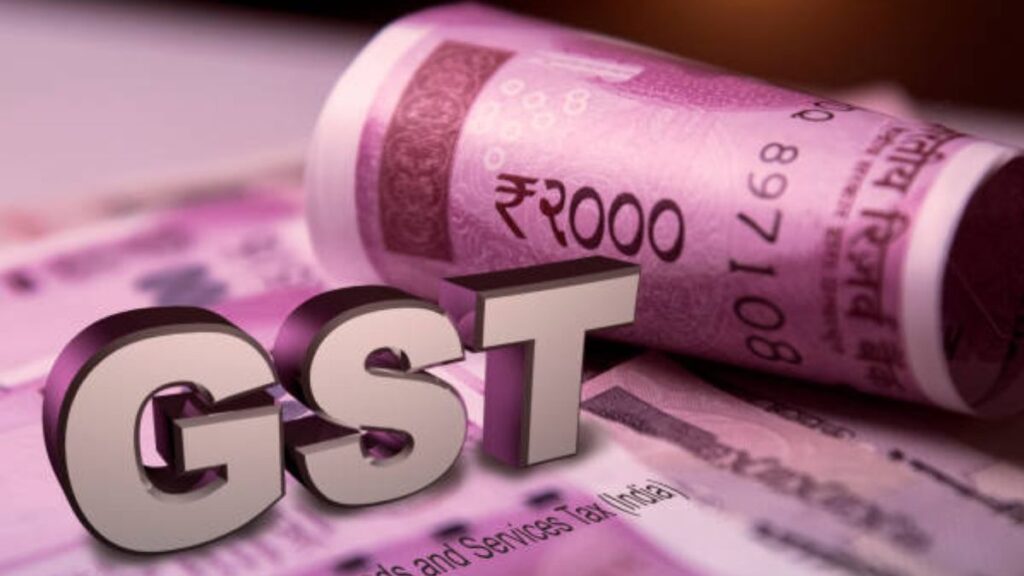
Reliance General Insurance Company (RGIC), a subsidiary of Reliance Capital Ltd, is facing significant tax challenges as it has received multiple show cause notices from the Directorate General of GST Intelligence, totaling Rs 922.58 crore. These notices pertain to GST demands on revenue generated from services such as re-insurance and co-insurance.
Show Cause Notices Breakdown
The notices received by RGIC include demands for Rs 478.84 crore, Rs 359.70 crore, Rs 78.66 crore, and Rs 5.38 crore, respectively. These demands are based on the GST Authority’s assertion that re-insurance commission and co-insurance premium should be subject to GST since they form part of the company’s recorded revenue.
Controversies Surrounding Re-Insurance
One of the notices, amounting to Rs 478.84 crore, questions the applicability of GST on re-insurance commission booked for re-insurance services ceded to various Indian and Foreign Reinsurance companies. RGIC argues that the lead insurer has already paid GST on the entire premium, negating the need for further GST payment. However, the GST department contends otherwise, asserting that GST cannot be collected and disbursed by one registered person on behalf of another.
Input Tax Credit Investigation
In another notice totaling Rs 78.66 crore, the Directorate General of GST Intelligence is investigating the availing of input tax credit (ITC) without underlying services related to marketing expenses. RGIC has deposited Rs 10.13 crore under protest in response to this matter.
Non-Payment of GST on Reinsurance Services Import
The fourth notice involves the non-payment of GST under reverse charge basis for the import of reinsurance services from foreign reinsurers concerning an exempted crop insurance scheme. The GST Authority has issued a tax notice of Rs 5.38 crore in this regard.
These show cause notices pose financial challenges for RGIC, which is a crucial asset for Reliance Capital, currently undergoing debt resolution proceedings through the National Company Law Tribunal (NCLT). RGIC represents a significant portion of Reliance Capital’s total value, making these tax disputes of utmost importance.
NCR-based real estate giant, Adore Group, has recently made a significant acquisition of 15 acres of prime land in Sec-84, Faridabad. This strategic move marks the inception of an ambitious luxury real estate project that promises to redefine the city’s skyline. The project is set to cater to the evolving preferences of homebuyers in the region.
Modern Luxury and Spacious Living
Adore Group’s upcoming project is poised to become a symbol of modern luxury and spacious living. With a blend of high-rise towers and low-rise builder floors, the development aims to accommodate approximately 500 families upon completion. It is anticipated to yield a staggering total saleable value of around Rs 700 crore, according to the company.
Unparalleled Amenities and Facilities
The Adore Group is committed to offering unparalleled amenities and facilities to its residents. From a state-of-the-art clubhouse to an international-quality swimming pool and a range of other top-line amenities, this project promises to set a new standard for premium properties in Faridabad.
Prime Location and Connectivity
Situated in the thriving Greater Faridabad region, the project enjoys excellent connectivity with a mere 2 km distance to the Faridabad bypass road and approximately 6 km from the Bata Chowk Metro Station. The locality also boasts quality educational institutions, healthcare facilities, and proximity to major commercial hubs in Faridabad.
Adore Group’s Proven Track Record
Founded in 2015, Adore Group has swiftly risen to prominence in NCR’s real estate sector. With an impressive portfolio of more than 20 projects covering over 10 million sq ft, the group has consistently delivered quality and excellence in every endeavor. This latest venture is poised to further solidify Adore Group’s reputation as a leader in luxury real estate development.
Foreclosing your home loan can be a prudent decision if you possess the financial means to clear the outstanding amount. It allows borrowers to settle their home loans ahead of the scheduled tenure, providing benefits like reduced interest payments and increased monthly cash flow. However, there are several important factors to consider before proceeding with home loan foreclosure.
Know Your Interest Rate
Understand the type of interest rate on your home loan. Floating interest rate home loans usually do not incur foreclosure fees, while fixed-rate loans may attract a 4-5% foreclosure charge. Fortunately, many home loans today come with floating interest rates, reducing the likelihood of foreclosure fees.
Inform Your Lender
While not mandatory, it is advisable to inform your bank about your decision to foreclose your home loan at least a week or two in advance. Providing written notice or sending an email can prevent last-minute issues due to human errors.
Obtain NOC and Encumbrance Certificate
Request a non-objection certificate (NOC) from your lender after foreclosure. It serves as insurance against future claims by the bank. Additionally, obtain an Encumbrance Certificate (EC) that confirms your property’s lack of financial or legal liabilities, which can be crucial when selling it later.
Remove Lien
Ensure any lien on your property, which could hinder its sale, is removed during the foreclosure process. This might take a couple of weeks but secures your right to sell your property without legal complications after debt clearance.
Retrieve Original Documents and Cheques
As you complete the foreclosure, make sure all documents, including post-dated cheques and property-related papers submitted during the loan application, are returned to you by the bank. This precautionary step can help prevent future conflicts.
While home loan foreclosure can boost your credit score and financial standing, it’s essential to assess your current financial situation and investments to ensure it doesn’t strain your finances unnecessarily. In the final stages of your loan tenure, calculate the minimal interest savings, as foreclosure may not always be the most economical choice. In such cases, continuing repayments and investing your available funds for potential higher returns may be a wiser approach.
In the shortened trading week, the combined market capitalization of five of the top-10 most valued companies in India saw an increase of Rs 86,234.73 crore, led by Tata Consultancy Services (TCS) as the standout gainer. The gainers among the top 10 companies included TCS, HDFC Bank, Infosys, Hindustan Unilever, and Bajaj Finance, while Reliance Industries, ICICI Bank, ITC, State Bank of India, and Bharti Airtel saw their market capitalization decline.
TCS saw the most significant increase, with its market valuation surging by Rs 32,730.22 crore to reach Rs 13,24,649.78 crore. Bajaj Finance added Rs 21,697.96 crore, bringing its valuation to Rs 4,94,884.37 crore. Infosys witnessed a jump of Rs 18,057.94 crore, reaching a market capitalization of Rs 6,13,655.04 crore, while Hindustan Unilever’s valuation climbed by Rs 7,730.16 crore to Rs 5,87,104.12 crore. HDFC Bank’s market capitalization increased by Rs 6,018.45 crore to Rs 11,63,164.31 crore.
On the flip side, Reliance Industries’ valuation declined by Rs 19,336.49 crore, reaching Rs 15,68,216.88 crore, while ICICI Bank saw a decrease of Rs 4,671.54 crore, taking its market capitalization to Rs 6,62,057.43 crore. State Bank of India’s market cap fell by Rs 4,105.33 crore to Rs 5,30,211.19 crore, and ITC’s valuation eroded by Rs 2,743.6 crore to Rs 5,51,463.84 crore. Bharti Airtel’s market capitalization dipped by Rs 196.19 crore to Rs 5,19,082.95 crore.
Reliance Industries remained the country’s most valuable company, followed by TCS, HDFC Bank, ICICI Bank, Infosys, Hindustan Unilever, ITC, State Bank of India, Bharti Airtel, and Bajaj Finance.
Despite rising raw material costs, petrol and diesel prices are unlikely to increase due to upcoming general elections in India next year, according to Moody’s Investors Service. State-owned fuel retailers like Indian Oil Corporation (IOC), Bharat Petroleum Corporation Ltd (BPCL), and Hindustan Petroleum Corporation Ltd (HPCL) have maintained petrol and diesel prices at a standstill for a record 18 months, despite the surge in crude oil prices last year. International oil prices have increased since August, impacting the profitability of these state-owned oil marketing companies. However, they have limited flexibility to pass on higher raw material costs by increasing retail prices because of the upcoming elections.
Moody’s noted that while high oil prices may weaken the profitability of these companies, they are unlikely to be sustained for long due to global economic weaknesses. The decline in marketing margins for these oil companies has been offset to some extent by improved gross refining margins (GRMs). Moody’s expects GRMs and international transportation fuel prices to moderate in the coming quarters. While a smaller gap between international and domestic prices will reduce marketing losses for the oil marketing companies, overall profitability is expected to remain weak as retail prices are likely to remain unchanged.
Despite the weakening operating performance, the three oil marketing companies are expected to report strong earnings for fiscal year 2024, with IOCL and BPCL better positioned to withstand further increases in crude oil prices compared to HPCL. Moody’s noted that strong earnings in the first quarter of fiscal year 2024 and lower crude oil prices compared to the previous fiscal year have reduced the companies’ working capital requirements and allowed them to reduce borrowings. The Indian government’s capital support for the oil marketing sector will also boost cash flows for these companies and partially cover their capital spending needs.
In conclusion, despite the challenges posed by rising oil prices, the oil marketing companies are expected to maintain their financial stability through fiscal year 2024, with the impact on retail prices likely to be limited due to the upcoming elections.
Analysts have highlighted several factors that will influence the movement in the equity market this week, including quarterly earnings from IT giants like Tata Consultancy Services (TCS) and Infosys, macroeconomic data releases, global trends, and foreign investor activity. Additionally, the performance of the rupee against the dollar and Brent crude oil prices will play a crucial role in shaping market dynamics. Data announcements such as industrial and manufacturing production figures for August, inflation rates for September, and Wholesale Price Index (WPI) data for September are on the macroeconomic calendar.
Market participants are eagerly awaiting corporate performance reports for the second quarter of the fiscal year. TCS is scheduled to reveal its Q2 results on October 11, followed by HCL Technologies and Infosys on October 12. Monitoring the trading activity of Foreign Institutional Investors (FIIs) and Domestic Institutional Investors (DIIs) is another key aspect. Furthermore, the market will react to global events, including Eurozone inflation data, US initial jobless claims, and Federal Open Market Committee (FOMC) minutes. In the past week, the BSE benchmark rose 0.25%, while the Nifty increased by 0.07% amid volatility and mixed signals.
As the week progresses, attention will pivot toward quarterly results from the IT and banking sectors, marking a significant period for market observers.
Foreign Portfolio Investors (FPIs) have divested Indian equities worth Rs 8,000 crore in the first week of October due to the strengthening dollar and the steady increase in US bond yields. This follows FPIs turning net sellers in September, with a withdrawal of Rs 14,767 crore. Prior to this outflow, FPIs had been consistently buying Indian equities for six consecutive months from March to August, injecting Rs 1.74 lakh crore during that period. Going forward, FPIs are unlikely to re-enter the market in the near term due to the strong dollar and elevated US bond yields, according to V K Vijayakumar, Chief Investment Strategist at Geojit Financial Services.
Data from depositories reveals that Foreign Portfolio Investors (FPIs) sold shares amounting to Rs 8,000 crore in October (as of October 6). While India has remained attractive to FPIs among emerging economies this year, September marked a shift with selling, which has continued into October. The primary factor affecting capital flows in recent weeks has been the steadily rising US bond yields. The early days of October saw a sell-off in the US bond market, briefly pushing the 30-year bond yield to 5%. The benchmark 10-year yield consistently exceeded 4.7%, prompting FPIs to sell in emerging markets, Vijayakumar explained.
Himanshu Srivastava, Associate Director – Manager Research at Morningstar India, attributed the outflow to economic uncertainties in the US and Eurozone, coupled with growing concerns about global economic growth, causing foreign investors to become risk-averse. Factors such as higher crude oil prices, persistent inflation figures, and expectations of prolonged elevated interest rates may have led foreign investors to adopt a cautious stance. Additionally, concerns about India’s sub-par monsoon and its impact on inflation are likely on the radar of foreign investors, Srivastava added.
While FPIs have been selling in sectors like financials, power, IT, and oil and gas, they have been buyers in capital goods, automobiles, and auto components. The forthcoming second-quarter financial results in the financial sector, expected to be positive, may deter FPIs from further divestment in this segment, suggested Vijayakumar of Geojit Financial Services.
After a record-breaking 31 initial share sales in the first half of this fiscal year, the IPO pipeline remains robust, with 28 firms aiming to raise Rs 38,000 crore in the second half and an additional 41 awaiting approval from Sebi to launch initial public offerings worth Rs 44,000 crore, according to a report. Despite the number of IPOs more than doubling to 31 in the first half, with a total mop-up of Rs 35,456 crore, fundraising through initial public offerings fell by 26% to Rs 26,300 crore compared to the previous year, as reported by Prime Database. Of these 69 companies in the IPO pipeline, three new-age technology firms plan to collectively raise Rs 12,000 crore.
OYO is reported to be the leader in the pack, seeking to raise over Rs 8,300 crore, followed by Go Digit Insurance. In contrast, the first half saw only one tech IPO by Yatra, which raised Rs 775 crore in late September. Notable IPOs in the previous fiscal year included Paytm, Zomato, and Nykaa. Pranav Haldea, Managing Director of Prime Database, noted that despite current volatility in the secondary market, the next half is expected to see several IPOs launched before a potential pause due to general elections.
According to leading brokerage Angel One, major upcoming IPOs include OYO, Tata Technologies, JNK India, Dom Industries, Apeejay Surrendra Park Hotels, Epack Durables, BLS E-Services, India Shelter Finance Corporation, Cello World, RK Swamy, Flair Writing Industries, Go Digit Insurance, and Credo Brands Marketing, among others. The proposed Tata Technologies IPO will be the first IPO from the Tata Group in 19 years, with Tata Motors expected to sell over 811 lakh shares in the offer for sale. The IPO will comprise a 100% offer for sale. Tata Technologies is a key player in automotive engineering and R&D services, serving 35 original equipment manufacturers and 12 new energy companies.
Originally, OYO Rooms planned to raise Rs 8,430 crore, with Rs 7,000 crore in fresh issue and Rs 1,430 crore in offer for sale. However, it is expected to revise its valuation and issue size. According to Haldea, overall public equity fundraising increased by 69% to Rs 73,747 crore in the first half of FY24, up from Rs 43,694 crore in the first half of FY23. The largest issue in the first half was Mankind Pharma’s Rs 4,326 crore IPO, followed by JSW Infrastructure (Rs 2,800 crore) and RR Kabel (Rs 1,964 crore). The smallest IPO came from Plaza Wires, raising just Rs 67 crore, with an average size of Rs 848 crore. Out of the 31 IPOs in the first half, 21 were launched in August and September.
The Goods and Services Tax (GST) Council has made significant decisions in its 52nd meeting. One key decision is the delegation of the taxation of Extra Neutral Alcohol (ENA), used in the production of potable alcohol, to the states. Union Finance Minister Nirmala Sitharaman announced this decision and explained that despite the GST Council’s authority to impose charges on ENA, it has chosen to relinquish the right to tax distilled alcohol used for human consumption to the states. GST will still apply to ENA intended for industrial use.
Reduction in Millet Flour Levy Rates
In addition to the ENA decision, the GST Council has also lowered the levy rates on millet flour. Sitharaman clarified that if millet flour is unpackaged and contains a minimum of 70 percent millet, it will now be subject to a zero percent tax rate. However, if the millet flour is packaged and labeled, it will incur a five percent tax rate.
Lower GST on Molasses
Furthermore, the GST Council has reduced the GST tax rate on molasses from 28 percent to 5 percent. This change is expected to benefit sugarcane farmers and reduce the cost of cattle feed.
Age Limit for Council Members Extended
Sitharaman also highlighted a change in the age limit for council members. The tenure for the president and members of the council can now extend up to a maximum age of 70 years, an increase from the previous limit of 67 years for the president and 65 years for members.
The 52nd meeting of the GST Council, chaired by Nirmala Sitharaman, took place at Sushma Swaraj Bhawan in New Delhi and was attended by the union finance minister, union minister of state for finance, chief ministers of Goa and Meghalaya, as well as finance ministers of states and union territories (with legislature).
Delhi Finance Minister Atishi expressed deep concern over the issuance of tax evasion notices totaling ₹1.5 lakh crore to online gaming companies, warning that these actions could potentially cripple the industry. She has announced her intention to appeal for the withdrawal of these notices during the 52nd meeting of the Goods and Services Tax (GST) Council.
Industry’s Valuation vs. Tax Notices
Atishi highlighted a stark contrast between the valuation of online gaming companies at ₹23,000 crore and the staggering ₹1.5 lakh crore in tax evasion notices issued to companies within the online gaming sector. She emphasized the urgent need to seek the withdrawal of these notices to protect an industry that is already grappling with the adverse effects of a 28 percent tax rate.
Impact on Investor Confidence
The Delhi Finance Minister pointed out that an “unstable and erratic tax environment” could deter foreign investors from entering the online gaming industry. This, in turn, could have a detrimental impact on the broader startup ecosystem in the country.
Background on GST Amendments
During its 51st meeting held on August 2, the GST Council introduced amendments to the GST laws. These changes clarified that the 28 percent tax rate applies to casinos, horse racing, and online gaming, with taxation being based on the full value of bets placed rather than the gross gaming revenue. These amendments became operational on October 1 following approval by Parliament during the monsoon session.
Show-Cause Notices and Tax Demands
Despite the recent implementation of these amendments, numerous online real-money gaming companies have received show-cause notices for alleged tax evasion. For instance, Play Games 24X7, the operator of RummyCircle and My11Circle, reportedly received notices for ₹21,000 crore, while fantasy e-sports firm Dream11 was served with a notice for ₹28,000 crore.
Cumulative Tax Demands
Authorities are said to be preparing to issue tax demands totaling as much as ₹1.5 trillion from online gaming companies for alleged underpayments spanning several years. It is worth noting that these notices appear to pertain to the period preceding the recent GST law amendments, with tax officials applying a 28 percent tax to the full value of bets placed during that time.