Court Rebukes Advocate for Insisting on Reading Entire Petition
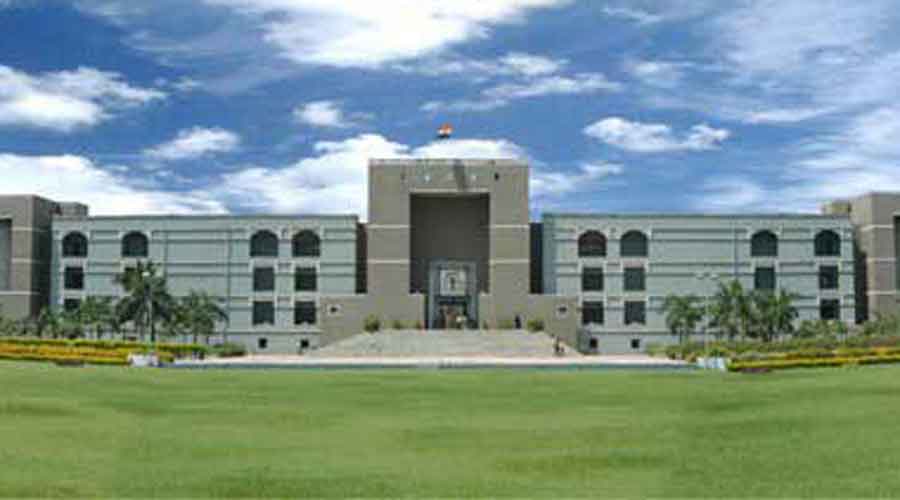
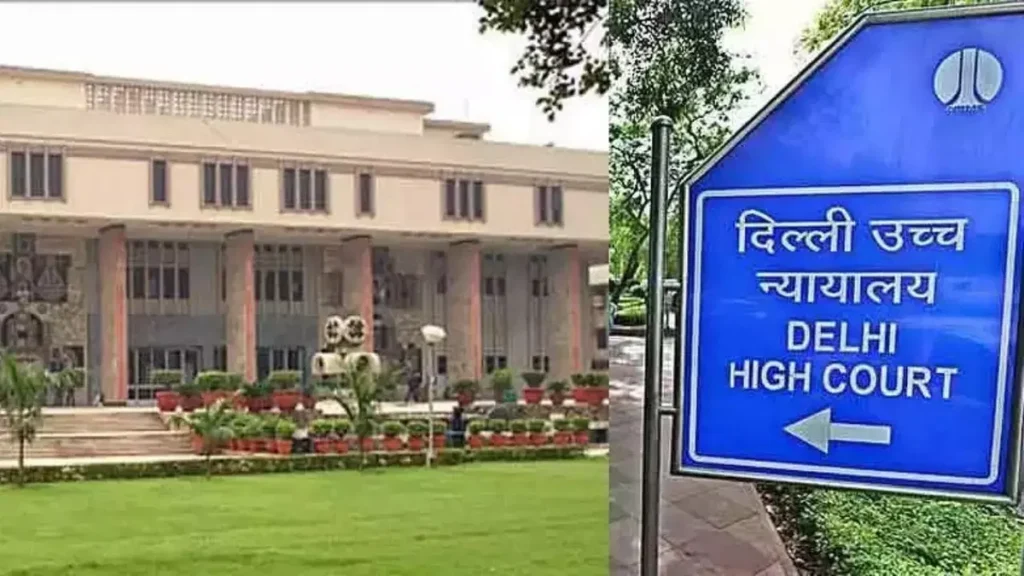
In a recent development, the Gujarat High Court reprimanded an advocate for his practice of simply reading out a petition in court and demanding that the entire document be perused by the judges.
Judicial Time Deemed Wasted on Mere Reading
A division bench, comprising Chief Justice Sunita Agarwal and Justice Aniruddha Mayee, criticized this approach as a “criminal waste of judicial time.” The judges stressed that lawyers should engage in active advocacy rather than relying solely on reading verbatim from the petition.
Advocate’s Defense and Court’s Response
The advocate defended his stance, asserting that courts exist to deliver justice and should not bypass a thorough reading of petitions. Chief Justice Agarwal cautioned against taking undue liberties and insisted that the court was well aware of its role in delivering justice.
Adjournment with a Clear Directive
The court adjourned the hearing to September 8, issuing a clear directive to the advocate to present arguments instead of reading from the petition.
Case Background
The case at hand concerns the acquisition of land in July 1987. The petitioners, who were landowners, expressed dissatisfaction with the compensation awarded by the acquisition authorities.
Court’s Query and Advocate’s Response
The court inquired whether the petitioner’s counsel could provide acquisition notifications to clarify whether the petitioners’ lands were initially part of the acquisition proceedings. However, the advocate requested the court’s patience and opted to read from the documents in the petition.
Request for Recusal
During the hearing, the counsel also sought leave to file an application for recusal, leading to an exchange with Chief Justice Agarwal. However, the Chief Justice clarified her intention to continue presiding over the case.
Two Approaches to Arguing the Case
The advocate proposed “two methods of arguing” the case, one involving pointing out aspects of the petition and the other consisting of reading the entire document to explain the issues. The bench firmly rejected the latter approach, emphasizing the counsel’s responsibility to argue effectively.
Court’s Final Word
The Gujarat High Court made it abundantly clear that it would not permit the counsel to read the entire petition in court. Instead, they encouraged the lawyer to argue the case in the manner expected of legal counsel. The court requested that the advocate return for the next hearing fully prepared to present arguments, rather than relying on reading from the petition.
A total of 1,000 foreign delegations received practical UPI demonstrations from the central government. Foreign delegates who came to India ahead of the G20 meeting praised the initiative and reported having a “great” experience using the Unified Payments Interface technology after having the chance to do so. “I have been using the G20 UPI application…has been great,” one of the participants stated. On Monday afternoon, I was able to complete my first transaction. Made a transaction in some small stores… Actually, we were purchasing Coca-Cola, candy, and medicine, and it was great. Using the UPI network has been a truly wonderful experience for me as someone who is from overseas.
Another participant said, “I’ve never used the UPI network before. I’ve traveled to India a few times, but I’ve always been restricted to using cash and credit cards.
The government highlighted the nation’s digital public goods and its ‘Digital India’ project in light of India’s G20 Presidency. In support of this, the central government provided about 1,000 foreign delegates attending the event with hands-on demonstrations. These demonstrations highlighted the UPI wallet technology and showed how simple it is to make payments utilizing this domestic option.
According to a government official who spoke to ANI previously, “Foreign delegates or participants will be given 500-1,000 in their UPI wallets for doing UPI transactions.” The official added that it has budgeted roughly 10 lakhs for it.
For retail digital payments, the UPI payment system has grown wildly popular in the nation and is being adopted at an accelerated rate. In August, the number of UPI (Unified Payments Interface) transactions surpassed 10 billion. Drumroll, please! The National Payments Corporation of India (NPCI) has previously posted on X. With an astounding 10 billion or more transactions, UPI has recently broken records. Join us as we commemorate this amazing accomplishment and the potential of digital payments. Let’s maintain the momentum and continue to transform how we do transactions via UPI.
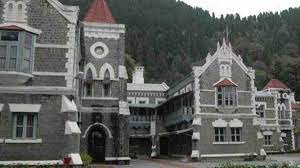
In a significant development, the Uttarakhand High Court has issued an order directing the Central Bureau of Investigation (CBI) to investigate allegations of illegal construction within the Corbett Tiger Reserve and the reported felling of nearly 6,000 trees to facilitate the creation of a tiger safari. This decision comes as a response to both a suo motu public interest litigation (PIL) initiated by the Court and a plea filed by a Dehradun resident, Anu Pant.
Serious Allegations Against State Authorities
A division bench of Chief Justice Vipin Sanghi and Justice Alok Kumar Verma highlighted the gravity of the allegations, implicating higher authorities of the state, including former forest minister Harak Singh Rawat. The Court asserted that it could not merely stand by as a spectator in the face of these allegations.
The Court further expressed the view that suspending some officers would not suffice and called for a comprehensive CBI probe into the matter, emphasizing the need for cooperation from all state authorities.
Prima Facie Case for CBI Investigation
The bench stated, “We are satisfied that the material on record does disclose a prima facie case calling for an investigation by the Central Bureau of Investigation. Therefore, the present matter is referred to CBI for proper and uninfluenced investigation in accordance with the law.”
Unapproved Construction and Tree Felling
The case revolves around the unauthorized construction of administrative buildings, internal roads, service roads, guard huts, and animal holding areas within the sensitive areas of the Corbett Tiger Reserve, without the necessary administrative and financial approvals. Initially, authorities claimed that only 163 trees were cut for these purposes, but subsequent reports revealed that nearly 6,000 trees had been felled.
Despite several inquiries into the role of officials and alleged violations of environmental laws, the Court noted that no substantial action had been taken against those responsible.
Role of Former Forest Minister and Divisional Forest Officer
A report by a Central Empowered Committee formed by the National Green Tribunal implicated the former forest minister, Harak Singh Rawat, in the planning and execution of illegal constructions and unauthorized buildings within the tiger reserve. The report also named the then Divisional Forest Officer (DFO) Kishan Chand, alleging a history of irregularities and questionable conduct.
It was alleged that the minister disregarded advice from the State vigilance department, the Principal Chief Conservator of Forests (PCCF), and Head of Forest Force (HoFF) when appointing Kishan Chand to sensitive positions.
Legal Representation
Advocate Abhijay Negi represented the petitioner, Anu Pant, while the State of Uttarakhand was represented by Special Counsel Atul Sharma, Additional Chief Standing Counsel Rajeev Singh Bisht, and Standing Counsel Gajendra Tripathi. The Union of India was represented through its Standing Counsel VK Kapruwan.
To accommodate the increasing number of tourists visiting Venice, the Italian government plans to start charging 5 euros for visitors the following year.
The Reserve Bank of India (RBI) will exhibit a number of cutting-edge financial innovations at the G20 Summit that have the potential to fundamentally change the financial environment. The RBI pavilion at the summit is home to five unique displays, each of which emphasizes a different facet of Indian financial innovation. One of the highlights of the show is the Public Tech Platform (PTP) for Frictionless lending, a breakthrough created to alter rural financing.
New Delhi According to two senior officials on Tuesday, India will demonstrate its fintech prowess at the G20 Summit, including the ability to approve bank credits to farmers and small businesses in minutes, develop affordable global payment solutions to compete with MasterCard and Visa and develop applications that let non-residents pay their utility bills from abroad.
The central bank digital currency (CBDC), UPI One World, RuPay On-The-Go, and Bharat bill payment system (BBPS) are the five such products that the Reserve Bank of India (RBI) would present at the Summit, according to one of them.
The RBI, he continued, would conduct live demonstrations of these services, and a few of the pilot’s participating banks will use live digital rupee transactions to promote India’s digital currency.
UPI is one of India’s major triumphs, and numerous nations are already eager to either have the technology or to connect it with their digital currencies, according to the authorities. “The UPI One World will onboard the visitors to the system without having a bank account in India and they will benefit in the process to have a first-hand experience of breezing payments through UPI,” the official stated above.
He added that the RuPay On-The-Go, another fintech solution, demonstrates the adaptability of domestic card scheme linked items on par with such international products by enabling clients to conduct contactless transactions using digital accessories such as watches and keyrings.
Additionally, RBI will highlight BBPS as a choice for international bill payments. He stated that it can be used by non-resident Indians (NRIs) to send various kinds of payments to Indian utilities from outside.
A second official emphasized the significance of these fintech solutions and cited the RBI’s pilot project, which provided loans to farmers and the dairy industry in under 15-20 minutes, as an illustration of the PTP’s frictionless credit system.
While Kisan Credit Cards (KCC) provide a revolving credit facility to farmers, manual processing of such loan applications takes 2-4 weeks, is laborious, and incurs operational costs. He claimed that thanks to digital technology, KCC loans up to 1.6 lakh per farmer are now instantly available without the need for collateral.
He continued by saying that the pilot program was successfully operating in a few regions of Madhya Pradesh and Maharashtra that used a state-created digital land records database to assess creditworthiness. Farmers can now use their cellphones or tablets at any time to apply for new KCC loans as well as KCC renewal, he said. In Gujarat, a similar digital pilot program was started that gave dairy farmers credit based on the data from their milking operations.
According to the degree of digitization of essential data, “RBI plans to extend this facility in all areas”—loans to micro, small and medium enterprises (MSMEs), personal loans, school loans, and so on.
The first official stated that an experience center would be made available for the delegates and visitors to see an interactive demonstration of the entire process, from onboarding to sanction and disbursement of the KCC and dairy loans in an entirely digital manner in a matter of minutes, revolutionizing rural credit.
In response to a question on the idea of “one nation, one election” in Bhopal, Kumar stated that the RP Act and constitutional provisions oblige the poll commission to “deliver elections before the time.”
Rajiv Kumar, the chief election commissioner, talks at a press conference in New Delhi on March 29, 2023, to announce the dates of the Karnataka Legislative Assembly elections. PTI Image/File
According to PTI, Chief Election Commissioner Rajiv Kumar stated on Wednesday that the Election Commission of India (ECI) is prepared to operate in accordance with the Representative of the People (RP) operation and constitutional requirements in the framework of “one nation, one election.”
In response to a question on the idea of “one nation, one election” in Bhopal, Kumar stated that the RP Act and constitutional provisions oblige the poll commission to “deliver elections before the time.”
Legal requirements state that this period of time is five years from the day of the first Parliamentary session following the formation of a new administration. Six months before the conclusion of this period, the ECI may announce the general elections, according to Kumar. Elections for the assembly follow the same rules. According to him, the ECI is authorized and prepared to conduct elections in accordance with the law.
In order to engage with political parties, the government, and enforcement agencies about election preparation in Madhya Pradesh, where elections are scheduled for November-December, Kumar and other top ECI officials traveled to Bhopal. The CEC also stated that the state, which has just under 5.5 crore voters, will issue its final voter list on October 5.
The issue of “one nation, one election” was brought to the forefront last week when the Centre established an eight-member team to be chaired by former President Ram Nath Kovind to examine the viability of holding simultaneous polls across the country.
The Supreme Court has taken up the problem of freebies in elections, according to the CEC, which also noted that the top electoral body had produced a thorough report in this regard.
Ten state assemblies’ tenure are set to expire prior to or around the 2024 Lok Sabha elections.
A commission led by President Ramnath Kovind has been established by the Centre to determine whether simultaneous elections for the Lok Sabha and state legislatures are feasible in India. (Image from a file: The Indian Express)
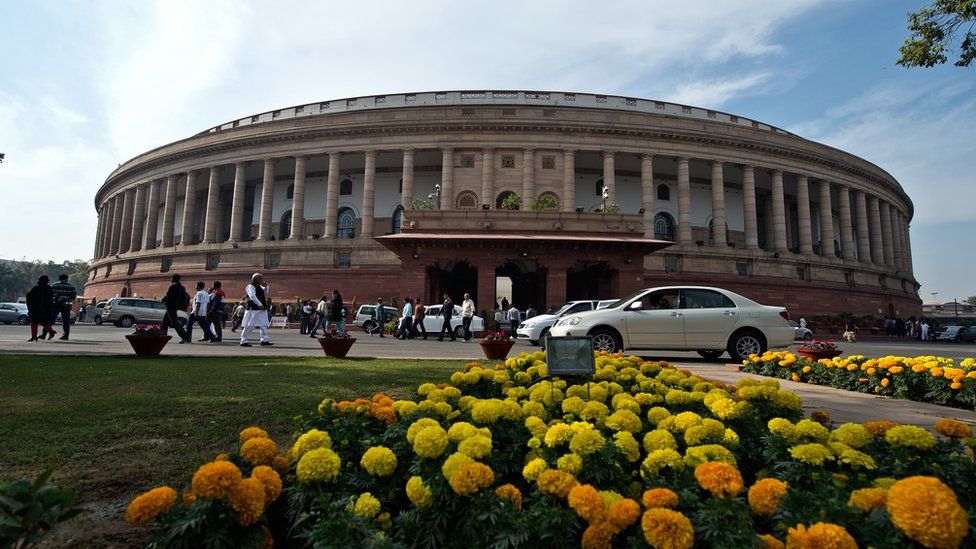
In advance of the special session of Parliament that will take place from September 18 to 22, the Centre’s decision to form a committee under the leadership of former President Ramnath Kovind to examine the viability of holding simultaneous Lok Sabha and Assembly elections, as was the case until 1967, has generated buzz in political circles.
Since the Narendra Modi administration of the BJP-led NDA took office at the Center in 2014, there has been growing buzz surrounding the concept of “One Nation One Election,” which was first proposed by the Election Commission in 1982 and accepted by the Law Commission in 1999. Atal Bihari Vajpayee, a former prime minister, supported it in 2003, and Lal Krishna Advani, a senior BJP leader, supported it once more in 2010.
Politicians from all parties have shown support for the concept of conducting simultaneous polls, although logistical concerns still exist. The Law Commission, Niti Aayog, the standing committee on law and justice, as well as the EC, have all supported the concept, citing the impact on governance brought on by the model code of conduct’s ongoing enforcement.
Simultaneous elections would provide the Election Commission with logistical difficulties, and their implementation would necessitate changes to at least five Constitutional Articles. According to experts, amendments to Articles 83 (duration of houses of Parliament), 85 (sessions of Parliament, prorogation, and dissolution), 172 (duration of state legislatures), 174 (sessions of state legislatures, prorogation, and dissolution), and 356 (President’s rule) will need to be approved by at least 50% of the states in the union.
Ten states with upcoming elections could have elections in addition to the Lok Sabha elections if the proposal is successful in winning support from Parliament. These assemblies’ terms end either prior to or close to the Lok Sabha elections that are slated to take place in 2024.
By the end of the year, elections for five states’ assemblies are scheduled: Madhya Pradesh, Rajasthan, Telangana, Mizoram, and Chhattisgarh. However, if the general elections are moved up, polls in Andhra Pradesh, Arunachal Pradesh, Odisha, Sikkim, and Jharkhand might be held concurrently with the Lok Sabha elections.
Schedule for when terms in states and union territories will expire: complete list
Mizoram: December 2023
Chhattisgarh, Madhya Pradesh, Rajasthan, Telangana: January 2024
Andhra Pradesh, Arunachal Pradesh, Odisha, Sikkim: June 2024
Haryana, Maharashtra: November 2024
Jharkhand: December 2024
Delhi: February 2025
Bihar: November 2025
Assam, Kerala, Tamil Nadu, West Bengal: May 2026
Puducherry: June 2026
Goa, Manipur, Punjab, Uttarakhand: March 2027
Uttar Pradesh: May 2027
Gujarat, Himachal Pradesh: December 2027
Meghalaya, Nagaland, Tripura: March 2028
Karnataka: May 2028
The Jammu and Kashmir UT was established when the last Assembly was dissolved in 2018, however, it is still unclear when its tenure will end.
The Delhi High Court has issued a significant order directing the Central government and domain name registrars (DNRs) to block and suspend multiple fraudulent websites that were impersonating US-based investment advisory and asset management services firms, Cresset Capital Management and Cresset Administrative Services Corporation. The order, delivered by Justice Prathiba M Singh on September 1, also involves an investigation by the Delhi Police’s cyber cell due to the websites’ illicit collection of money from unsuspecting consumers.
Impersonation and Collection of Funds:
The plaintiff, Cresset, had filed the plea, alleging that an individual named Karthikeyan Ganesan had registered several domain names using the “Cresset” mark. Consumers had reported investing money in these websites, believing them to be affiliated with Cresset. The fraudulent websites had replicated Cresset’s content, making it difficult for users to discern their fraudulent nature.
Court’s Observations:
Justice Singh examined the websites and found that they were blatantly using the Cresset name and logo with the sole intention of impersonating the company and collecting money from unsuspecting individuals. The Court noted that all domain name registrations were privacy protected, making it challenging to identify the individuals behind the websites. Consequently, the Court ordered the immediate suspension of these domain names to prevent further deception of innocent individuals.
Comprehensive Investigation:
In addition to blocking the websites, the Court directed a thorough investigation through the Delhi Police’s cyber cell to uncover the individuals responsible for these fraudulent websites. The investigation will include inquiries into any bank accounts opened by the website proprietors and the issuance of freezing orders, as necessary.
Legal Representation:
Cresset was represented by Senior Advocate Saurabh Kirpal, along with advocates Anuj Berry, Sourabh Rath, Vibhore Yadav, and Gauri Pasricha.
The Ministry of Electronics and Information Technology (MEITY) Department of Technology (DoT) was represented by Central Government Standing Counsel Harish Vaidyanathan Shankar, along with advocates Gokul Sharma, Srish Kumar Mishra, Sagar Mehlawat, Alexander Mathai Paikaday, Krishnan V, and M Sriram.
This legal action underscores the importance of protecting consumers from fraudulent online activities and impersonation.
Mamata Banerjee, the chief minister of West Bengal, asserted on Tuesday that the country should only be referred to as Bharat while asserting that India is Bharat.
She made reference to the issue surrounding a G20 dinner invitation addressed to the “President of Bharat,” saying that everyone in the world is familiar with India.
“I’ve heard that the name of India is changing. Bharat is written on the G20 invitation that was sent out under the honorable president’s name. What’s novel about the fact that we call the nation Bharat? When we say India in English… Nothing new needs to be done. Our nation is known as India” She addressed a government gathering here by enquiring as to what had suddenly occurred that required the country’s name to be altered.
“History is being rewritten in the country,” she continued.
Additionally, Banerjee criticized Governor CV Ananda Bose, claiming that he was obstructing the passage of laws approved by the state assembly.
“The governor’s actions represent an attempt to stifle state government. He can’t put off paying his bills, she said.
If necessary, she declared, she will stage a dharna outside the Raj Bhavan.
The governor, according to the chief minister, is meddling with how the state’s colleges, universities, and schools are run.
We will withhold the cash if the governor keeps meddling with how universities run, the woman said.
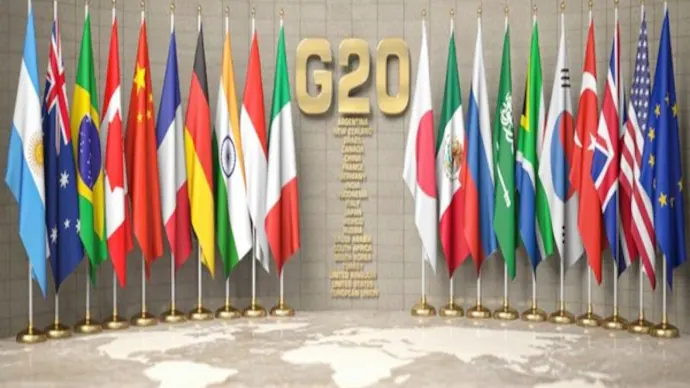
The G20 Summit, scheduled to take place in India’s National Capital, New Delhi, from September 8 to September 10, is poised to bring together leaders from the world’s top 20 economies. The summit carries the weighty agenda of seeking solutions to pressing global challenges, particularly in the backdrop of escalating tensions surrounding the Ukraine conflict. Here is a breakdown of confirmed attendees, likely participants, uncertain attendance, and notable non-attendees:
Confirmed Attendees:
U.S. President Joe Biden: President Biden is set to attend and will address key issues, including the social impact of the Ukraine conflict, clean energy transition, climate change, and bolstering multilateral banks to combat poverty.
Canadian Prime Minister Justin Trudeau: Trudeau has confirmed his participation and expressed disappointment over Ukraine’s President Zelenskiy not being invited, unlike the previous year.
British Prime Minister Rishi Sunak: Sunak will make his inaugural official visit to India as the UK’s Prime Minister during the summit.
Japanese Prime Minister Fumio Kishida: As the current G7 chair, Kishida is expected to lead criticism against Russia regarding the Ukraine conflict.
Australian Prime Minister Anthony Albanese: Australia views the G20 as a crucial forum for global economic cooperation. Albanese’s visit to India is part of a larger three-nation tour, including Indonesia and the Philippines.
South Korean President Yoon Suk-yeol: Yoon has confirmed his attendance and aims to garner international support against North Korea’s missile provocations and nuclear threats while focusing on denuclearization.
French President Emmanuel Macron: Macron will attend the summit and hold bilateral talks with Indian Prime Minister Modi.
Argentina’s President Alberto Fernandez: Fernandez is set to attend the summit.
Nigeria’s President Bola Tinubu: Tinubu has already arrived in the National Capital and aims to promote foreign investment in Africa’s largest economy and mobilize global capital for infrastructure development.
German Chancellor Olaf Scholz: Scholz has stressed the significance of the G20 summit despite the absence of Russia and China.
Likely Attendees:
South African President Cyril Ramaphosa: Ramaphosa has expressed full support for India’s G20 presidency and intends to attend, as India seeks permanent African Union membership in the G20.
Turkish President Tayyip Erdogan: Erdogan plans to visit India and prioritize discussions on climate change.
Saudi Arabia’s Crown Prince Mohammed bin Salman: While not officially confirmed, media reports suggest his attendance.
Bangladesh Prime Minister Sheikh Hasina: Likely to attend, Hasina is said to be organizing a meeting with French President Macron in New Delhi following the summit’s conclusion.
Uncertain Attendance:
Brazil’s President Luiz Inacio Lula da Silva: Brazil is expected to assume the G20 presidency in December but has not confirmed attendance.
European Union: The presence of European Union leaders, Ursula von der Leyen and Charles Michel, remains unconfirmed.
Mexican President Andres Manuel Lopez Obrador: Multiple media reports suggest Obrador is unlikely to attend.
Notable Non-Attendees:
Chinese President Xi Jinping: Jinping will not be present in India for the upcoming G20 Summit and has designated Premier Li Qiang to represent China at the event.
Russian President Vladimir Putin: Prior to the G20 Summit, Putin conveyed to Prime Minister Modi his decision not to attend. Instead, Russia will be represented by its Foreign Minister, Sergey Lavrov.
As world leaders gather for the G20 summit, the focus remains on addressing critical global challenges, despite the notable absence of some leaders due to geopolitical tensions and other factors.
According to former Lok Sabha secretary general PDT Achary, rules of procedure prohibit the Constitution from being altered through a resolution in Parliament. He further notes that any change to the country’s name will necessitate other Constitutional amendments.
An unexpected controversy has been sparked by a dinner invitation sent on President Droupadi Murmu’s behalf to international leaders traveling in New Delhi this week for the G20 Summit. The fact that Murmu’s title on the invitation is “President of Bharat” rather than “President of India,” as has traditionally been the case, has sparked rumors that the Prime Minister Narendra Modi-led government at the Centre is considering a proposal to formally rename the nation Bharat and remove the word “India” from the Constitution entirely.
Tuesday’s media reports that the Centre could introduce a resolution to this effect during the five-day special session of the Parliament, which will be held from September 18–22, gave rise to more rumors. On its part, the government has dismissed rumors about the name change as untrue, but it has criticized opposition parties for objecting to the usage of the Bharat nomenclature.
How does the Constitution’s Article 1 apply to the discussion?
The overall constitutional framework is established by Article 1 of the Constitution. The nation’s federal system, name, and sovereign territory are all spelled out in this critical declaration, along with other important details.
Article 1’s wording declares that “India, that is, Bharat, shall be a Union of States.” Any change to the nation’s name will necessitate amending Article 1 of the Constitution.
However, according to constitutional experts, if and when the Centre proposes a resolution to change the nation’s name, the procedure will call for multiple revisions to the Constitution. PDT Achary, a constitutional expert and former secretary general of the Lok Sabha, told Financial Express Digital that it would take a herculean effort.
“First and foremost, the name of the nation (India, i.e., Bharat), as stated in Article 1 of the Constitution, will need to be modified. The subject is India’s federal government, and the name of the nation is included.
Can ‘India’ become ‘Bharat’ with a resolution in Parliament?
According to Achary, there is no process in place that would allow the Constitution to be changed through a House resolution. “The government is rumored to be sending a resolution to the House. There is no process by which a resolution may be introduced or the Constitution changed. Such a technique is not recognized by the constitutional principles of procedure, the speaker claims.
‘India that is Bharat’
Experts speculate that the current administration may have been told to use the names interchangeably or alternatively, meaning that they can continue to refer to India as “Bharat” without making any changes. That perception, however, might not be accurate. “‘Bharat’ is a descriptive word. India is the name of the nation. There can only be one official name for a nation. Having multiple official names can only lead to confusion, both inside and outside of the nation. “‘Bharat’ is not recognized as the official name of the nation by the Constitution,” claims Achary.
In response to a question, numerous ministers cited the Constitution, which states that either of the two names can be used to refer to the nation officially and uses the phrase “India, that is Bharat.”
According to experts, the current government may have been urged to use the names interchangeably or alternatively, suggesting that they can use “Bharat” in place of “India” without making any changes. That perception might not be accurate, though. “The term ‘Bharat’ is a descriptor. The nation is called India. A nation may only have one official name. Multiple official names will simply increase confusion, both inside and outside the country. ‘Bharat’ is not recognized as the nation’s official name under the Constitution,’ claims Achary.
In response to a question, numerous ministers cited the Constitution, which states that “India, that is Bharat,” can be used to refer to the nation in either official capacity.
“There is not a single article of the Constitution that uses the name Bharat. There is just India. The Republic of India is the official name of the nation. However, there must be a term in Hindi because it is the official language of the Union according to the Constitution. Hindi translations are necessary. Therefore, we utter “Bharat ke Rashtrapati.” But nowhere in the Constitution will you find the word “Rashtrapati.” The word President is the only one mentioned.
Achary points out that even the Hindi version of the Constitution, authenticated by the constituent Assembly, Article 1 is worded as “Bharat arthaat India”. “India is the official name here as well. That makes it clear that India is the official name of the country.”
As stated by the Supreme Court in 2016: “India or Bharat”
A PIL that demanded that the Bharat nomenclature be used for all purposes instead of India was dismissed in 2016 by a Supreme Court panel that included the former Chief Justice of India, TS Thakur, and Justice UU Lalit. India’s “Bharat… Go ahead and call it Bharat if you want to. If someone wants to refer to it as India, let him. The court had ruled that there had been no change in circumstances warranting revision of Article 1 of the Indian Constitution.