India proudly holds the distinction of having the world’s second-largest MSME base, trailing only behind China. This dynamic sector plays a pivotal role by offering an extensive array of services and contributing to the production of over 6,000 diverse products, ranging from traditional to cutting-edge innovations. Fueled by the Indian government’s emphasis on fostering a self-reliant economy, known as Atmanirbhar Bharat, the MSME sector is on a trajectory of rapid expansion and seeks deeper integration with global value chains.
Government Support and Policy Initiatives
MSMEs in India benefit significantly from targeted government policies. Initiatives such as sector-specific Production-Linked Incentives (PLI) programs, region-focused incentives, and schemes promoting technical skills and digital advancements receive consistent backing. Special relief measures are also rolled out in response to unforeseen events like the COVID-19 pandemic, underlining the government’s commitment to the sector’s resilience.
Quantifying the MSME Landscape
Estimates indicate a robust MSME ecosystem, comprising approximately 63.05 million micro-industries, 0.33 million small enterprises, and around 5,000 medium enterprises. Uttar Pradesh claims the largest share at 14.20%, closely trailed by West Bengal at 14%, with Tamil Nadu and Maharashtra contributing 8% each.
Revised Criteria for MSME Qualification
Since July 1, 2020, a revised categorization defines MSMEs in India based on updated criteria. The classification hinges on both investment and turnover for entities operating in manufacturing and services sectors. Micro, small, and medium designations are determined by specific thresholds for plant and machinery/equipment investment, coupled with annual turnover limits, reflecting the government’s commitment to fostering a thriving MSME landscape.
In a recent development, the Goods and Services Tax Network (GSTN) has introduced a crucial functionality on the GST portal to address disparities between Input Tax Credit (ITC) figures in GSTR-2B and those claimed in GSTR-3B. This move aligns with the GST Council’s directive to streamline reporting and ensure accuracy in tax credit utilization.
Intelligent Comparison of ITC Figures
The newly implemented feature systematically compares the ITC declared in GSTR-3B/3BQ with the ITC available in GSTR-2B/2BQ for each return period. If the claimed ITC in GSTR-3B surpasses a predefined limit or the percentage difference exceeds a configurable threshold, taxpayers are promptly notified through an automated intimation in the form of DRC-01C.
Responsive Action with Form DRC-01C Part B
Upon receiving an intimation, impacted taxpayers are required to file a response using Form DRC-01C Part B. They have the flexibility to provide details of the payment made to reconcile the difference using Form DRC-03. Alternatively, they can furnish an explanation for the disparity or opt for a combination of both options.
Consequences of Non-Compliance
It is crucial for impacted taxpayers to file a response in Form DRC-01C Part B within the stipulated timeframe. Failure to do so will result in the inability to file subsequent period GSTR-1/IFF. This emphasizes the importance of prompt and accurate reconciliation to maintain compliance with GST regulations.
In a positive trend, formal job creation witnessed a substantial rebound under the Employees’ Provident Fund Organisation (EPFO) in November 2022. Provisional data released by the labor ministry on Friday revealed a remarkable growth of 25.6%, adding 1.62 million net new subscribers compared to the 1.29 million added in October 2022.
Year-on-Year Comparison
Comparing year-on-year figures, November 2022 showcased a 16.5% increase in net new additions, with 1.62 million subscribers, compared to 1.39 million in November 2021.
October Decline
The rebound in November comes after a dip of 30.2% in net new subscriber additions in October, which saw 1.29 million additions compared to the 1.68 million in September.
Fiscal Year Overview
Cumulatively, the net new subscribers added to EPFO in the current fiscal year are as follows: 1.29 million (April), 1.21 million (May), 1.42 million (June), 1.55 million (July), and 1.53 million (August).
Demographic Insights
Of the total 1.62 million net subscribers added in November, 0.89 million were new members entering the ambit of EPF & MP Act, 1952 for the first time—a notable increase from October’s 0.728 million. Additionally, 1.12 million net subscribers re-joined by transferring their accumulations from previous PF accounts to the current PF account, rather than opting for final withdrawal.
Age Group Dynamics
The data reveals that among the new members, 0.27 million were in the 18-21 age group, followed by 0.23 million in the 22-25 years age bracket. A significant 56.6% of the total new members belonged to the age group of 18-25 years, signaling a trend of youth employment.
The government has issued a warning to MSMEs (Micro, Small, and Medium Enterprises) against a deceptive portal, eudyogaadhaar.org, falsely claiming to be a government-approved consultancy for Udyam registration. Through its PIB Fact Check Twitter handle, the government exposed the fake portal, which charges Rs 2,700 under the pretense of “printing the registration certificate.”
Official Portal Clarification
The official Udyam registration portal, udyamregistration.gov.in, is the sole platform authorized for MSME registration, according to the government. The warning emphasized that no other private online or offline entity is authorized to conduct MSME registration activities. The government portal ensures a free-of-cost, paperless registration process based on self-declaration, with only the Aadhaar number required.
Proliferation of Fraudulent Portals
Despite the official portal’s prominence, various deceptive MSME registration portals such as udyamregister.org, udyogadharcertificate.in, udyamregistration.co, udyam-registration.co.in, etc., continue to operate, offering registration support and potentially misleading businesses.
Statistics and Continued Vigilance
The official Udyam portal achieved over 1 crore MSME registrations in August, marking a significant milestone since its launch in July 2020. While a small percentage of enterprises have withdrawn their registrations, the government remains vigilant against fraudulent activities. As of July 15, 2022, 35,501 enterprises withdrew their Udyam registrations, constituting 0.35% of the total registrations on the portal. The government encourages MSMEs to exercise caution and utilize the official portal for authentic registration processes.
In the ever-evolving landscape of insurance, customer-centricity takes center stage, ushering in a new era of convenience and adaptability. The once obligatory realm of motor insurance has undergone a profound shift, embracing a proactive customer-first approach, akin to health and life insurance.
Technology’s Impact After the Pandemic
The global shift triggered by the pandemic prompted regulatory authorities to reshape motor insurance, infusing inclusivity and user-friendliness. Technological advancements and shifting consumer expectations played pivotal roles, prompting the industry to discard unnecessary costs for personalized, transparent experiences.
Innovative Initiatives Driving Change
1. Pay as You Drive (PAYD): A groundbreaking innovation emerged with the introduction of PAYD policies. Leveraging telematics, these policies assess individual vehicle usage, ensuring customers only pay for the coverage they require. This approach gained prominence during the pandemic, addressing the incongruity of full premiums amid limited vehicle usage.
2. Digitized Solutions: The digitalization of motor insurance offers seamless access and operational efficiency across various touchpoints. From policy discovery to management, claims processing, and post-sales service, customers navigate a digital realm that provides convenience, safety, and prompt assistance through apps and portals.
Embracing a Customer-Centric Future
As motor insurance continues its transformation, these initiatives underscore a shift from rigid and costly structures to adaptive, customer-centric models. The integration of technology not only simplifies processes but also empowers customers, marking a significant leap forward in the insurance landscape.
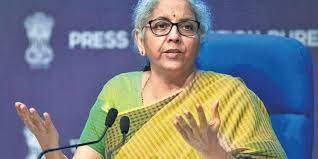
Finance Minister Nirmala Sitharaman asserted the Union government’s desire to bring petrol and diesel within the ambit of Goods and Services Tax (GST), criticizing the Congress for what she deemed “double standards” on the issue. The Bharatiya Janata Party (BJP) and the central government have consistently supported bringing petroleum products under the GST, emphasizing the potential benefits for the public.
Call for Consistent Support
Sitharaman called attention to the BJP’s ongoing advocacy for including petrol and diesel in the GST regime, highlighting its positive implications for the people. She urged Congress general secretary Priyanka Gandhi Vadra, who has expressed a similar viewpoint, to align the state governments of Congress with this stance in the GST Council.
Challenging Congress’s Stance
The Finance Minister urged the media to scrutinize the Congress’s stance, emphasizing the need for consistency in its position on bringing petrol and diesel under GST. She questioned the party’s commitment to the cause and suggested that if Priyanka Gandhi Vadra supports the move, she should actively pursue agreement from Congress-led state governments.
Global Conflicts and Economic Impact
Addressing concerns about the Israel-Hamas conflict’s impact on the country’s economy, Sitharaman acknowledged the potential influence of global conflicts on crude oil prices. She assured that the government has been vigilant in monitoring the situation, pointing out that India has imported cost-effective crude oil from Russia amid the Russia-Ukraine war.
Government’s Measures Against Inflation
Sitharaman highlighted the government’s proactive measures to control inflation, citing ongoing efforts to manage prices of essential commodities like tomatoes, flour, and pulses. She contrasted this with the previous Congress government’s record, stating that food inflation remained above 10% for 22 months without effective control measures.
In a recent event inaugurating 12 GST Suvidha Kendras in Gujarat, Finance Minister Nirmala Sitharaman emphasized the Finance Ministry’s commitment to not only bolstering GST revenue but also ensuring the inclusion of all business establishments under its ambit. The Suvidha Kendras aim to facilitate seamless GST registration and address concerns for businesses.
GST’s Positive Impact and Revenue Growth
Sitharaman highlighted the success of GST in the “one nation one tax” framework, noting a consistent increase in GST revenue annually and monthly. She credited GST for reducing tax rates on various items, providing relief to businesses. The elimination of double taxation has contributed to the upward trajectory of GST collections.
Challenges in Comprehensive Adoption
Despite the positive trends, Sitharaman acknowledged that certain establishments choose to stay outside the GST framework, remaining informal entities. She expressed the need for all businesses to come under the tax net, not just for immediate tax contributions but for the holistic benefit of the economy.
Formalizing the Economy for Collective Growth
Sitharaman stressed that staying outside the formal economy is detrimental to both the country and individuals. Formalization, she argued, is essential for capturing the true strength of the economy. The Finance Ministry aims to encourage businesses to join the formal economy, promoting transparency and contributing to the overall growth and development of the nation.
In a targeted operation preceding the Deepavali festival, the Food Safety and Standards Authority of India (FSSAI) conducted a special drive in Coimbatore, seizing and subsequently destroying 501.3 kg of sweets. The crackdown aimed at curbing the excessive use of artificial colorants in these festive treats.
Widespread Inspections Yield Results
Nine dedicated teams from FSSAI undertook inspections at 104 locations, including manufacturers, wholesale dealers, seasonal producers, and retailers, from November 1 to 6. The seized sweets, valued at approximately ₹1.10 lakh, encompassed popular varieties such as laddoo and jalebi.
Artificial Colorant Overuse Uncovered
The primary issue identified during the inspections was the indiscriminate use of artificial colorants, surpassing permissible limits. Seven samples from the confiscated sweets were sent to a government laboratory for examination. Notices were issued to 45 traders under Section 55 of the Food Safety and Standards Act, 2006, for violations.
Hygiene Concerns Prompt Action
During the six-day drive, FSSAI discovered an unhygienic sweet manufacturing unit. The unit was promptly instructed to cease operations and address the identified anomalies, with a follow-up inspection planned.
Penalties for Violations
FSSAI imposed fines of ₹2,000 each on seven shops employing banned plastic carry bags for delivering sweets. Additionally, 16 traders selling prohibited tobacco products faced fines of ₹5,000 each.
Continued Vigilance and Public Engagement
FSSAI reassured continued surprise checks in sweet shops and manufacturing units leading up to Deepavali. Customers are encouraged to report grievances through the FSSAI’s WhatsApp helpline at 94440-42322 or the TN Foodsafety Consumer App.
In a recent announcement, the Telecom Regulatory Authority of India (TRAI) has granted an extension for the submission of comments and counter comments on its Consultation Paper (CP) titled “Digital Inclusion in the Era of Emerging Technologies.”
The original deadline for stakeholders to submit their comments was set for 16th November 2023, with the counter comments deadline on 1st December 2023. However, due to requests from stakeholders citing festival holidays and ongoing multiple consultations, TRAI has decided to extend the timeline.
The new deadlines are as follows:
Submission of comments: Extended until 15th December 2023
Counter comments: Extended until 29th December 2023
For any clarifications or further information, stakeholders can contact Shri Anand Kumar Singh, Advisor (CA&IT), TRAI, at Telephone: 011-23210990 or via email at advisorit@traigov.in.
This extension reflects TRAI’s commitment to ensuring a thorough and inclusive consultation process in the rapidly evolving landscape of emerging technologies.
In a strategic move to fortify its Micro, Small, and Medium Enterprises (MSME) sector, the Kerala government has unveiled a comprehensive insurance initiative. The pioneering scheme, facilitated through a Memorandum of Understanding (MoU) with four public sector insurance companies, aims to shield MSMEs from diverse risks, fostering a resilient business environment.
Reimbursement Reinforcement
Under the scheme, MSMEs stand to benefit from a substantial advantage—50% reimbursement of their annual premium. This financial safeguard is poised to enhance confidence within the sector and encourage its growth amid a competitive business landscape.
Digital Boost with Web Portal Launch
Industries Minister P. Rajeeve marked the occasion by launching a dedicated web portal for the scheme (http://msmeinsurance.industry.kerala.gov.in/). This online platform is designed to streamline the insurance process, making it more accessible for MSMEs.
Catalyzing Confidence and Coverage
With over three lakh MSMEs in Kerala, the government’s ambitious initiative seeks to address a critical gap, as only around 15,000 enterprises currently possess insurance coverage. The insurance scheme encompasses risks ranging from natural disasters and fire accidents to theft, accidents, and market fluctuations, providing a holistic protective umbrella.
Targeted Eligibility Criteria
MSMEs engaged in manufacturing, service, and trade sectors, holding UDYAM registration in Kerala and enrolled in the “Bharat Sookshma/Laghu Udyam scheme” with any of the four designated public sector insurance firms from April 1, 2023, onwards, are eligible for the scheme. The reimbursement extends to 50% of the annual premium, capped at ₹2,500.
Government Commitment to MSME Growth
The government’s proactive approach in fortifying MSMEs reflects its commitment to fostering a conducive business environment. By addressing the financial vulnerabilities that MSMEs face, the scheme is expected to catalyze their recovery from unforeseen risks, further fueling the state’s industrial and investment ecosystem.