With interest rates expected to remain stable or decline, investors seeking steady growth in their fixed-income investments can consider target maturity funds. These funds currently offer a yield-to-maturity (YTM) of 7.3% to 7.5%, making them an attractive option for those looking to secure higher yields in a low-rate environment.
Stability Through Maturity: Target maturity funds invest in government securities, public sector bonds, and state development loans, holding them until maturity. This strategy provides predictability of returns, and as the fund approaches its target maturity, volatility tends to decrease. Unlike actively managed short-term bond funds, target maturity funds do not trade bonds with shorter durations, reducing default risks.
Duration Flexibility: These funds offer an average maturity ranging from one to 10 years, making them suitable for both short and long-term investors. The use of a glide path allows the asset mix to evolve gradually, reducing the risk as the target date approaches.
Favorable Interest Rate Outlook: Given the anticipated decline in interest rates, investing in target maturity funds is considered advantageous. The inclusion of Indian bonds in the JP Morgan Emerging Market Global Bond Index is expected to lower government borrowing costs, potentially resulting in higher yields for investors.
Low-Cost and Passive: Target maturity funds are low-cost and passive in nature, making them suitable for investors seeking predictable returns with minimal volatility. The predefined portfolio provides clarity and requires no active management.
Hold Till Maturity: Investors should plan to hold target maturity funds until maturity to benefit from committed returns. These funds are particularly appealing for medium to long-term investment goals, as they offer attractive returns in the debt fund category.
Professional Asset Allocation: Target maturity funds automatically manage asset allocation within the fund, simplifying the portfolio for investors. This eliminates the need to navigate between various asset classes and allows for easy comparison of portfolio returns.
Choosing the Right Duration: Investors should select a fund duration that aligns with their risk tolerance and investment horizon. Currently, four to five years is considered ideal to lock in higher yields.
Tax Considerations: Investors should be aware that returns from debt funds are now taxable at the marginal rate without indexation benefits. Before investing, ensure that the YTM offered by the funds aligns with your investment objectives.
In a climate of uncertain interest rates, target maturity funds offer a reliable strategy for investors seeking stability, higher yields, and simplified portfolio management.
In an era defined by wanderlust and digital prowess, Gen Z is redefining vacation planning with digital credit. By mastering this modern approach, they can craft unforgettable journeys without breaking the bank. Here’s a concise guide in 200 words:
Setting a Realistic Budget: Begin your vacation planning journey by establishing a sensible budget. Assess your financial situation thoroughly, factoring in accommodation, transportation, meals, activities, and emergency funds. For international trips, create a separate fund, considering currency conversion and prepayment.
Deciding on Your Dream Vacation Spot: Leverage technology to discover dream destinations. Utilize location-based deals on travel apps and websites to uncover hidden gems and exclusive offers. Keep an eye out for last-minute deals and bundled packages to save money.
Choosing the Right Borrowing Platform: Selecting a trustworthy digital credit platform is crucial. Research their legitimacy and transparency, ensuring they provide clear loan terms and responsive customer support. Assess loan terms that align with your financial capacity and travel plans.
Maximizing Benefits with Cashback and Reward Points: Look for platforms offering cashback and reward point programs, enhancing the value of your digital credit. These perks can lead to discounted flights or accommodations, making your trip even more rewarding.
Learning About Currency Exchange: Understand currency exchange rates when traveling internationally. Research the local currency and exchange rates, considering travel cards with favorable rates to avoid unnecessary fees.
Planning Repayment Modes Beforehand: Plan your repayment strategy in advance. Allocate a portion of your monthly budget exclusively for credit repayments, ensuring it’s manageable alongside other financial commitments.
Gen Z’s digital-savvy approach to vacation planning ensures memorable journeys while staying within budget. With convenience, flexibility, and financial awareness, they master vacation planning in the digital age.
The Glasgow Gurdwara has vehemently condemned an incident involving the Indian High Commissioner to the United Kingdom, Vikram Doraiswami, who encountered disruptions during his planned interaction at the religious site. The Gurdwara expressed its disapproval of what it referred to as “disorderly behavior,” carried out by unidentified individuals from outside the Glasgow area. Moreover, it reaffirmed its unwavering commitment to maintaining an open and inclusive environment for people from all communities and backgrounds.
Details of the Incident
The incident transpired on September 29, 2023, during Indian High Commissioner Vikram Doraiswami’s personal visit, which had been facilitated by a Scottish Member of Parliament. These disruptions by unidentified individuals not associated with the Glasgow area compelled the visiting party to leave the premises. The incident occurred during a planned interaction involving the Indian High Commissioner and was attributed to “extremist elements.” The disruptive behavior persisted, leading to an ongoing inquiry by the Scotland Police.
Response and Condemnation
The Indian High Commission promptly reported the incident to UK authorities, deeming it a “disgraceful incident” in which individuals from outside Scotland intentionally disrupted a planned interaction organized for the Indian High Commissioner. This disruption has garnered strong condemnation from various British Members of Parliament, including Anne-Marie Trevelyan, the UK’s Minister of State for the Indo-Pacific.
The Glasgow Gurdwara firmly stands against any attempts to disrupt the peaceful proceedings of a Sikh place of worship, emphasizing its commitment to an open-door policy rooted in its principles of faith.
In a record-breaking real estate deal, Asha Mukul Agrawal, the wife of stock market investor Mukul Agrawal, has purchased three ultra-luxury apartments in the Lodha Malabar, a prestigious sea-facing residential project by the Lodha Group in Mumbai’s Malabar Hill area. The transaction amounted to a staggering Rs 262 crore, with each square foot of space costing Rs 1.36 lakh, making it one of the most expensive property acquisitions based on per sq ft price.
Luxurious Apartment Details:
One of the apartments, situated on the twenty-fourth floor, was acquired for Rs 130 crore and spans an area of 9,535 sq ft.
Additionally, two apartments on the twenty-fifth floor, worth Rs 132 crore, were purchased, boasting a combined area of 9,719 sq ft.
Asha Mukul Agrawal also paid a significant stamp duty of Rs 13.1 crore for these opulent properties. As part of the purchase, she secured a total of ten car parking spaces.
Rising Trend Among Industrialists:
This extravagant property acquisition trend extends to other industrialists as well. Notably, Jyoti Prasad Taparia and Anjali Ashutosh Taparia, founders of Famy Care (a contraceptive maker), invested Rs 369.55 crore in a sprawling apartment within the Lodha Malabar project, following a similar Rs 1.36 lakh/sq ft pricing.
Earlier, Niraj Bajaj, chairman of Bajaj Auto, acquired a penthouse in the same development for Rs 252 crore.
The owners of Maharashtra Hybrid Seeds Company (Mahyco) purchased a sea-view apartment in Malabar Hill for approximately Rs 122 crore.
Current Status and Possession Date: The Lodha Malabar project is currently under construction, with an expected possession date of June 2026. It comprises 36 apartments in A and B wings, primarily featuring 4 BHK apartments of 3,800 sq ft each and ten 5 BHK duplex apartments ranging from 6,640 sq ft to 7,995 sq ft in size.
This upscale property market in Mumbai continues to witness high-profile acquisitions by prominent individuals and industrialists, reflecting the city’s enduring appeal for luxury real estate investments.
Last week, the Indian stock market faced headwinds, resulting in a collective dip in the market capitalization (mcap) of the top 10 most valued firms. Here’s a breakdown of the changes:
TCS and Infosys Lead the Decline:
Tata Consultancy Services (TCS) and Infosys bore the brunt of the market downturn. TCS witnessed a significant drop of Rs 26,308.58 crore in its mcap, bringing it to Rs 12,91,919.56 crore. Meanwhile, Infosys saw a substantial erosion of Rs 25,296.43 crore, reducing its valuation to Rs 5,95,597.10 crore.
Reliance Industries and Hindustan Unilever Also Affected:
Reliance Industries, despite being at the top of the valuation ladder, wasn’t immune to the trend, experiencing a decline of Rs 5,108.05 crore in mcap to reach Rs 15,87,553.37 crore. Hindustan Unilever’s valuation also took a hit, dropping by Rs 3,865.08 crore to Rs 5,79,373.96 crore.
Mixed Results for Banks:
HDFC Bank’s mcap dipped by Rs 2,008.74 crore to Rs 11,57,145.86 crore. In contrast, ICICI Bank and State Bank of India managed to gain ground, with ICICI Bank adding Rs 1,296.63 crore to reach Rs 6,66,728.97 crore, and State Bank of India gaining Rs 535.48 crore to Rs 5,34,316.52 crore.
Bajaj Finance Bucks the Trend:
Bajaj Finance stood out by bucking the trend, with its mcap surging by Rs 20,413.41 crore to Rs 4,73,186.41 crore. Bharti Airtel also performed well, adding Rs 8,520.13 crore to reach a valuation of Rs 5,19,279.14 crore. ITC’s mcap climbed by Rs 1,526.52 crore to Rs 5,54,207.44 crore.
In summary, last week’s market turbulence impacted the mcap of India’s top firms, with TCS and Infosys facing the most significant setbacks, while some banks and select companies managed to weather the storm with gains.
The price of natural gas produced from difficult areas, such as the deep-sea KG-D6 block operated by Reliance Industries, has been reduced by a significant 18%. This price adjustment aligns with the softening of international benchmark gas prices. However, the price of gas predominantly used for producing Compressed Natural Gas (CNG) for automobiles and piped natural gas (PNG) for household kitchens remains unchanged. This stability is due to a price cap set at 30% less than market rates, including those paid to Reliance.
Starting October 1 for a six-month period, the price of gas from deep-sea and high-pressure, high-temperature (HPHT) areas will stand at USD 9.96 per million British thermal unit (mmBtu), down from USD 12.12, according to the Petroleum Planning and Analysis Cell (PPAC) of the oil ministry.
India periodically fixes the prices of domestically-produced natural gas, which is utilized for various purposes, including CNG for automobiles, cooking gas for households, electricity generation, and fertilizer production. The pricing structure differentiates between gas from legacy fields operated by national oil companies and gas from challenging or newer fields, such as deep-sea reserves. These rates are typically adjusted on April 1 and October 1 each year.
Legacy field rates were recently modified, indexed to 10% of the prevailing Brent crude oil price, with a capped rate of USD 6.5 per mmBtu. While international crude oil prices have been high, these caps have limited consumer price increases.
The price of gas from challenging fields continues to be determined by an older formula that considers a one-year average of international liquefied natural gas (LNG) prices and rates at global gas hubs. Due to lower international prices in the reference period of July 2022 to June 2023, prices for challenging fields have decreased.
This pricing adjustment balances the interests of producers and consumers, especially CNG users, households using piped cooking gas, and fertilizer plants grappling with rising input costs. India’s goal is to become a gas-based economy, with natural gas expected to constitute 15% of the primary energy mix by 2030, up from the current level of approximately 6.3%.
Foreign Portfolio Investors (FPIs) transitioned from being net buyers to sellers in Indian equities in September, withdrawing a total of over Rs 14,767 crore. This shift is primarily attributed to several factors, including the appreciation of the US dollar, a steady increase in US bond yields, and a surge in crude oil prices. The future direction of FPI flows in India remains uncertain, contingent on factors such as the performance of the Indian economy, the Reserve Bank of India’s (RBI) monetary policy in October, and the outcomes of corporate earnings for the September quarter, as outlined by Mayank Mehra, the manager and principal partner at Craving Alpha, who works with smallcase.
Data from depositories reveals that FPIs offloaded shares worth Rs 14,767 crore in September. This comes on the heels of a four-month low in FPI equity investments at Rs 12,262 crore in August. Prior to this reversal, FPIs had been consistently buying Indian equities over the preceding six months, amassing a total of Rs 1.74 lakh crore from March to August.
Several factors have contributed to this recent trend of FPI selling. These include the strengthening of the US dollar, which pushed the dollar index close to 107, as well as a continuous uptick in US bond yields, resulting in the US 10-year bond yield reaching approximately 4.7%. Additionally, the spike in Brent crude oil prices to USD 97 has weighed on FPI selling. Rising US interest rates have also prompted FPIs to withdraw investments from India.
According to Himanshu Srivastava, Associate Director – Manager Research at Morningstar India, the outflow in September can be attributed to economic uncertainties in the US and Eurozone regions, coupled with growing concerns about global economic growth. These factors have made foreign investors more risk-averse. Furthermore, higher crude oil prices, persistent inflation figures, and the expectation of prolonged elevated interest rates have likely influenced foreign investors to adopt a cautious approach.
Domestic Institutional Investors (DIIs) have countered the FPI selling trend with their own purchases. Additionally, FPIs invested Rs 938 crore in India’s debt market during the same period. So far this year, FPIs have invested a total of Rs 1.2 lakh crore in equities and over Rs 29,000 crore in the debt market. In terms of sectors, FPIs have shown interest in capital goods and selected financials.
Industry experts anticipate that interest rates for both retail and corporate borrowers will remain stable, with the Reserve Bank expected to maintain the benchmark rate at 6.5 percent during its upcoming bi-monthly monetary policy review, scheduled for later this week. This projection is based on factors such as elevated inflation levels and global considerations.
The Reserve Bank began incrementally raising the policy rate in May 2022, in response to the Russia-Ukraine conflict, eventually reaching 6.5 percent in February of the current year. Since then, the rate has remained unchanged in the last three consecutive bi-monthly monetary policy reviews.
Madan Sabnavis, Chief Economist at Bank of Baroda, suggests that the credit policy is likely to maintain the existing rate structure and policy stance. He notes that while retail inflation is expected to decline in September and October, there are concerns about Kharif output, particularly related to pulses, which could push up prices. Given the downward trajectory of inflation, a rate hike is unlikely, but any reduction in the repo rate may still be some time away.
Karthik Srinivasan, Senior Vice President & Group Head – Financial Sector Ratings at ICRA Limited, also expects the Monetary Policy Committee (MPC) to maintain the status quo on both the policy rate and stance. He points out that the significant liquidity tightening observed in the latter part of September is unlikely to persist, especially with the release of liquidity resulting from the incremental Cash Reserve Ratio (CRR) imposed in the previous policy.
Srinivasan further notes the RBI’s cautious stance regarding the sharp rise in interest rates in emerging economies and its potential impact on capital flows, forex reserves, and the exchange rate.
The Reserve Bank’s mandate from the government is to maintain Consumer Price Index (CPI)-based retail inflation at 4 percent, with a margin of 2 percent on either side.
Rajan Bandelkar, President of the National Real Estate Development Council (NAREDCO), expects the RBI’s accommodative stance to continue during the October MPC meeting, especially considering the ongoing festive season. He emphasizes the need to focus on the real estate sector and highlights the potential positive impact of RBI actions on housing targets.
Interest rates, which began rising in May of the previous year, have stabilized with the RBI keeping the repo rate unchanged at 6.5 percent since February. The next monetary policy review is eagerly awaited, with expectations centered on supporting economic growth, especially during the festive season, while keeping inflation and liquidity in check.
Aman Sarin, Managing Director at Anant Raj Limited, expresses hope that the RBI will maintain its current policies, with a focus on bolstering economic growth, particularly during the festive season.
Parijat Agrawal, head-fixed income at Union Asset Management Company, notes that while headline inflation is expected to cool down in September compared to August, it remains above the RBI’s comfort zone. Global factors, such as rising crude oil prices and bond yields, will likely keep the MPC vigilant about inflation and growth dynamics.
Mandar Pitale, Head of Treasury at SBM Bank India, highlights that overnight rates have consistently been about 15 basis points above the repo rate for an extended period due to tight liquidity conditions, effectively mimicking the impact of a 25 basis point repo rate hike. He also predicts that the MPC will maintain its stance of withdrawing accommodation, as CPI is unlikely to fall below 5 percent for the rest of the fiscal year.
The Monetary Policy Committee is responsible for determining the policy repo rate to achieve the inflation target while considering the growth objective. In an off-cycle meeting in May 2022, the MPC raised the policy rate by 40 basis points, followed by further rate hikes in subsequent meetings. The repo rate increased cumulatively by 250 basis points between May 2022 and February 2023.
The MPC comprises three external members and three RBI officials, with Governor Shaktikanta Das at the helm. The other external members are Shashanka Bhide, Ashima Goyal, and Jayanth R. Varma, while the RBI officials on the committee are Rajiv Ranjan (Executive Director) and Michael Debabrata Patra (Deputy Governor).
Mizoram Assembly Election 2023: Expected to be held in November-December 2023. The state legislative assembly consists of 40 members. In the previous 2018 elections, the Mizo National Front won, leading to the election of Zoramthama as the Chief Minister.
Chhattisgarh Assembly Election 2023: Expected in November 2023. The legislative assembly comprises 90 members. In the 2018 elections, the Indian National Congress emerged victorious, and Bhupesh Baghel became the Chief Minister.
Madhya Pradesh Assembly Elections 2023: Expected in November 2023. There are 230 constituencies. In the 2018 elections, Congress won the most seats but later faced defections. Shivraj Singh Chouhan from the BJP assumed the role of Chief Minister in 2020.
Rajasthan Assembly Elections 2023: Expected in December 2023. The legislative assembly has 200 members. The Indian National Congress secured the most seats in 2018 but formed the government in coalition with other parties, with Ashok Gehlot as the Chief Minister.
Telangana Assembly Election 2023: Expected in December 2023. The state legislative assembly consists of 119 members. The Telangana Rashtra Samithi (later Bharat Rashtra Samithi) won the 2018 elections, and K. Chandrashekar Rao became the Chief Minister.
Scheduled for 2024:
Andhra Pradesh Assembly Election 2024: Expected before June 2024. All 175 members of the legislative assembly will be elected. In the 2019 elections, the YSRCP won a majority, and Y. S. Jagan Mohan Reddy became the Chief Minister.
Arunachal Pradesh Assembly Election 2024: Expected in or before April 2024. The state assembly has 60 seats. In the 2019 elections, the BJP secured the most seats, leading to Pema Khandu becoming the Chief Minister.
Odisha Assembly Election 2024: Expected on or before June 2024. All 147 members of the legislative assembly will be elected. In the 2019 elections, the Biju Janata Dal secured the most seats, and Naveen Patnaik remained the Chief Minister.
Sikkim Assembly Election 2024: Expected in or before April 2024. The legislative assembly has 32 members. In the 2019 elections, the Sikkim Krantikari Morcha won the most seats, and Prem Singh Tamang became the Chief Minister.
Haryana Assembly Election 2024: Expected in or before October 2024. All 90 members of the legislative assembly will be elected. In the 2019 elections, the BJP formed the government in an alliance with other parties, with Manohar Lal Khattar as the Chief Minister.
Maharashtra Assembly Election 2024: Expected in or before October 2024. All 288 members of the legislative assembly will be elected. The 2019 elections resulted in the formation of the MVA alliance, with Uddhav Thackeray as the Chief Minister.
These elections will play a crucial role in shaping the political landscape of their respective states.
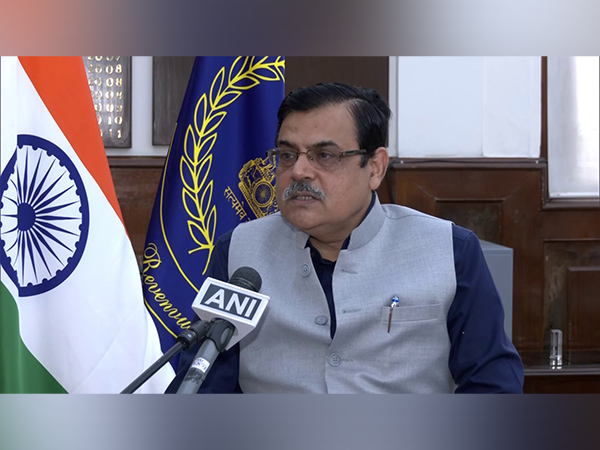
The government has granted a nine-month extension to Nitin Gupta, the current Chairman of the Central Board of Direct Taxes (CBDT). This extension, provided on a contract basis, was approved by the Appointments Committee of the Cabinet.
It is effective from October 1 and will continue until June 30, 2024, or until further orders are issued, whichever comes earlier. This extension is in relaxation of the recruitment rules and follows the usual terms and conditions applicable to re-employed central government officers.
Nitin Gupta, a 1986-batch Indian Revenue Service officer of the Income-Tax department, initially assumed the role of CBDT Chairman in June 2022.