The Rajasthan High Court has upheld the removal from service of a constable with the Rajasthan Armed Constabulary who was found to be in a live-in relationship with a married woman, also a constable with the Central Reserve Police Force (CRPF). The court rejected the constable’s argument that his actions were justified by Indian mythology.
Background
The constable, Hari Singh, was served with a charge-sheet in September 2007 after he was found to be living with a married woman while serving in the Rajasthan Armed Constabulary. The authorities dismissed him from service for violating the Rajasthan Civil Services (Classification, Control and Appeal) Rules, 1958.
Court’s Decision
Justice Ashok Kumar Gaur, in a single-judge bench, dismissed the constable’s contention that he had the right to lead his personal life as he pleased. The court emphasized that government servants are bound by certain code of conduct rules, even outside of working hours, to maintain high standards in private and public life.
The constable’s argument that Indian mythology justified his conduct was also rejected by the court. It stated that customs and references to Indian mythology could not be used to violate statutory provisions governing conduct rules for government servants.
The court upheld the action against the constable, noting that he was living in an illicit relationship while serving in a disciplined police force and failing to meet his legally wedded wife and children.
Conclusion
The Rajasthan High Court’s decision underscores the importance of government servants adhering to prescribed code of conduct rules and maintaining high standards in their personal and public lives.
The Calcutta High Court has taken action to expunge aspersions cast against the State Crime Investigation Department (CID) by Justice Abhijit Gangopadhyay in a money laundering case. The case pertains to the alleged failure of a cooperative society, the Alipurduar Mahila Rindan Samabay Samity, to return deposits to several individuals, amounting to approximately ₹50 crores.
Background
Justice Gangopadhyay had transferred the investigation of this case from the CID to central agencies, the Central Bureau of Investigation (CBI) and the Enforcement Directorate (ED), on August 24. Subsequently, he rejected a plea by the CID to recall the transfer order on September 15. In this order, Justice Gangopadhyay criticized the CID for allegedly playing with the court and termed the plea “absolutely frivolous.”
High Court’s Decision
The CID challenged the September 15 order before a division bench of the Calcutta High Court. The bench upheld the transfer order but quashed Justice Gangopadhyay’s observations against the CID. It expressed that the single judge may have been influenced by emotions while making those remarks. The division bench also set aside the ₹5 lakh cost imposed on the CID and expunged the aspersions cast against it.
The division bench maintained that the CID’s plea for a recall of the transfer order was rightly rejected by Justice Gangopadhyay on merits. It found no fault with the single judge’s decision to transfer the case to the CBI, given the magnitude of the alleged offenses and the need to inspire public confidence.
Conclusion
The Calcutta High Court’s decision highlights the importance of maintaining objectivity and professionalism in court proceedings and underscores the significance of public confidence in investigations involving substantial sums of money.
Justice Sanjay Karol, a Supreme Court judge, has voiced concerns about the reporting of judges’ actions and comments on online platforms. He emphasized that judges should not be treated as celebrities, and minute-by-minute reporting of their activities is not appropriate. Justice Karol shared his views during a panel discussion on the impact of social media on the justice delivery system at the Bar Council of India’s International Lawyers’ Conference.
Responsible Reporting
Justice Karol highlighted the importance of responsible reporting, stating that sensational headlines and reporting without context can lead to misunderstandings. He cautioned against the practice of making viral snippets of oral observations or queries from court proceedings appear as final court decisions. Such misrepresentation can harm the credibility of judges and lawyers and lead to personal attacks on social media.
Misinterpretation and Media Trials
The judge expressed concern that unchecked and unverified information readily available on the internet can lead to misinterpretation, sparking heated debates and media trials. He stressed that the public often lacks awareness of the nuances of court proceedings and the process leading to judgments. Justice Karol called for educating the media about the restrictions on freedom of speech.
Freedom of Speech and Social Media
Justice Karol acknowledged the importance of freedom of speech, a cherished value of the Indian Constitution. While he did not advocate for legislation to regulate social media, he encouraged discussions on these issues, seeking input from young people.
Conclusion
Justice Sanjay Karol’s remarks underscore the need for responsible and context-aware reporting on judges and court proceedings. He emphasized that judges should not be treated as celebrities and called for a better understanding of the complexities of the legal system in media reporting.
Justice Dipankar Datta, a Supreme Court judge, has emphasized the urgent need for addressing several crucial concerns within India’s legal profession. These concerns include the mental health of lawyers, work-life balance, and gender bias against women lawyers. Justice Datta believes that it is essential to provide lawyers with proper work schedules and leaves to ensure their well-being and mental health.
Mental Health and Work-Life Balance
Justice Datta stressed the importance of supporting lawyers in achieving a healthy work-life balance. This support should encompass well-defined working schedules and leave policies. He suggested that the Bar Council of India (BCI) should take the lead in addressing these issues, recognizing the significance of mental health for advocates.
Gender Bias and Inclusivity
Justice Datta emphasized the need to make the legal profession more inclusive, providing equal opportunities to women lawyers. He urged the legal community to challenge long-standing prejudices against women in the profession. Promoting gender equality is not only a moral obligation but also a legal imperative.
Positive Opportunities and Inclusivity
Justice Datta highlighted the positive opportunities for change within the legal profession. He cited inclusivity as a crucial aspect, noting that courts have opened up possibilities for common people to pursue their rights. He also mentioned the recent passing of the Women Reservation Bill as a significant step toward gender equality.
Addressing Bias
Justice Datta acknowledged the existence of bias within the legal profession and referred to the Supreme Court’s handbook for combating gender stereotypes. He emphasized the importance of combating stereotypes and prejudices that may persist within the profession.
Promoting Inclusivity
Justice Datta called for outreach programs to encourage underrepresented groups to pursue careers in law. He expressed concerns about the increasing commercialization of the legal profession and urged the BCI to maintain ethical standards.
Other Perspectives
Other speakers at the event, including Justice Anita Sumanth and Justice Rekha Palli, also shared their views on making the legal profession more sustainable, addressing gender disparities, and ensuring a fair work environment for all lawyers.
Conclusion
Justice Dipankar Datta’s call to address critical issues within the legal profession highlights the need for reforms that promote mental well-being, gender equality, and inclusivity. These changes are essential to ensure a sustainable and equitable legal profession in India.
Justice MR Shah, former Supreme Court judge and head of the Bar Council of India’s (BCI) Legal Education Committee, has announced plans to bring about radical changes in India’s legal education system. The move is driven by the need for Indian lawyers to compete effectively with foreign law firms, necessitating a transformation in curriculum and teaching methods.
Adapting to Global Competition
Justice Shah emphasized that Indian lawyers are now in direct competition with their counterparts in foreign law firms. To prepare law graduates for this global challenge, the BCI aims to propose significant changes in the legal education landscape.
Proposed Changes
The BCI’s Legal Education Committee will recommend changes in the curriculum and teaching methodologies to ensure that Indian law schools impart not only traditional subjects like the Code of Criminal Procedure (CrPC), Indian Penal Code (IPC), and Civil Procedure Code (CPC) but also contemporary subjects such as commercial law. The emphasis will shift from quantitative to qualitative legal education, with a focus on teaching students how to argue effectively in virtual courts.
Quality Legal Education
Justice Shah stressed that institutions have a responsibility to provide quality legal education, and change is imperative to meet evolving needs. He lamented the declining respect for legal professionals and highlighted the importance of restoring the prestige associated with the legal profession.
Conclusion
The BCI’s commitment to improving legal education and preparing lawyers for global competition is evident in its pursuit of radical changes in curriculum and teaching methods. These changes will equip law graduates to excel in the dynamic and competitive legal landscape, both domestically and internationally.
The Insurance Regulatory and Development Authority of India (IRDAI) is pioneering a transformative shift in the insurance sector with the introduction of “Bima Sugam.” This digital marketplace aims to bring together all life and non-life insurance companies onto a single platform, offering customers a seamless and efficient insurance experience. While the platform’s launch faced delays, it is now scheduled for June 2024.
The Game-Changer for Insurance
IRDAI envisions Bima Sugam as a game-changer akin to the Unified Payments Interface (UPI) moment for the insurance industry. The platform’s primary goal is to simplify the insurance purchasing process for consumers by providing a one-stop destination for all insurance needs, including life, health, and general insurance, such as motor and travel coverage.
Streamlined Insurance Processes
Bima Sugam aims to streamline the entire insurance journey, from policy selection to claims settlement and renewals. Customers will have the convenience of choosing from multiple insurance options offered by various companies. Claims, whether related to health coverage or death, will be processed in a paperless manner using policy numbers. This digital transformation reduces paperwork, expedites claim settlements, and enhances the overall insurance experience.
Key Benefits
Data Accessibility: The platform allows insurance companies to access real-time, validated, and authentic data from various sources, improving their decision-making processes.
Reduced Paperwork: Intermediaries, agents, and policyholders will benefit from reduced paperwork, leading to more efficient policy management and claims processing.
End-to-End Solutions: Bima Sugam offers end-to-end solutions for insurance needs, enabling policy purchase, premium payments, and claims settlement on a single platform.
Who Benefits?
While insurance agents may experience changes in commissions, consumers stand to benefit significantly from reduced paperwork and enhanced efficiency in claims processing. The platform also serves as a centralized hub for health insurance activities, benefiting insurers, hospitals, and policyholders alike.
Conclusion
Bima Sugam represents a proactive measure by IRDAI to bring positive change to the insurance industry. By meeting evolving market demands and positioning India as a leader in insurance innovation, this initiative promises to revolutionize the insurance landscape. It aligns with the broader global trend of digitization and simplification of financial services for consumers.
The Attorney General for India, R Venkataramani, has emphasized the need for a robust dialogue on the influence of social media on the justice delivery system. Speaking at the Bar Council of India’s International Lawyers’ Conference, Venkataramani acknowledged the global reach and connectivity of social media while cautioning against its potential to distort ethical and moral standards. He stressed that social media, at times, serves partisan interests and called for a thoughtful examination of its role in preserving objectivity within the justice system.
Global Law and Intellectual Property
Venkataramani also highlighted the importance of global law and the equitable incentivization of intellectual property creations. He urged the legal community to engage in discussions surrounding challenges arising from artificial intelligence and the competition for power in the modern world.
Digitization and Access to Justice
Solicitor General Tushar Mehta discussed India’s progress in the last decade, citing significant statutory developments and policy initiatives. He emphasized the transformative impact of digitization on India’s judiciary, enabling transparent access to court documents and proceedings. Mehta commended the translation of Supreme Court judgments into vernacular languages as a remarkable achievement.
Government Initiatives and Legal Fraternity
Union Minister of State for Law, Arjun Ram Meghwal, highlighted government efforts to strengthen alternative dispute resolution mechanisms and commercial dispute resolution. He praised the Tele-Law initiative and the ecourts platform for enhancing access to justice. Meghwal also noted the government’s support for improving infrastructure in lower courts.
Bar Council of India’s Initiatives
Manan Kumar Mishra, Chairman of the Bar Council of India, emphasized the need for more judges to address case backlogs. He highlighted the strength of India’s legal fraternity and its support for Prime Minister Narendra Modi. Mishra called for a central law to protect lawyers and their families and shared ongoing efforts to promote legal education in regional languages.
Conclusion
The International Lawyers’ Conference provided a platform for legal luminaries to discuss critical issues, including the impact of social media, digitization’s role in access to justice, and the legal fraternity’s contributions to India’s evolving legal landscape. The conference underscored the importance of open dialogue and collaboration within the legal community to address contemporary challenges effectively.
State Bank of India (SBI), the largest lender in India, has successfully raised Rs 10,000 crore through an infrastructure bond issue. This achievement marks SBI’s fourth infrastructure bond issue and reflects strong investor confidence in the bank’s offerings.
Coupon Rate and Utilization of Funds
SBI will pay a competitive coupon rate of 7.49 per cent on the issued bonds. The funds raised through this issuance will be dedicated to on-lending for infrastructure projects and affordable housing, supporting critical sectors of India’s economy.
Oversubscription and Investor Profile
The initial aim of the bond issue was to raise Rs 4,000 crore, but it received an overwhelming response from the market, with the issue being oversubscribed by over five times. Notably, the bank received 134 bids totaling Rs 21,045 crore.
A diverse set of investors participated in this bond offering, including provident funds, pension funds, insurance companies, mutual funds, and corporate entities. This diverse investor profile underscores the broad appeal of SBI’s infrastructure bonds.
Competitive Pricing and Previous Issuances
The coupon rate offered by SBI for this issuance is 0.12 per cent over the corresponding FBIL G-Sec par curve. This pricing is marginally better than the rate offered in SBI’s previous infrastructure bond issuance in August 2023, which required a coupon rate of 0.13 per cent.
SBI had successfully raised Rs 10,000 crore from its infrastructure bond offering in August, bringing the total outstanding long-term bonds issued by the bank to Rs 39,718 crore. This achievement demonstrates SBI’s consistent ability to attract investors and raise funds for essential infrastructure projects.
Conclusion
SBI’s accomplishment in raising Rs 10,000 crore through its infrastructure bond sale highlights its pivotal role in supporting critical sectors of the Indian economy. The oversubscription and competitive pricing reflect the confidence that investors have in SBI’s financial offerings and its commitment to infrastructure development and affordable housing in India.
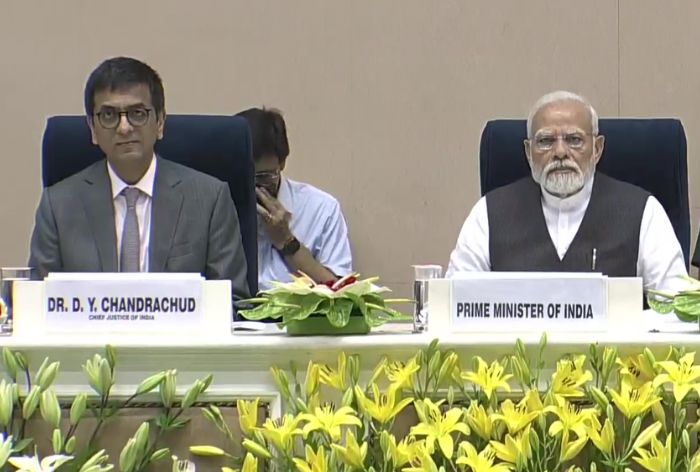
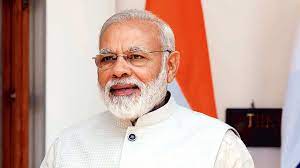
Prime Minister Narendra Modi underscored the significance of a strong and independent judiciary in India during the inaugural session of the International lawyers conference hosted by the Bar Council of India. He expressed pride in the Indian judiciary’s consistent commitment to upholding the rule of law.
Crucial Role of the Judiciary
PM Modi stressed that the role of the judiciary is pivotal for the development of any nation. He reiterated that India requires a resilient and independent judiciary to ensure justice and uphold the principles of the rule of law.
CJI’s Praise for Accessibility
Chief Justice of India DY Chandrachud commended the Supreme Court for making judgments available in regional languages, a milestone achieved after 75 years. He emphasized the importance of making legal language more accessible to the common man.
Simplifying Laws for All
CJI Chandrachud expressed his intention to present laws in two formats: one in legal language and another in layperson language to enhance understanding. He believes that the language in which laws are written plays a crucial role in delivering justice.
Simplifying Data Protection Law
The government is working towards simplifying the data protection law, recognizing the need for clarity and accessibility in legal matters.
Role of Lawyers in India’s Independence
PM Modi acknowledged the significant role played by Indian lawyers in the country’s struggle for independence. Figures like Mahatma Gandhi, Lokmanya Tilak, Veer Savarkar, and Baba Saheb Ambedkar were all lawyers who contributed to India’s freedom movement.
Conclusion
The conference aims to raise awareness of legal rights among the populace and foster discussions on the role of the judiciary in India’s development. PM Modi’s remarks highlight the government’s commitment to an independent judiciary and legal reforms to ensure justice is accessible to all citizens.
The Young Entrepreneurs Association (YEA) based in Hyderabad has taken a significant step forward by introducing a fresh startup fund with an initial fund size of INR 5 Crores. This initiative is designed to provide valuable support to promising startups in the Hyderabad region and signifies YEA’s commitment to fostering entrepreneurship and innovation.
Nurturing Startup Ecosystem
YEA has been an active platform for entrepreneurs and leaders from various sectors, including politics and bureaucracy, to come together and exchange insights that can reshape and refine their business strategies. Originally comprising just 11 members, the association has now expanded to include 80 members, with plans to further increase the membership count to 120 by adding 15 new members this year.
The New Logo
In addition to the startup fund, YEA has also unveiled a new logo, symbolizing a fresh beginning and a renewed focus on empowering the entrepreneurial ecosystem in Hyderabad. This move reflects YEA’s dedication to redefining entrepreneurship and fostering impactful entrepreneur-to-entrepreneur networking opportunities.
Conclusion
The launch of the INR 5 Crore startup fund and the introduction of a new logo by YEA Hyderabad demonstrate the organization’s commitment to nurturing startups and promoting entrepreneurship in the region. This initiative is expected to provide valuable resources and support to emerging businesses, contributing to the growth and success of the local startup ecosystem.