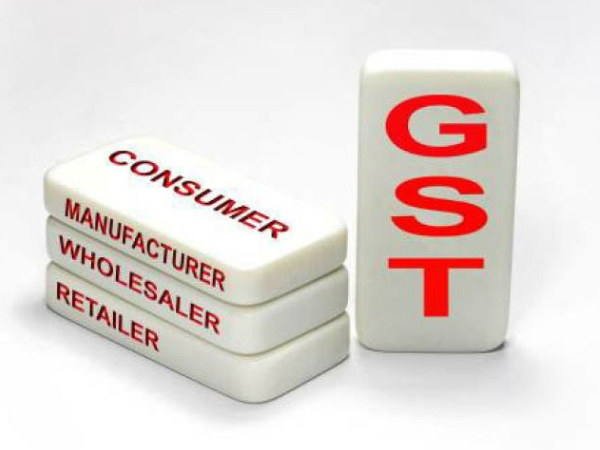
The Finance Ministry aims to introduce pre-filled goods and services tax (GST) return forms before the upcoming fiscal year, addressing the challenge of significant data mismatches leading to unwarranted tax notices. The move is expected to enhance the ease of doing business and curb discrepancies in the GST system. The ministry is currently assessing the additional costs associated with reinforcing digital infrastructure to prevent system slowdowns or crashes when consolidating data from various databases.
Addressing Data Mismatches for Business Ease
A senior government official highlighted that the pre-filled consolidated GST return form is in progress and could be implemented before the next fiscal year. The initiative aims to combat the rising issue of data mismatches, which often results in unnecessary demand notices. Multiple templates are being employed in the development process.
Automated Scrutiny and Technological Analysis
The automated scrutiny module for GST returns presently sends notices to assesses when data mismatches exceed 20%, utilizing data analytics and system-identified risks. The Central Board of Indirect Taxes and Customs (CBIC) is currently evaluating the necessary technological upgrades, weighing the potential additional costs against the impact on system speed and response time.
Pilot Testing and Approval Process
Before full implementation, a pilot program will assess the functionality and time efficiency of the pre-filled GST return form. Notably, the initiative, focused on taxpayers’ convenience, doesn’t require GST Council approval to proceed, according to the official. The commercial question of acceptable additional costs versus benefits is under debate, emphasizing the need for a balanced approach to technological enhancements in tax processes.
Anicut Capital, through its third private credit fund Grand Anicut Fund (GAF) 4, has injected INR 133 crore into IT services firm TAO Digital Solutions. The funds are earmarked for TAO’s strategic acquisition of data intelligence services company TriGeo Technologies, aimed at bolstering its digitization services. TAO Digital Solutions, a global player in technology services encompassing product engineering, managed services, cybersecurity, and payment solutions, operates with a team of over 2,400 professionals worldwide.
Expanding Capabilities for Customer-Centric Growth
Rajkumar Velagapudi, CEO of TAO Digital Solutions, emphasized the pivotal role this investment will play in elevating their service offerings. With the TriGeo acquisition, TAO plans to integrate digitization services, annotation & labelling, 3D modeling, and digital twinning capabilities to enhance customer satisfaction and position itself as a market leader.
Anicut Capital’s Strategic Deployments
Anicut Capital’s GAF-4, a Rs 1,000 crore fund launched in Q1 FY24, has strategically deployed over Rs 220 crores in sectors like technology, ITeS, electronics manufacturing, and engineering services within the past seven months. A. Jayaseelan, Partner and Chief Credit Officer at Anicut Capital, expressed confidence in TAO’s trajectory, stating that the acquisition of TriGeo is TAO’s initial stride towards market leadership.
Driving Digital Transformation in a Growing Market
The investment aligns with the booming global digital transformation market, projected to surge from $695.5 billion in 2023 to $3,144.9 billion by 2030, with a compound annual growth rate of 24.1%. Anicut Capital, managing assets worth Rs 3,000 crore, has a diverse portfolio, including investments in notable enterprises like Wow! Momo, Bira, Sugar Cosmetics, Lendingkart, and others.
Fintech SaaS platform Clear, backed by Peak XV Partners, achieved a significant milestone in the financial year ending March 31, 2023, with its consolidated operating revenue soaring by over 85% to INR 108.8 Cr. Although this propelled Clear past the coveted INR 100 Cr mark, the company experienced a nearly 5% increase in net loss, reaching INR 233.5 Cr, compared to INR 222.7 Cr in the preceding fiscal year.
Revenue Streams and Geographic Breakdown
Clear’s primary revenue streams, stemming from services such as tax preparation, e-filing, accounting, and investment planning solutions, accounted for over INR 104 Cr in FY23. The domestic market in India remained Clear’s stronghold, contributing over INR 103 Cr, while international revenue amounted to INR 5.4 Cr. Additionally, Clear’s acquisition of CimplyFive Corporate Secretarial Services in July the previous year contributed INR 2.1 Cr, but also incurred an impairment loss of INR 8.13 Cr.
Path to Profitability
Despite the surge in operating revenue, Clear emphasized in its FY23 financial filings that the positive trajectory has brought the company closer to its profitability goal. The increase in revenue, driven by services like taxation and software subscriptions, reflects Clear’s commitment to financial growth and market leadership.
Expenditure Dynamics
Clear’s total expenditure rose by over 21% to INR 343.7 Cr in FY23, growing at a slower pace than its operating revenue. This strategic balance suggests a focused approach to sustainable growth, as Clear navigates the dynamic landscape of financial technology.
The Small Industries Development Bank of India (SIDBI) has entered into a memorandum of understanding (MoU) with the Technology Development Board (TDB) under the Department of Science and Technology. The MoU aims to facilitate enhanced credit access for Micro, Small, and Medium Enterprises (MSMEs) engaged in developing and applying indigenous or imported technology for broader domestic applications. SIDBI and TDB will collaborate to refer additional funding requirements of previously funded companies to each other. Dedicated contacts within both organizations will streamline coordination, ensuring a seamless exchange of referrals. Additionally, financial support will be extended to eligible MSMEs in alignment with respective policy guidelines. The collaboration seeks to foster innovation, job creation, and overall economic development in the MSME sector. Rajesh Kumar Pathak, Secretary of TDB, expressed the significance of the collaboration in promoting technology development and creating an environment conducive to the growth of innovative MSMEs.
Comprehensive Support Beyond Financial Assistance
In addition to financial support, SIDBI and TDB will engage in outreach and marketing activities to promote the initiative, reaching a wider audience of MSMEs. The collaboration builds on SIDBI’s recent initiatives, including the launch of the MSME Economic Activity Index – Sumpoorn in partnership with Jocata. The index leverages anonymized monthly sales data from over 50,000 MSMEs, aiming to bridge the knowledge gap and support stakeholders in strategizing credit flow and formulating policies for sustainable MSME growth.
The finance ministry aims to introduce pre-filled Goods and Services Tax (GST) return forms before the upcoming fiscal year to address the challenge of significant data mismatches resulting in tax notices. This initiative seeks to enhance the ease of doing business and prevent unnecessary demand notices. The pre-filled consolidated GST return form is currently under development, utilizing multiple templates. The automated scrutiny module, which triggers notices for data mismatches exceeding 20 percent, will benefit from this enhancement.
Technological Analysis for Seamless Implementation
The Central Board of Indirect Taxes and Customs (CBIC) is assessing the technological requirements and potential upgrades, considering the additional costs and system impact. The analysis aims to determine the balance between implementing the pre-filled form without compromising system efficiency and response time. The discussion involves defining the technological asks for digital infrastructure and evaluating the acceptable additional cost compared to the benefits.
Pilot Testing and Council Approval
The plan involves conducting a pilot to test the functionality and efficiency of the pre-filled GST return form. While seeking to enhance taxpayer convenience, the initiative does not require GST Council approval to proceed. The move aims to streamline the GST return process, reduce mismatches, and contribute to a more efficient and business-friendly tax environment.
Anicut Capital, through its third private credit fund Grand Anicut Fund (GAF) 4, has invested Rs 133 crore in IT services firm TAO Digital Solutions. The funds will be utilized by TAO Digital Solutions to acquire data intelligence services company TriGeo Technologies, further expanding its digitization services. TAO Digital Solutions specializes in technology services, including product engineering, managed services, cybersecurity, digitization, and payment solutions. With a global presence and a team of over 2,400 professionals, the company aims to enhance its offerings through the acquisition of TriGeo.
Strategic Expansion and Digital Transformation
Rajkumar Velagapudi, CEO of TAO Digital Solutions, expressed that the investment will play a pivotal role in elevating their services and taking a significant leap in their journey. The acquisition of TriGeo will enable TAO to incorporate digitization services, annotation & labeling, 3D modeling, and digital twinning capabilities to better serve customers.
Anicut Capital’s Strategic Investments
Anicut Capital’s Grand Anicut Fund-4 (GAF-4), launched in Q1 FY24, has deployed over Rs 220 crore in sectors such as technology, ITeS, electronics manufacturing, and engineering services over the past seven months. Anicut Capital believes that TAO is well-positioned to become a market leader with its technological advancements, and the acquisition of TriGeo marks a significant step in that direction.
According to recent data from the Reserve Bank of India (RBI), the share of credit extended to Micro, Small, and Medium Enterprises (MSMEs) in banks’ non-food credit reached 15% in October. The gross bank credit deployed by scheduled commercial banks for MSMEs under priority sector lending stood at Rs 23.15 lakh crore, marking a 22.8% increase from Rs 18.8 lakh crore in October last year and an 11.8% rise from Rs 20.6 lakh crore in September this year.
Robust Growth in MSE Credit
Within MSMEs, credit to micro and small enterprises (MSEs) experienced a notable 24.2% growth, reaching Rs 18.53 lakh crore compared to Rs 14.92 lakh crore during the same period last year. Similarly, credit to medium enterprises increased by 17.3% to Rs 4.61 lakh crore from Rs 3.93 lakh crore in October last year.
Concerns Raised by FICCI Survey
Despite the upward trend in MSME credit, a survey conducted by FICCI involving 610 respondents highlighted challenges. Collateral-free credit, touted on paper, reportedly faces implementation issues, with banks often requiring collateral for loan approvals. The survey also pointed out hesitancy from banks in providing financing to SMEs, and certain government schemes, like the Credit Guarantee Fund Trust for Micro and Small Enterprises Scheme (CGTMSE), facing limited effectiveness in aiding SMEs.
In response to the GST Council’s 52nd meeting, recommending amnesty for taxpayers unable to file appeals under section 107 of the CGST Act, the government issued Notification No. 53/2023 on November 2, 2023. The advisory outlines crucial procedures and provisions for taxpayers who missed filing appeals against demand orders under sections 73 or 74 of the CGST Act, 2017, passed on or before March 31, 2023, or whose appeals were rejected for not adhering to the specified timeframe.
Filing Appeals and Payment Procedures
Taxpayers now have the opportunity to file appeals using FORM GST APL-01 on the GST portal until January 31, 2024, for orders issued on or before March 31, 2023. It is emphasized that correct payments should accompany the appeal, with the GST Portal allowing various payment modes. The Appellate Authority will verify the payment’s correctness before entertaining the appeal.
Differential Payments for Existing Appeals
Taxpayers who previously filed appeals and wish to benefit from the amnesty scheme must make differential payments against the demand order using the “Payment towards demand” facility on the GST portal. A step-by-step navigation guide is provided for this purpose.
Refiling Appeals and Grievance Resolution
For those whose appeals were rejected as time-barred (APL-02), re-filing is allowed. Any issues encountered during re-filing should be addressed by raising a ticket on the Grievance Redressal Portal under the “Amnesty Scheme” category.
APL-04 Issued Cases and State Nodal Officer Route
In cases where the Appellate Authority issued rejection orders (APL-04) due to time constraints, direct representations will not be entertained. Instead, such cases must be forwarded through the State Nodal Officer, emphasizing adherence to the prescribed dates in the notification.
This advisory provides comprehensive guidance to ensure taxpayers navigate the amnesty scheme seamlessly, emphasizing correct filing procedures, payment protocols, and the appropriate channels for issue resolution.
Godrej Capital, the non-banking finance company (NBFC) arm of the Godrej Group, has forged strategic partnerships with Amazon, Visa, and DBS Bank India for its digital platform Nirmaan. The platform, launched in April this year, aims to provide a comprehensive suite of value-added services (VAS) for Micro, Small, and Medium Enterprises (MSMEs). Nirmaan now boasts a network of over 13 partners offering diverse VAS to enhance MSMEs’ market reach, financial support, legal compliance, employee well-being, and more.
Key Partnerships and Services
Amazon’s collaboration with Nirmaan enables MSMEs to showcase and sell their products on Amazon.in, facilitating both domestic and global market access through a three-month subscription to Amazon Global Selling. Visa offers MSMEs access to comprehensive payment solutions, while DBS Bank India provides a tailored current account and an array of value-added services.
Diverse Platform Offerings
Apart from Amazon, Visa, and DBS Bank India, Nirmaan’s partner ecosystem includes Onsurity (employee healthcare), Zolvit (tax and compliance support), MSMEx (advisory platform), and new partners like GeM Tech Paras (GeM consultancy), Escrowpay (digital escrow account), GreytHR (HR and payroll software), and Serapis Knowledge Solutions (strategy and research). This diverse range of services aims to address various facets of MSME operations.
Strategic Vision for MSME Growth
Manish Shah, MD & CEO at Godrej Capital, emphasized the company’s commitment to being catalysts in the MSME growth journey. Beyond lending, the focus is on providing holistic support to MSMEs. The collaborative efforts of Nirmaan’s partners align with the Godrej Group’s commitment to contributing to India’s journey towards becoming a 5 trillion-dollar economy.
Convenience store network Frendy, headquartered in Ahmedabad, has successfully raised INR 16 crores in a funding round led by Auxano Capital and AT Capital Singapore, among others. The startup, operational in over 40 Tier 2-6 towns in Gujarat, plans to utilize the capital to enhance its technological offerings, expand its private label product portfolio, and further extend its network of stores. Frendy’s unique model consists of franchised Frendy Marts digitally connected to a cluster of Frendy Micro stores, serving as a convenient solution for smaller towns and rural areas.
Innovative Store Network Model
Frendy Marts, ranging from 500 to 1000 sq. ft, offer a diverse range of 1,000 to 2,000 products, also serving as dark stores for digitally connected Frendy Micro stores in a 10 km radius. The Micro stores, run by existing family-owned micro kiranas and home-based setups, provide an additional 100 SKUs, with the remaining available for digital ordering through Frendy’s app.
Strategic Expansion Plans
Having achieved a robust Product-Market Fit (PMF) in its initial phase, Frendy aims to become asset and operations light in its second phase. CEO Sameer Gandotra highlights the goal of having 40 operational Marts within the next 12 months, leveraging them as warehouses for existing micro stores. The company envisions an Annual Recurring Revenue (ARR) of INR 300 crores and profitability in the next 24 months.
Financial Performance and Growth Trajectory
In its second year of operations (FY23), Frendy has reported a noteworthy revenue of INR 82 crores, marking a significant increase from INR 40 crores in FY22. With a focus on current geographies and leveraging density for a robust cost advantage, Frendy sets ambitious goals for growth and profitability in the near future.