The Gujarat High Court has dismissed petitions challenging the state government’s decision to prohibit schools from admitting children under the age of 6 to Class 1 starting from the current academic year (2023-24). The court ruled that the right to free and compulsory education, as established by the Right to Education Act (RTE Act) and Article 21A of the Constitution of India, is only applicable once a child reaches the age of 6.
Legal Background:
A bench consisting of Chief Justice Sunita Agarwal and Justice NV Anjaria emphasized that the right to free and compulsory education under the RTE Act and Article 21A begins only after a child reaches the age of 6. The court’s judgment clarified that a child above the age of 6 cannot be denied admission to a formal school, and the state is obligated to ensure that such children complete their elementary education without any restrictions.
Dismissal of Parental Petitions:
The court rejected the argument made by several parents (petitioners) that their children should be allowed early admission to Class 1 since they had already completed their elementary education. It pointed out that the RTE Act prohibits enrolling a child in a pre-school if the child has not reached the age of 3 by June 1 of the relevant academic year.
The court stated that forcing children under the age of 3 to attend a pre-school is illegal and that the petitioners were in violation of the RTE Act and RTE Rules. Therefore, the petitioners could not seek leniency or exceptions.
State Government Notifications Upheld:
The court was addressing a series of petitions filed by parents challenging state government notifications issued on January 31, 2020, and August 4, 2020, which were set to take effect from June 1 of the current year. Notably, the children of the petitioners had not yet reached the age of 6 as of June 2023.
The court underscored that the minimum age requirement of 6 for admission to Class 1 serves a purpose, aiming to provide education to children at an appropriate age, as per the RTE Act.
Importance of Early Childhood Education:
The bench also referenced the National Education Policy, 2020, which highlighted that over 85% of a child’s cumulative brain development occurs before the age of 6. This underscores the critical importance of proper care and stimulation for healthy brain development in the early years.
The court upheld the notifications, stating that they were not arbitrary.
Legal Representation:
The petitioners were represented by Advocates Ashish M Dagli, Nayan L Gupta, Hitesh Gupta, Dilipkumar Prajapati, Amit Chaudhary, and Samir Gohel.
The state was represented by Advocate General Kamal Trivedi, Additional Government Pleader KM Antani, and Advocate Ankeeta Rajput.
This decision reinforces the age-based admission criteria for Class 1 and the importance of early childhood education.
In a recent development, the Supreme Court of India has stayed the Karnataka High Court’s verdict that quashed a notice issued by the Goods and Services Tax (GST) department, claiming ₹21,000 crore in dues from the online gaming company Gameskraft Technologies Private Limited. This decision came in response to the appeal filed by the Directorate General of Goods and Services Tax Intelligence and others against the High Court’s ruling.
Awaiting Response from Gameskraft
A Bench comprising Chief Justice of India DY Chandrachud and Justices JB Pardiwala and Manoj Misra has sought a response from Gameskraft and scheduled the matter for further hearing after a period of three weeks. During the proceedings, Chief Justice Chandrachud reassured that there was no immediate cause for concern within this three-week timeframe.
High Court’s Controversial Ruling on Rummy
The Karnataka High Court’s May verdict not only invalidated the GST department’s claim but also made a significant determination regarding the nature of Rummy, stating that it is a game of skill rather than a game of chance, whether played with stakes or without stakes. Consequently, the High Court ruled that online Rummy and other digital games on Gameskraft’s platforms should not be classified as ‘betting’ or ‘gambling,’ thus affecting their taxability.
Pending Karnataka Government’s Challenge
The Karnataka state government has also challenged the High Court’s decision, and its plea is currently pending before the Supreme Court.
Background of the Case
The case against Gameskraft began when the GST authorities issued an intimation notice on September 8 of the previous year, demanding ₹21,000 crore in dues. Gameskraft challenged this notice in the High Court, where a single-judge temporarily stayed the demand on September 23, 2022, citing numerous contentious issues.
However, Gameskraft later alleged that the authorities had, in contempt of the High Court’s order, issued a show-cause notice on the same day as the stay order. The company also pointed out that its Chief Financial Officer, Ramesh Prabhu, faced a personal penalty.
Gameskraft argued that the allegations made in the GST authorities’ show-cause notice were identical to those in the intimation notice that had already been stayed. Furthermore, it stressed that the authorities had incorrectly claimed that the gameplay provided by the company should be taxed at a rate of 28 percent.
In November 2021, the GST authorities conducted a raid on Gameskraft’s office, leading to the attachment of all the company’s bank accounts. Initially, the alleged tax evasion amount was ₹419 crore, but this escalated to ₹5,000 crore and eventually exceeded ₹21,000 crore by July 2022 when the authorities began to suggest that Gameskraft might be involved in betting activities.
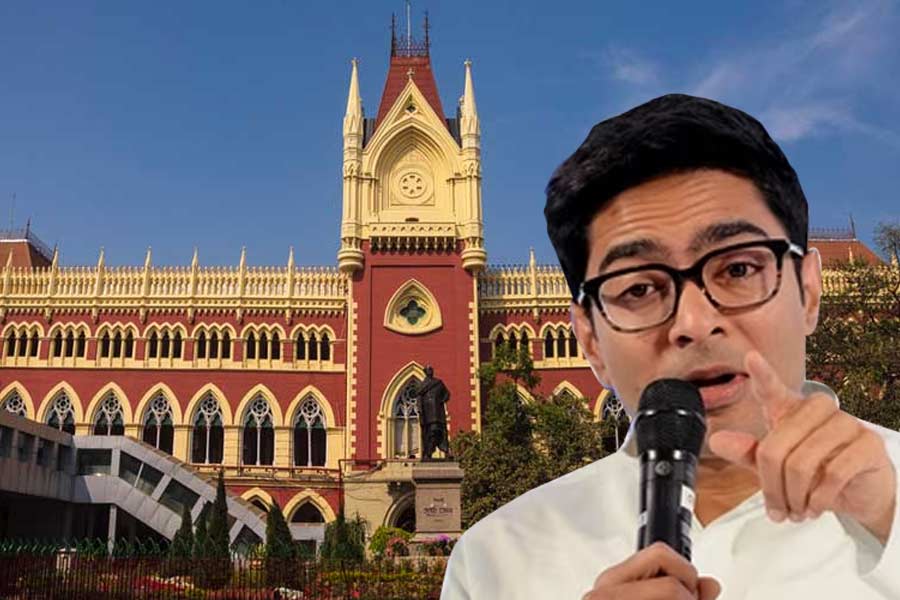
The Enforcement Directorate (ED) informed the Calcutta High Court that it would not utilize 16 files downloaded from a company computer linked to Trinamool Congress leader Abhishek Banerjee as evidence in any investigations against him. This decision came after Banerjee raised concerns that the ED had downloaded these files during a recent raid on the company, Leaps & Bounds, without proper consent.
Abhishek Banerjee, who serves as the company’s CEO and was previously a director, alleged that an ED officer had downloaded approximately 16 files from the computer. The ED contended that the officer had only used the computer to check details related to his child’s hostel due to anxiety about their well-being.
The central agency, represented by Additional Solicitor General SV Raju, assured the court that these 16 files would not be considered as evidence in any criminal proceedings, and the ED would certify this in a letter. The court accepted this assurance and documented it in its order.
The bench instructed Mithilesh Kumar Mishra, an assistant director of the ED, along with an officer from the Cyber Cell of the Kolkata Police, to cooperate with the CFSL authorities. The printouts of the files in question were to be submitted to the court by 4:30 PM on September 6.
Justice Tirthankar Ghosh had previously deferred pronouncing judgment on Banerjee’s plea against the ED probe into the school jobs-for-cash scam after the dispute over the 16 downloaded files was raised.
Senior Advocate Kishore Datta and a team of advocates represented Abhishek Banerjee, while Additional Solicitor General SV Raju and a group of advocates appeared for the ED. This development highlights the ongoing legal battle involving a prominent political figure and allegations of unauthorized data access by law enforcement agencies
In a recent development, the Supreme Court has taken a strong stance against the increasing trend of issuing preventive detention orders in the state of Telangana without due consideration for the liberties and freedoms guaranteed to citizens under the Indian Constitution. The apex court has outlined guidelines for courts to follow when assessing the legality of such preventive detention orders, emphasizing the importance of upholding constitutional rights.
Background and Legal Context
The Supreme Court, in a division bench comprising Justice Surya Kant and Justice Dipankar Data, referred to numerous judgments that delineate the requirements of a valid detention order and the scope of judicial reviewability. The court extracted essential guidelines for constitutional courts to follow when evaluating the legality of preventive detention orders.
Guideline 1: Requisite Satisfaction of Detaining Authority
The court emphasized that the detention order’s legality should be assessed based on whether the order is founded on the necessary satisfaction, even if it is subjective, of the detaining authority. The absence of such satisfaction regarding a matter of fact or law, upon which the exercise of power is based, is a fundamental criterion for declaring the exercise of power unsatisfactory.
Guideline 2: Application of Mind to Relevant Circumstances
The court stressed that the detaining authority must consider all relevant circumstances while reaching the necessary satisfaction. The satisfaction should not be based on extraneous material outside the scope and purpose of the relevant statute.
Guideline 3: Proper Purpose and Statutory Authorization
The court examined whether the power of preventive detention was exercised for the purpose for which it was conferred by law. Any exercise of power for an improper purpose not authorized by the statute renders it ultra vires.
Guideline 4: Independence of Detaining Authority
The court evaluated whether the detaining authority acted independently or under the influence or direction of another body.
Guideline 5: Self-Imposed Rules and Policy
The court considered whether the detaining authority, through self-imposed rules or policies not authorized by the governing statute, hindered its ability to apply its mind to individual cases.
Guideline 6: Rational and Relevant Grounds
The court assessed whether the grounds for reaching the necessary satisfaction were logically connected to the facts and pertinent to the subject matter under inquiry. These grounds should provide sufficient clarity to inform the detainee of the basis for their detention.
Guideline 7: Non-Vague Grounds and Opportunity for Representation
The court looked at whether the grounds on which the preventive detention order rested were precise, pertinent, and relevant, enabling the detainee to make a suitable representation. Vague or unclear grounds would render the detention order vulnerable.
Guideline 8: Adherence to Timelines
The court examined whether the statutory timelines were strictly followed in the issuance of the preventive detention order.
The Supreme Court underscored that if any of these tests indicate a defective exercise of power, resulting in a vulnerable detention order, the court should intervene to correct the injustice.
Case Background
The Supreme Court’s deliberations arose from an appeal against the Telangana High Court’s refusal to intervene in a detention order against the appellant’s husband, who was the subject of a writ of habeas corpus filed by her.
The challenge pertained to the detention order issued under Section 3(2) of the Telangana Prevention of Dangerous Activities of Bootleggers, Dacoits, Drug-Offenders, Goondas, Immoral Traffic Offenders, Land Grabbers, Spurious Seed Offenders, Insecticide Offenders, Fertilizer Offenders, Food Adulteration Offenders, Fake Document Offenders, Scheduled Commodities Offenders, Forest Offenders, Gaming Offenders, Sexual Offenders, Explosive Substances Offenders, Arms Offenders, Cyber Crime Offenders, and White Collar or Financial Offenders Act 1986.
Court’s Findings
The Supreme Court determined that the actions of the detainee did not meet the criteria for affecting public order as required by the Act. Moreover, it found no circumstances warranting the invocation of the extraordinary provisions of the Preventive Detention Act, as the ordinary criminal law offered adequate means to address the detainee’s case.
As a result, the Supreme Court nullified the contested detention order and overturned the High Court’s judgment, thereby allowing the appeal.
A Stern Warning and Call for Responsible Action
The Supreme Court issued a stern warning to the authorities in the state of Telangana, cautioning against the indiscriminate use of the Preventive Detention Act. The court urged law enforcement agencies to respect citizens’ fundamental rights and liberties guaranteed by the Constitution and to exercise their duties with care and responsibility.
The court’s unequivocal message was that the Preventive Detention Act should not be employed casually and without due consideration for the rights and freedoms of individuals. The court’s statement resonated with the ongoing celebration of “Azadi Ka Amrit Mahotsav” (the Festival of Freedom) commemorating 75 years of independence from foreign rule, emphasizing the importance of safeguarding citizens’ rights.
Legal Representation
In this case, Senior Advocate Dushyant Dave appeared for the State of Telangana, while Senior Advocate Sidharth Luthra represented the appellant.
Conclusion
The Supreme Court’s stance against arbitrary preventive detention orders in Telangana serves as a significant legal precedent. It reiterates the necessity of adhering to established legal standards and safeguards when issuing such orders, ensuring that the fundamental rights and freedoms of citizens are not compromised. This judgment emphasizes the pivotal role of the judiciary in upholding the rule of law and protecting individual liberties, particularly in cases involving preventive detention.
‘Defaulter’s Paradise Lost- Demystifying the Insolvency and Bankruptcy Code’ was written by attorney Anant Merathia, and Justice Senthil Kumar Ramamoorthy was speaking at the book’s launch event.
Senthil Kumar Ramamoorthy, a judge on the Madras High Court, recently said that the Insolvency and Bankruptcy Code (IBC) is an important piece of law. According to what he said, the IBC creates a creditor-driven model that focuses on the worth of the corporation as a whole rather than just its assets. These remarks were made by Justice Ramamoorthy last Friday at the Chennai book launch for ‘Defaulter’s Paradise Lost: Demystifying the Insolvency and Bankruptcy Code’ by attorney Anant Merathia.
The judge emphasized that the IBC was implemented at a time when public sector banks were experiencing an increase in non-performing assets and debt defaults. He added that earlier laws like the SARFESI Act and the Sick Industrial Companies Act (SICA) weren’t enough to deal with the growing NPAs. The IBC stood out from other legislation since it allowed for the realization of a business’s value because of its creditor-driven strategy.
As a thorough reference to the IBC, Justice Ramamoorthy lauded Merathia’s work as being appropriate for judges, attorneys, and all parties. The guest of honor, Dr. TK Vishwanathan, discussed his experiences with the IBC’s drafting and underlined the importance of data in the law. Merathia, a business litigator, sought to streamline the law so that stakeholders would have a reference manual.
Merathia emphasized that modern business owners are more aware of the legal ramifications and that experts like chartered accountants, auditors, and bankers must keep up with changes to the law. He called the book a progressive move and said it was crucial for small and mid-sized businesses, financial institutions, universities, and foreign lawyers.
Dr. TK Vishwanathan, Justice Sanjiv Jain, and Senior Counsel PH Arvindh Pandian were among the guests who attended the launch event, which was chaired by attorney Sanjay Pinto.
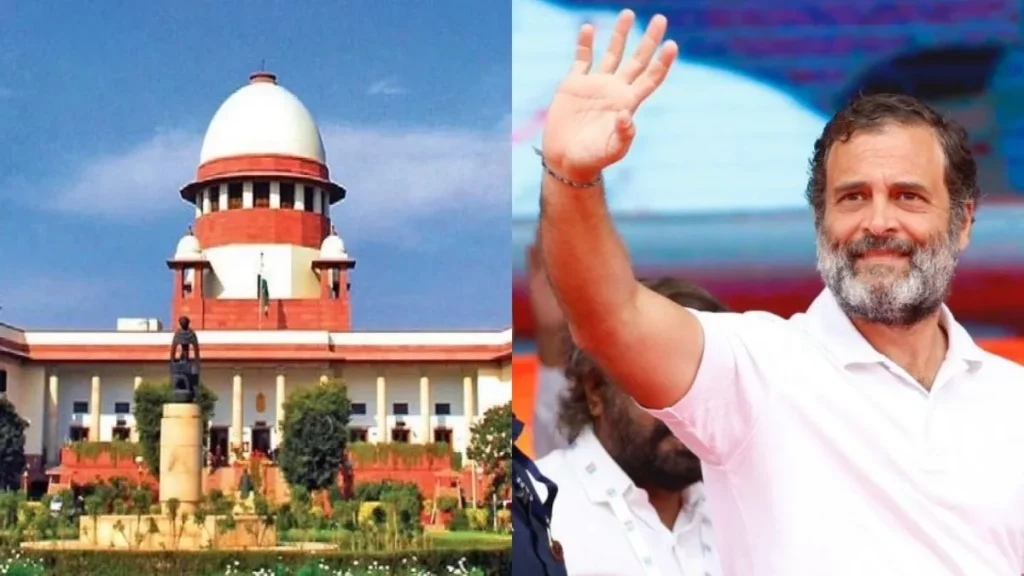
A recent plea filed in the Supreme Court challenges the reinstatement of Rahul Gandhi’s Lok Sabha membership. This reinstatement was made through a notification by the Lok Sabha
Legal Contention: Operation of Law and Disqualification
The central argument revolves around constitutional and statutory provisions. It asserts that under Article 102 and 191 of the Indian Constitution, along with Section 8(3) of the Representation of the People Act, 1951, an MP or MLA, after being legally convicted, should remain disqualified from holding public office until acquitted by a higher court.
CrPC Section 389: Suspension of Sentence vs. Suspension of Conviction
The plea delves into the legal nuances of CrPC Section 389. It clarifies that Section 389 allows the suspension of a sentence and the release of the appellant on bail, but it doesn’t authorize an appellate court to suspend the underlying conviction itself.
Precedent from the Lok Prahari Case
Reference is made to a significant precedent set by the Supreme Court in the Lok Prahari vs. Election Commission of India and others (2018) case. This ruling established that when an appellate court stays the conviction of an MP or MLA under Section 389 of the CrPC, the disqualification clauses in Section 8 of the Representation of the People’s Act, 1951, no longer apply.
Background of the Controversy
The legal dispute involving Rahul Gandhi began with his contentious statement during a political rally in Karnataka’s Kolar in 2019.
Conviction and Disqualification
Subsequently, Rahul Gandhi faced a defamation case filed by Bharatiya Janata Party (BJP) MLA Purnesh Modi in Gujarat. He was convicted and sentenced to two years in prison earlier this year, leading to his disqualification from the Lok Sabha.
Disqualification Provisions
The Representation of the People Act, 1951, states that a person shall be disqualified from membership in Parliament or state legislatures if convicted and sentenced to imprisonment for two years or more.
Supreme Court Intervention and Conviction Suspension
After exhausting legal remedies, Rahul Gandhi approached the Supreme Court, challenging the Gujarat High Court’s denial of a stay on his conviction.
In conclusion, the plea challenging the restoration of Rahul Gandhi’s Lok Sabha membership raises fundamental legal questions about the disqualification of elected representatives in India. It hinges on constitutional and statutory interpretations, CrPC Section 389 intricacies, and a precedent from the Lok Prahari case. This legal battle highlights the significance of addressing disqualification, conviction, and sentence suspension issues in parliamentary representation. The Supreme Court’s decision will have broad implications for the intersection of law and politics in India.
Oon & Bazul LLP has hired a former government attorney from Singapore’s tax agency, the Inland Revenue Authority of Singapore (IRAS), to lead its newly established Tax Practice. Ma provides advice on a variety of tax-related topics, such as tax disputes involving company and individual income tax, goods and services tax, property tax, and stamp duty.
His appointment comes in response to clients’ growing demand for specialized tax knowledge in light of the movement of affluence to the city-state, according to a statement from Oon & Bazul.
Ma spent 13 years working for the Singaporean government before joining Taxise in 2022. He served as the Attorney General’s Chambers’ deputy public prosecutor, the Ministry of Culture, Community, and Youth’s senior legal adviser/state counsel, and the Inland Revenue Authority of Singapore’s senior legal specialist (tax).
19 partners now make up Oon & Bazul. Ting Chi Yen, a corporate partner, recently left the company to join Joseph Tan. Jude Benny, Mei Yen Tan, co-head of the restructuring practice at Norton Rose Fulbright, and Jerald Foo, a lawyer, are all moving to Selvam.
The two-day G20 Global Food Regulators Summit (GFRS), which was first organized in India by the Food Safety & Standards Authority of India (FSSAI) and the Ministry of Health and Family Welfare (MoHFW), will take place in New Delhi on July 20, 2023. The two-day Summit’s goal was to give regulators a venue to collaborate on improving food safety systems and regulatory frameworks all throughout the food value chain. Leading experts, regulators, and business people from all over the world attended the summit.
The Summit envisioned creating a holistic approach to the food safety policy framework, taking into account the shifting panorama of growing food dangers, new technology, and changing consumer needs. The show also included state-of-the-art products, services, and technologies that promote food safety and regulation. The summit was opened by Dr. Mansukh Mandaviya, Union Minister of the MoHFW, in the presence of Prof. S. P. Singh Baghel and Dr. Bharati Pravin Pawar, Union Ministers of State for Health and Family Welfare, as well as Narendra Tomar, Union Minister of Agriculture and Farmers Welfare, Dr. Bedu Ram Bhusal, Minister of Agriculture and Livestock Development, Government of Nepal.
“Vasudhaiva Kutumbakam: One Earth, One Nation” is the theme of this year’s Indian G20 Presidency, and this conference perfectly matches it. We need to investigate how regional differences might be taken into account when developing global best practices, Dr. Mandaviya continued, pointing out that because agro-climatic differences between different geographic regions make it impossible to apply a single standard to food safety measures
Announcement of New Digital Platforms
Several ground-breaking projects that will revolutionize the accessibility and sharing of information about food safety were introduced at the summit. The introduction of Food-oCopoeia, a comprehensive collection of food category-specific monographs, is one of these projects. It serves as a single-point reference for all applicable standards for certain product categories. ‘SaNGRAH’ (Safe Food for Nations: Global Food Regulatory Authorities Handbook), a noteworthy initiative by the single regulator, was also launched. It is an extensive database of food regulatory authorities from 76 different countries that includes information about their mandates, food safety ecosystems, food testing facilities, contact information for food authorities, and SPS/TBT/Codex/WAHO information. English, Hindi, Gujarati, Marathi, Tamil, Telugu, Kannada, and Malayalam are among the languages in which SaNGRAH can be utilized.
During the summit, a common digital dashboard a single IT portal offering thorough information on standards, laws, advisories, rules, contamination limits, and the most recent advancements by the Indian food regulator was also unveiled.
Additionally, a two-day exhibition took place at the GFRS 2023 summit. This exhibition served as a forum for the discussion and exchange of knowledge regarding food standards, product re-engineering, and technological advancements in the food industry. Over the course of the two days, 35 exhibitors—including Food Business Operators (FBOs), Rapid Analytical Food Testing (RAFT) producers, and prestigious organizations like the Agricultural & Processed Food Products Export Development Authority (APEDA), Marine Products Export Development Authority (MPEDA), Export Inspection Council (EIC), Spice Board, Tea Board, and Coffee Board—displayed their knowledge and contributions to the industry.
“Safe and nutritious food is key to good health, while unsafe food causes 600 million infections and 4.2 lakh deaths every year,” said G Kamala Vardhana Rao, CEO of the Food Safety and Standards Authority of India, during the conference. I’m hoping that the group will discuss important food safety issues and come up with creative ways to guarantee a secure food supply.
Food safety technical lectures that were enlightening
Numerous technical sessions were held at the conclave and were led by eminent officials from the government, business, and academia. The first technical session on “Global Regulatory Framework” with panelists from eight different nations, including Brazil, Bhutan, Chile, Ethiopia, Mauritius, Mozambique, the US, and New Zealand, followed the opening session. The discussions centered on how crucial it is for international food regulators to work together and efficiently to maximize their efficacy. Notably, the importance of harmonizing regulatory standards was emphasized as a crucial step to guarantee consumer safety and ease global trade. Different nations highlighted their best practices and triumphs, which may be adopted by other nations to strengthen their food regulation framework.
The panel proposed collaboration strategies among agencies and stakeholders for a national food control system with a safety focus. They emphasized stakeholder involvement in developing and amending food regulations. Day two included a session on robust standards, covering operational regulation, food safety, and quality control. Another session discussed health supplements and nutraceuticals, stressing strong regulations, research, and product quality. Codex’s Nutrient Reference Values for health supplements were considered. Discussions also touched on non-sugar sweeteners, probiotics, and Ayurveda in food. A session on contaminants emphasized harmonizing safety standards, setting limits, and using National Reference Laboratories for data. Organic foods, animal feed safety, innovation in food emergency response, and technology adoption were also covered. These discussions form the foundation for addressing regulatory challenges and ensuring consumer well-being worldwide.
Creating a Global Food System that is more Secure and Sustainable
By convening regulators and experts from diverse nations, GFRS 2023 has established a robust basis for coordinated efforts to enhance food safety and address challenges such as AMR, antibiotic residues, animal feed regulation, and food product analysis. GFRS 2023 has reaffirmed its dedication to fostering international collaboration, knowledge exchange, and mutual learning, all aimed at advancing a safer and more sustainable global food system.
During the closing ceremony of GFRS 2023, Suman Berry, Vice-Chairman of NITI Aayog, noted, “This summit has served as a crucial platform for international cooperation in confronting food safety issues. It is imperative to bolster scientific food safety standards and enforce regulations to prevent food adulteration and counterfeiting. India’s complex food landscape presents significant challenges that require collective efforts involving the government, industries, and other stakeholders.”
The summit signifies a significant stride in promoting global cooperation, sharing knowledge, and fostering cross-learning to create a safer and more sustainable global food system. The shared commitment and expertise showcased during the summit will undoubtedly facilitate positive change and safeguard the well-being of consumers worldwide.
The Global Food Regulators Summit 2023 concluded with a commitment to enhance food safety systems worldwide.
The Delhi High Court has taken a significant step in the ongoing legal battle involving PayPal, as it has sought the response of the Union Government regarding an appeal filed by PayPal. This appeal challenges a prior ruling by a single judge, which categorized PayPal as a “payment system operator.” Consequently, this designation requires PayPal to adhere to reporting entity obligations stipulated under the Prevention of Money Laundering Act, 2002.
Union Ministry of Finance Implicated
In this development, a division bench comprising Chief Justice Satish Chandra Sharma and Justice Sanjeev Narula has impleaded the Union Ministry of Finance in the case. They have directed the Ministry to submit a comprehensive response. Earlier in the legal proceedings, the court had also sought a response from the Financial Intelligence Unit (FIU) India, highlighting the significance of the case.
PayPal’s Defense and Concerns
Senior Advocate Sandeep Sethi, representing PayPal, made a notable argument during the proceedings. He pointed out that PayPal officials themselves had acknowledged the potential for their payment platform to be “used for terror financing.” In a vivid hypothetical scenario, he stated, “Suppose someone from Lashkar-e-Taiba sitting in Pakistan sends money to a person in Delhi to acquire explosives…you will not have any way of knowing it.”
Next Steps and Previous Ruling
The court has scheduled the next hearing for October 18, underscoring the importance of this case. Regarding the prior ruling by Justice Yashwant Varma on July 24, it had a profound impact on PayPal’s legal standing. Justice Varma had invalidated the Monetary of Records Rules 2005, delivering a verdict in favor of PayPal. He found the imposition of penalties unjustifiable and consequently quashed them. Additionally, Justice Varma partially granted the plea by discharging the bank guarantee of Rs. 96 lakhs that PayPal had submitted following a court order issued on January 12, 2021. In his observations, Justice Varma highlighted that all aspects of transactions related to payments between two parties seemed to fall within the scope of the expression “payment system” as defined under Section 2(1)(rb) of the PMLA, solidifying the legal foundation of PayPal’s challenge.
Significance of the Legal Battle
This ongoing legal battle continues to attract attention as it addresses crucial issues related to the regulatory status and responsibilities of digital payment platforms, such as PayPal, in the context of anti-money laundering laws. It also underscores the broader concerns related to the use of such platforms in potential illicit activities.
The Indian tax services is complex and ever-changing. This can make it difficult for individuals and businesses to stay compliant with all applicable laws. India Advocacy can help you navigate the complex Indian tax system and ensure that you are compliant with all applicable laws.
We offer a comprehensive range of income tax services, including:
· Tax Planning
· Compliance
· Representation
· Audit Defence
· Tax Dispute Resolution
Tax Planning
India Advocacy can help you develop a tax plan that meets your individual or business needs. We can help you identify tax deductions and credits that you may be eligible for, and we can help you structure your transactions in a way that minimizes your tax liability.
For example, we can help you:
· Maximize your deductions and credits.
· Plan for retirement
Income Tax Services Compliance
India Advocacy can help you stay compliant with all applicable tax laws. We file your tax returns on time and accurately, and we help you with any other tax compliance requirements.
For example, we can help you:
· File your income tax returns.
· Pay your taxes on time
Representation
If you are facing a tax audit or a tax dispute, India Advocacy can represent you before the tax authorities. We have a team of experienced tax lawyers who can help you protect your rights and ensure that you receive the best possible outcome.
For example, we can help you:
· Represent you at a tax audit.
· File an appeal if your tax return is denied.
· Litigate a tax dispute in court.
Audit Defences
If you are facing a tax audit, India Advocacy can help you defend your case. We have a team of experienced tax lawyers who can help you understand the audit process, gather evidence, and negotiate with the tax authorities.
For example, we can help you:
· Understand the audit process.
· Gather evidence to support your case.
· Negotiate with the tax authorities.
Tax Dispute Resolution
If you have a tax dispute with the government, India Advocacy can help you resolve it. We have a team of experienced tax lawyers who can help you negotiate a settlement, file an appeal, or litigate the dispute in court.
For example, we can help you:
· Understand your tax dispute rights.
· Negotiate a settlement with the government.
· File an appeal if your tax return is denied.
Documents Required for availing income Tax Services
The documents required for availing income tax services by India Advocacy may vary depending on your individual or business needs. However, some of the most common documents that may be required include:
· PAN Card
· Aadhaar Card
· Form 16
· Form-16A/ Form-16B/ Form- 16C
· Bank Account details
· Bank Statement/ Passbook
· Form 26AS and AIS/TIS
· Home Loan Statement
· Any other documents that may be relevant to your tax situation
If you are unsure what documents are required, please contact India Advocacy and we will be happy to help you.
Conclusion for income tax services
India Advocacy is a trusted provider of income tax services in India. We have a team of experienced tax professionals who can help you with all aspects of your tax needs. We are also up-to-date on the latest tax laws and regulations, so you can be confident that you are receiving accurate and up-to-date advice.
To learn more about our income tax services, please contact us today.