In the ongoing Adani-Hindenburg case, the petitioner seeking a court-monitored investigation against Adani group companies has submitted a fresh affidavit in the Supreme Court. This affidavit, filed by petitioner Anamika Jaiswal, raises concerns over the Securities and Exchange Board of India (SEBI) and its handling of the case. The petitioner alleges that SEBI has a clear conflict of interest in investigating the matter and accuses the regulator of introducing multiple amendments to protect Adani group from regulatory violations and price manipulations.
Conflict of Interest Allegation
The affidavit points out that in 2014, the Directorate of Revenue Intelligence (DRI) was investigating the overvaluation of imported equipment and machinery by Adani group entities from a UAE-based subsidiary. During this investigation, DRI sent a letter to the then SEBI chairperson, alerting them to potential stock market manipulation by Adani group companies. The DRI’s letter included evidence of siphoning off ₹22,323 crores and detailed notes on the case.
SEBI’s Suppression
The petitioner alleges that SEBI concealed this crucial information and never initiated an investigation based on the DRI’s alert. The affidavit expresses shock over SEBI’s failure to disclose the receipt of the DRI letter and related evidence to the court, raising questions about SEBI’s impartiality and transparency in handling the matter.
Conclusion
This development adds another layer of complexity to the Adani-Hindenburg case, as the petitioner accuses SEBI of concealing critical information and potentially favoring the Adani group. The Supreme Court will need to consider these allegations carefully while determining the course of the investigation.
Real estate investments are popular in India, but they often come with substantial tax obligations due to their high initial costs. However, strategic planning can significantly reduce the tax burden associated with real estate investments. Here are four unique ways to minimize taxes on your real estate investments.
Invest in Real Estate Investment Trusts (REITs)
REITs have democratized real estate investing by allowing individuals to invest in income-generating commercial properties for as low as Rs 10,000. Investors in REITs don’t own the properties themselves but are entitled to a share of the income generated. The advantage is that there are no registration charges or property taxes for retail investors in REITs. To minimize tax on gains from REIT unit sales, consider selling a limited number of units at a time after a specific holding period to ensure that long-term capital gains remain below Rs 1 lakh.
For Ready-to-Move-In Properties
Choosing ready-to-move-in properties with an Occupancy Certificate can help you avoid the Goods and Services Tax (GST). While such properties may be more expensive than under-construction ones, they present lower risks, as buyers can inspect the property and its amenities before purchase.
Take Advantage of Home Loan Benefits
If you’ve taken a home loan for your property, you can benefit from tax deductions under Section 80C and Section 24(b) of the Income Tax Act. This includes deductions on the principal repayment and interest paid on the loan, reducing your overall tax liability.
Joint Ownership and Gifting
Consider joint ownership of the property with family members, as this can help distribute the tax liability. Additionally, gifting real estate assets to family members can be a tax-efficient way to transfer property while minimizing the tax impact.
In conclusion, these innovative strategies can help you optimize your real estate investments by minimizing the tax burden, making your investments more financially efficient.
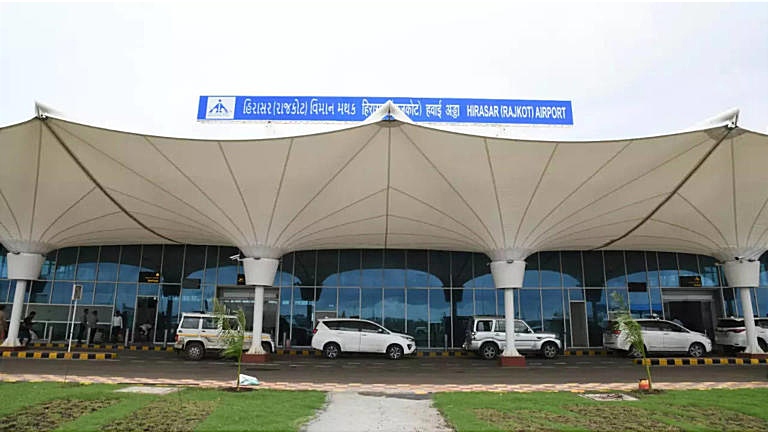
Observe your fliers! Rajkot International Airport in Gujarat has started operating flights as of right now. The Rajkot-Ahmedabad highway passes beside the recently constructed airport. The present Rajkot Airport and Rajkot City are both 30 kilometers apart. The state government will provide a bus service from the ST bus stop to Rajkot International Airport every day, beginning at 6 AM and running every two hours, for the convenience of travelers.
Airport Authority of India (AAI) closes Rajkot Airport:
The current Rajkot Airport has been shut down. The AAI has already said that the airport will stop operating once the new Greenfield airport is operational.
IndiGo will run operations out of the new airport:
All of IndiGo Airlines’ operations will take place at Rajkot International Airport. “Effective September 10th, all scheduled flights will arrive at and depart from Rajkot International Airport,” the airlines stated in a statement. On September 8, 2023, the last flight from Rajkot Airport departed.
The airport in Rajkot is expensive because:
Prime Minister Narendra Modi committed the country to the greenfield airport on July 27, 2023. It was built at a cost of about Rs 1,400 crores on a total land area of more than 2,500 acres. It entails building a runway, an apron, a parallel taxi track, etc.
Rajkot International Airport’s significance:
For residents of the state who are going overseas, the Rajkot International Airport has been envisioned as a transit hub. The terminal building of this international airport will have a total built-up area of 23,000 sqm (excluding the basement), and it can accommodate 1,800 passengers at peak times.
The new Rajkot International Airport combines cutting-edge technology with environmentally friendly elements. The New Terminal Building (NITB) is GRIHA -4 compliant (Green Rating for Integrated Habitat Assessment) and has a number of environmentally friendly features, including a double-insulated roofing system, skylights, LED lighting, and low heat gain glazing.
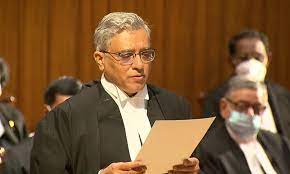
Justice P.S. Narasimha, a Supreme Court judge, has emphasized the need for concerted efforts within the legal fraternity to uplift marginalized communities. He proposed a significant step toward this goal by suggesting that every senior advocate should recruit and mentor at least one member from a marginalized community in their chambers.
Mentorship with Patience and Dignity
Justice Narasimha emphasized that such mentorship should be characterized by patience and dignity. Rushed or superficial mentoring may have adverse effects, and the process should avoid tokenism. Instead, it should adopt a humanistic approach, ensuring that the mentorship genuinely benefits the mentees from marginalized backgrounds.
Institutionalization through Bar Council Regulations
Justice Narasimha also recommended that this practice could be institutionalized through regulations established by the Bar Council of India. By formalizing this mentorship approach, it can become a norm within the legal profession.
Creating Future Leaders
Justice Narasimha believes that these voluntary efforts by senior members of the bar can lead to significant change. Young professionals from marginalized communities who receive mentorship today could become successful legal professionals in the future. Their success may not only transform their own lives but also contribute to positive changes in society.
Justice Narasimha’s proposal underscores the importance of inclusivity, mentorship, and long-term impact within the legal community, promoting a more diverse and equitable legal profession.
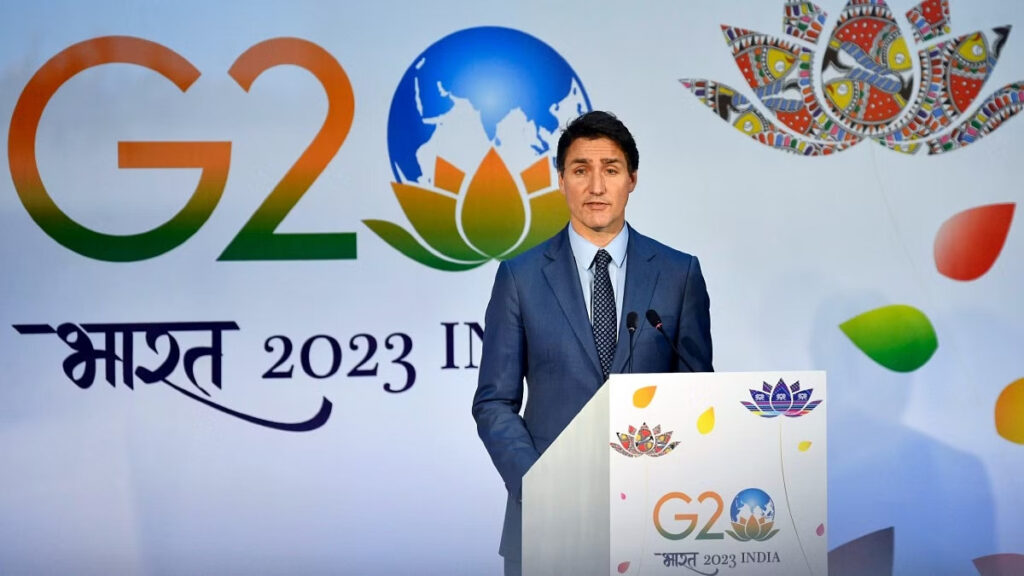
Justin Trudeau, the prime leader of Canada, was unable to leave India when a technical issue occurred with his aircraft.
The delegates weren’t on the plane yet. The airport staff received the information well in advance, and as a result, the aircraft will now depart on Monday morning.
“The Canadian Armed Forces informed us that CFC001 was having technical problems as we were leaving for the airport. Because of this, our group will remain in India until other arrangements are made, according to a statement from Trudeau’s office, as published by the Canadian website CTV News.
After attending the two-day G20 Summit in the capital, Trudeau is departing for Canada. The Canadian prime minister and his Indian counterpart, Narendra Modi, had private meetings earlier in the day.
PM Modi informed Trudeau of India’s worries during the discussion regarding the ongoing anti-Indian activities of extreme Canadian elements who are encouraging secessionism, instigating violence against Indian diplomats, and endangering the Indian population there.
According to the Ministry of External Affairs, “The Prime Minister highlighted that India-Canada relations are anchored in shared democratic values, respect for the rule of law, and strong people-to-people ties.”
The relationship between these factors and organized crime, drug cartels, and people trafficking ought to worry Canada as well. Cooperation between the two nations is crucial in addressing these dangers, according to the MEA statement, which PTI cited.
Canada has pledged to preserve free speech constantly. Following the G20 Summit, Trudeau was questioned about the rise in events involving pro-Khalistan extremists in Canada. The Canadian premier responded, “Canada will always protect freedom of expression, freedom of conscience, and freedom of peaceful protest because these rights are very essential to us. At the same time, we are always present to stop violence and to fight back against hatred.
On Friday, anti-India and pro-Khalistan graffiti was scrawled on the wall of a Hindu temple in Canada’s Surrey, British Columbia. The incident happened when Sikhs for Justice (SFJ), a pro-Khalistan organization, threatened to ‘shut down’ Indian consulates in Vancouver.
On the main gate of the Lakshmi Narayan Mandir in Surrey town, anti-India and pro-Khalistan slogans were passed in August.
The Supreme Court has upheld the decision of the National Consumer Disputes Redressal Commission (NCDRC) in a case involving Glaxo Smithkline Pharmaceuticals Ltd, a drug manufacturer. The NCDRC had ruled that the company was not liable for any deficiency of service or defect related to the administration of a vaccine.
Lack of Evidence
The Supreme Court’s decision was based on several factors. Firstly, it pointed out that the complainant failed to prove that he suffered an adverse reaction as a result of the vaccination. The Court noted that there was insufficient evidence to establish a connection between the vaccine, an alleged condition called “myositis,” and the complainant’s health issues.
Doctor-Patient Relationship
Secondly, the Court highlighted the importance of the doctor-patient relationship. It stated that the doctor should have advised the patient properly regarding the potential risks and side effects of the vaccination. In this case, the Court found that the doctor’s advice and guidance were crucial in ensuring that the patient made an informed decision about vaccination.
Conclusion
The Supreme Court’s decision reinforces the principle that establishing a causal link between a medical procedure, such as vaccination, and adverse reactions requires substantial evidence. Additionally, it underscores the role of healthcare professionals in providing patients with comprehensive information about medical treatments to enable them to make informed choices. In this case, the Court concluded that the complainant had not met the burden of proof, leading to the dismissal of the appeal.
The Supreme Court has dismissed a plea challenging the Union government’s Cabinet decision from September 2021 to ease the payment terms for adjusted gross revenue (AGR) dues owed by telecom companies. This decision came in response to a writ petition filed by Anshul Gupta against the Cabinet’s move.
Justification for Cabinet Decision
In its order, the Supreme Court emphasized that it would not be appropriate to interfere with a well-considered policy decision made in the public interest, based on expert opinions and evolving circumstances. The government’s decision to relax AGR payment terms was influenced by the COVID-19 pandemic, which led to increased data usage for online education and virtual meetings. Telecom service providers (TSPs) needed substantial investments to maintain network stability during this surge in internet usage.
Pandemic-Driven Necessity
The Court acknowledged the critical role played by the telecom sector during the pandemic, facilitating communication, virtual court proceedings, and more. It recognized that policy decisions like these, made in the interest of the public’s welfare, should not be interfered with lightly.
Policy Matters and Public Interest
The Supreme Court expressed reluctance to intervene in policy matters unless there was evidence of illegality, arbitrariness, or unconstitutionality. It emphasized that policy decisions, especially those with technical and financial implications, should be driven by public interest and expert opinions.
Conclusion
The dismissal of the plea signifies the Court’s support for the government’s policy decision to relax AGR dues payment terms for telecom companies. It underscores the importance of considering public welfare and emerging circumstances in such policy matters.
During the G20 summit in New Delhi, a groundbreaking Memorandum of Understanding (MoU) was revealed, signifying a momentous geopolitical development. Multiple nations from different continents have joined hands to establish the India-Middle East-Europe Economic Corridor (IMEC). This initiative aims to reshape global economic and political dynamics.
Participating Nations
The IMEC has garnered support from key nations, including India, Saudi Arabia, the United Arab Emirates (UAE), France, Germany, Italy, and the United States. This diverse coalition represents Asia, the Arabian Gulf, and Europe.
Objectives of IMEC
The primary objective of IMEC is to stimulate economic growth by promoting connectivity and economic integration across the participating regions. This ambitious corridor seeks to enhance trade, infrastructure development, and cooperation among the involved nations.
Counter to China’s BRI
The IMEC initiative is widely seen as a strategic response to China’s Belt and Road Initiative (BRI), which has been a dominant force in global infrastructure development. By creating IMEC, these nations aim to balance China’s influence and provide an alternative route for economic cooperation and development.
Geopolitical Implications
The launch of IMEC signifies a significant shift in global geopolitics, with multiple nations collaborating to counterbalance China’s economic influence. It reflects the growing importance of economic corridors as tools for shaping international relations and trade dynamics.
Conclusion IMEC’s
establishment represents a milestone in global geopolitics, demonstrating the determination of these nations to foster economic development and connectivity while countering China’s BRI. This initiative will likely have far-reaching implications for the global economic landscape.
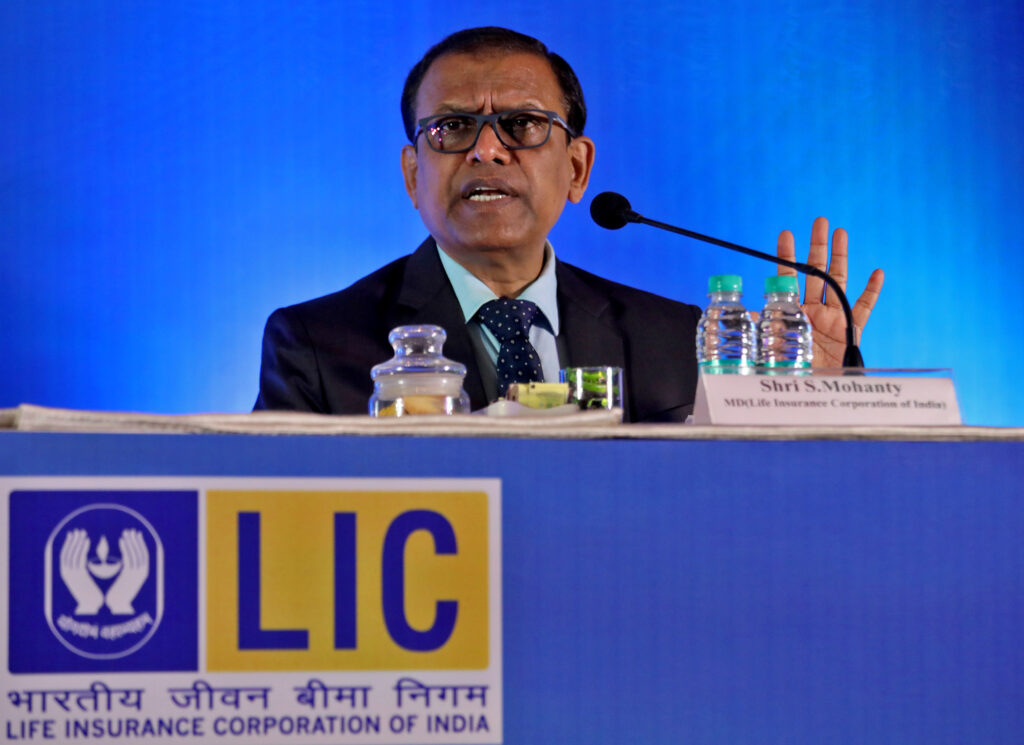
The Supreme Court has ruled that the Life Insurance Corporation (LIC) cannot impose a service charge or fee for endorsing the assignment or transfer of a policy. This verdict came in response to a circular issued by LIC on April 24, 2006, which imposed a registration charge of Rs. 250 for each policy assignment. The circular was challenged in court, and the Bombay High Court had previously declared it invalid.
Background of the Case
The case revolved around the legality of LIC’s circular, which introduced a fee for policy assignment. Policy assignment refers to the transfer of a life insurance policy from the policyholder to another party. LIC’s circular had imposed a service charge of Rs. 250 for each assignment of a policy.
High Court’s Decision
Prior to the Supreme Court’s ruling, the Bombay High Court had already invalidated LIC’s circular. The High Court found that LIC did not have the authority to levy such charges and declared the circular null and void.
Supreme Court’s Confirmation
The Supreme Court’s decision affirms the Bombay High Court’s judgment, emphasizing that LIC lacks the entitlement to impose fees for endorsing policy assignments. This ruling upholds the principle that policyholders should not be burdened with additional charges for legitimate actions related to their insurance policies.
The Supreme Court’s verdict serves as a significant legal precedent, reinforcing consumer protection in the insurance sector by preventing insurers from imposing unwarranted fees on policyholders.
As the G20 summit came to an end on Sunday with the US, Russia, and France hailing the gathering’s accomplishments under Indian presidency, Prime Minister Narendra Modi reaffirmed his call for the UN Security Council to be expanded and for reforms to all international institutions to reflect the “new realities” of the globe.
Prime Minister Modi ceremonially handed the gavel over to Brazilian President Luiz Inacio Lula da Silva to begin the rotating G20 chair. Lula praised India for speaking out on issues that concern rising economies.
Lula added that in order for emerging nations to reclaim political clout and have a stronger voice at the World Bank and the IMF, the UNSC needs to add additional developing nations as permanent and non-permanent members.
The prime minister also suggested a virtual G20 session for the end of November to review the recommendations and choices taken by the leaders of the main industrialized and developing countries here in his closing remarks at the final session of the two-day G20 summit. A major accomplishment for India’s president was the Saturday awarding of permanent membership to the 55-country African Union.
I hereby declare the G20 meeting to be over with this (proposal),” Modi remarked.
Modi quoted a Sanskrit shloka to pray for optimism and peace throughout the world, noting that India’s official G20 presidency would last until November 30 and that more than 2.5 months remained in its term as grouping leader.
A day after a breakthrough on the contentious issue was made to help the G20 leaders come out with a 37-page Declaration marking a significant diplomatic victory for India, official sources said the text relating to the Russia-Ukraine conflict is a “convergent consensus” rather than a “divisive consensus” and it could show a path to resolution of the crisis.
The Declaration, which avoided mentioning the Russian invasion of Ukraine and made a general appeal to all states to follow the principle of respecting each other’s territorial integrity and sovereignty, reflected the “100%” consensus India was able to achieve on geopolitical and developmental issues.
According to US Vice President Joe Biden, the New Delhi summit demonstrated that the alliance can still spearhead solutions to its most pressing problems. He made the comments in a post on X as he was departing for Vietnam, following a morning visit with other G20 leaders to Mahatma Gandhi’s monument Rajghat.
This year’s Summit “proved that the G20 can still drive solutions to our most pressing issues at a time when the global economy is suffering from the overlapping shocks of the climate crisis, fragility, and conflict,” added Biden.
The G20 Summit, which was held under India’s leadership, was a “breakthrough” summit in many aspects, according to Sergey Lavrov, the Russian foreign minister, as it revealed the strength and significance of the Global South and provided a roadmap for the world to go forward on a number of difficulties.
French President Emmanuel Macron told reporters after a lunch meeting with Prime Minister Modi that India has done well as the G20 president given the current disjointed climate.
Speaking at the summit’s ‘One Future’ session, Modi said it was essential that international organizations take into account the “new realities” if they were to guide the world toward a brighter future.
“Global systems must be in line with the reality of the present in order to move the world toward a better future. The “United Nations Security Council” of today is another illustration of this. The world was very different from what it is today when the UN was founded. The UN has 51 founding members at that time. Around 200 nations are currently members of the UN, according to Modi.
Every industry has undergone change, including those in transportation, communication, health, and education. Our new global organization should take into account these new realities. The US, China, France, Britain, and Russia are the UNSC’s five permanent members.
In his pitch for reforms, he claimed that the historic decision to award the African Union (AU), which consists of 55 nations, permanent participation in the G20 was taken on Saturday.
“In a similar vein, multilateral development banks need to have a wider range of authority. Our decisions in this regard should be swift and decisive, Modi emphasized. Modi also presided over a symbolic tree-planting ceremony at the opulent Bharat Mandapam convention center to commemorate the G20’s 18th summit, which was formed in the wake of the 1999 Asian financial crisis.
Cryptocurrencies and cyber security were among the pressing challenges Modi listed as affecting both the present and the future of the world. He claimed that the development of international standards to control cryptocurrencies is a new issue for social order, monetary stability, and financial stability.
According to him, cyberspace has grown to be a new source of finance for terrorism, and its security requires international cooperation and a framework. “This is a crucial topic for the security and prosperity of every nation.”
“When we take care of the security and sensitivity of every country, then the feeling of ‘One Future’ will be strengthened,” he continued.
He said that the “global family” must replace the idea of a “global village” and become a reality, advocating for a time when nations’ hearts as well as their interests are in harmony.
Lavrov claimed during his press conference that India was crucial in “preventing the West” from advancing their positions on a number of issues, including Ukraine. In many ways, this conference is a breakthrough. It gives us a way to move forward with many concerns.
Lavrov added that the Delhi summit pointed the way toward justice in both global governance and finance.
He said that the West would not be able to maintain its “hegemony” as new centers of power emerged throughout the world. “I want to express my gratitude to India for preventing attempts to politicize the G20,” he said.
President Lula addressed the closing ceremony and stated that geopolitical issues should not be allowed to dominate the G20 meetings. He also stated that the bloc was not interested in a “divided G20” and that the only effective way to address the problems of the day was through collective action. Conflict must be replaced by peace and cooperation, he declared. The following summit will take place in November 2024 in Rio de Janeiro.
“Everyone’s dedication and commitment will be needed along the route from New Delhi to Rio de Janeiro.”