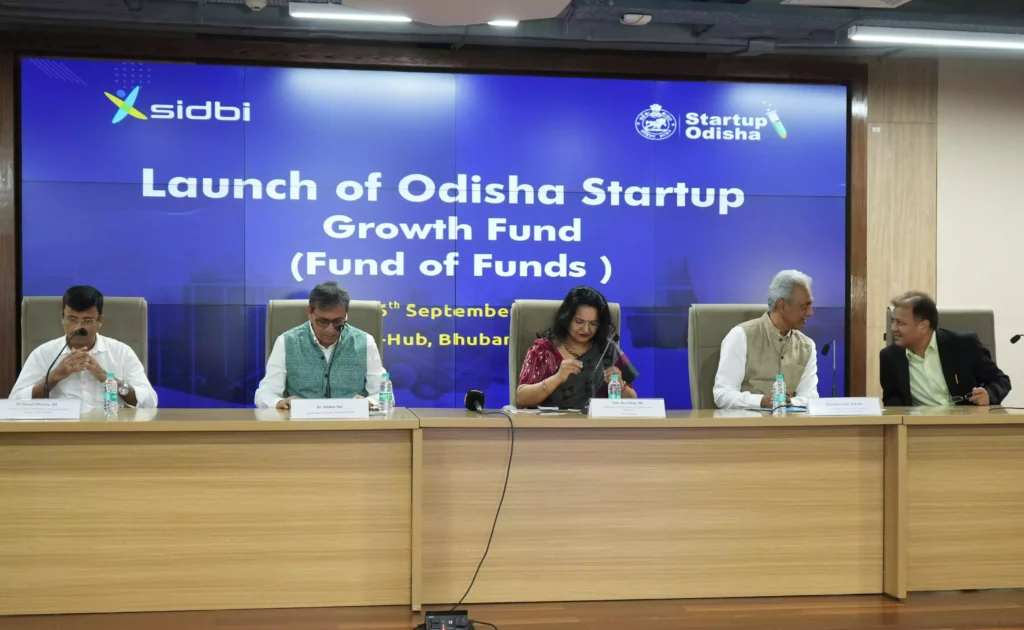
The Odisha government has introduced a significant initiative by launching the INR 100 Crore Odisha Startup Growth Fund (Fund of Funds) in collaboration with the Small Industries Development Bank of India (SIDBI). This fund aims to provide financial support to startups based in Odisha over the next five years and is part of the state’s efforts to establish itself as a thriving startup hub. The fund will be managed by SIDBI, and the state government will continually replenish it to ensure sustained support for startups.
Fund Management by SIDBI SIDBI will oversee the fund’s management, shape its investment strategy, and manage its portfolio. The fund will invest in Odisha-based startups through Alternative Investment Funds (AIFs) during its five-year tenure.
Empowering Entrepreneurs in Odisha The launch of the Odisha Startup Growth Fund is aligned with the state government’s vision to make Odisha a preferred destination for entrepreneurs. Currently, Odisha boasts more than 1,700 startups, with 600 of them being led by women. With the introduction of this fund, the government aims to further empower both existing and aspiring entrepreneurs.
Support from Startup Odisha Startup Odisha, established in 2016 with the Odisha Startup Policy-2016, plays a pivotal role in nurturing the startup ecosystem within the state. It collaborates with various agencies and incubators to provide support and resources to startups. Additionally, the government plans to expand the number of incubators in the state, striving to establish one in each district.
Future Goals The government has set ambitious goals, aiming to foster 5,000 startups in Odisha by 2025. Initiatives such as Startup Yatra 2023 and Startup Express 2023 have been rolled out to achieve this objective. Moreover, grants have been approved for startups across diverse sectors, including agritech, food and beverages, HRtech, enterprise technology, retail, education, and logistics.
The Odisha Startup Growth Fund is expected to play a pivotal role in catalyzing entrepreneurship and innovation in the state, contributing to its economic growth and development.
On the occasion of Vishwakarma Jayanti and his 73rd birthday, Prime Minister Narendra Modi unveiled the PM Vishwakarma scheme, dedicated to artisans and craftspeople involved in 18 traditional industries under the MSME sector. The launch took place at the India International Convention and Expo Center, Yashobhoomi, in New Delhi. Vishwakarma Jayanti celebrates Lord Vishwakarma, revered as the god of architecture and craftsmanship.
Scheme Overview The PM Vishwakarma scheme, with an approved outlay of Rs 13,000 crore for five years, aims to support traditional artisans and craftspeople, enabling them to enhance the quality, scale, and reach of their products, integrating them into the MSME value chain.
Key Benefits
Recognition and Training: Artisans will receive recognition as Vishwakarma along with a Certificate and ID Card. They can undergo skill verification followed by basic and advanced training, with a training stipend of Rs 500 per day.
Financial Support: The scheme offers a toolkit incentive of up to Rs 15,000, collateral-free loans of Rs 1 lakh (first tranche) and Rs 2 lakh (second tranche) at a concessional 5% interest rate, with interest subvention capped at 8%. Credit guarantee cover is provided for loans.
Digital Transactions Incentive: Artisans will receive Re 1 as an incentive for every digital transaction, up to 100 transactions monthly.
Marketing Support: The National Committee for Marketing will provide services such as quality certification, branding, e-commerce linkage, trade fair participation, advertising, publicity, and more.
Eligibility Criteria
Beneficiaries should be engaged in the relevant trade at the time of registration and not have availed loans under similar schemes in the past five years.
Registration is restricted to one family member (husband, wife, or unmarried child).
Government employees and their family members are ineligible.
Application Requirements Applicants need Aadhaar, mobile number, bank details, and a ration card. In the absence of a ration card, Aadhaar cards of all family members are required. Common Service Centres facilitate bank account opening for those without an account.
The PM Vishwakarma scheme is a significant step in empowering traditional artisans and craftspeople, fostering their growth and integration into the mainstream economy.
On September 17, 2023, Prime Minister Narendra Modi inaugurated the first phase of India International Convention Centre, known as YashoBhoomi, establishing itself as one of the world’s largest MICE (Meetings, Incentives, Conferences, and Exhibitions) destinations. YashoBhoomi spans an impressive area of over 8.9 lakh square meters and offers state-of-the-art facilities for various events and gatherings.
Delhi Metro Connectivity In conjunction with the inauguration, a new metro station named ‘Yashobhoomi Dwarka Sector 25’ was opened, linking YashoBhoomi to the Delhi Airport Metro Express line. This extension is set to enhance the operational speed of Metro trains on the Airport Express Line, reducing travel time from ‘New Delhi’ to ‘Yashobhoomi Dwarka Sector 25’ to approximately 21 minutes.
Key Features of YashoBhoomi Convention Centre
Impressive Capacity: The Convention Center boasts a seating capacity of over 11,000 delegates and includes 15 convention rooms, a Grand ballroom, and 13 meeting rooms.
LED Media Facade: YashoBhoomi is equipped with the largest LED media facade in the country, providing a stunning visual experience.
Cultural Inspiration: The Convention Center’s design draws inspiration from Indian culture, featuring terrazzo floors with brass inlays resembling rangoli patterns, suspended sound-absorbing metal cylinders, and illuminated patterned walls.
Auditorium and Grand Ballroom: The main auditorium can seat 6,000 people, and the grand ballroom accommodates an additional 2,500 guests. An extended open area can seat up to 500 people.
Expansive Exhibition Halls: YashoBhoomi offers one of the world’s largest exhibition halls, spanning over 1.07 lakh square meters. These halls will host exhibitions, trade fairs, and business events and are connected to a grand foyer space with a unique copper ceiling filtering natural light.
Innovative Seating: The auditorium features an innovative automated seating system, allowing for flexible seating configurations, including a flat floor or tiered auditorium-style seating.
Acoustic Excellence: Wooden floors and acoustic wall panels in the auditorium ensure a world-class audio-visual experience for visitors.
YashoBhoomi is set to become a hub for international conferences, conventions, exhibitions, and more, contributing to India’s prominence on the global stage in the MICE industry.
The National Company Law Tribunal (NCLT) in Mumbai has issued an interim stay on arbitration proceedings involving Shaadi.com’s Chief Executive Officer (CEO), Anupam Mittal, scheduled to commence before an arbitral tribunal in Singapore. The decision comes as a result of a plea filed by CEO Anupam Mittal, alleging mismanagement within his company. The NCLT’s order temporarily suspends the arbitration proceedings, which were set to take place from September 18 to 22, 2023.
Background of the Dispute The dispute revolves around disagreements between Anupam Mittal and Westbridge Ventures concerning their stakes in People Interactive (India) Pvt Ltd, the owner of the matrimonial website Shaadi.com. Westbridge asserted certain contractual rights, including exit rights, outlined in the Shareholders Agreement (SHA) executed with People Interactive. The SHA contained an arbitration clause designating Singapore as the seat of arbitration, with the enforcement of awards subject to Indian laws.
Mittal’s Allegations Anupam Mittal claimed that Westbridge’s actions, including attempts to appoint its nominees to People Interactive’s Board of Directors, amounted to oppression and mismanagement. He argued that since oppression cases are not arbitrable in India, the NCLT was the appropriate forum for his grievance. Mittal contended that even if an award were obtained from the Singapore tribunal, it would not be enforceable in India under the Arbitration and Conciliation Act.
Westbridge’s Position Westbridge contended that the dispute should be resolved under Singaporean law due to the specific arbitration clause in the SHA. It maintained that the issue pertained to contractual disputes, particularly the exercise of exit rights, rather than mismanagement of the company.
NCLT’s Decision The NCLT, considering the High Court’s observations regarding potential irreparable loss to Mittal, granted the injunction until the company petition’s resolution. The tribunal noted that Westbridge could still invoke Section 45 of the Arbitration and Conciliation Act during the NCLT proceedings. Conversely, proceeding with arbitration in Singapore and obtaining exit rights would render Mittal without remedy, rendering the current petition moot.
Legal Representatives Senior Advocates Ravi Kadam and Sharan Jagtiani, along with other advocates, represented Anupam Mittal, while Senior Advocates Janak Dwarkadas and Nikhil Sakhardande, with their legal team, represented Westbridge in the dispute.
The interim stay on arbitration proceedings aims to address the ongoing disputes and seek resolution through the appropriate legal channels in India.
Renowned Indian lawyer Fali S Nariman, Senior Advocate, highlighted the enduring significance of the basic structure doctrine within India’s constitutional framework during his keynote address at the 2023 Ram Jethmalani Memorial Lecture. He emphasized that this doctrine has not only achieved constitutional permanence in India but has also been embraced by six other nations worldwide. The basic structure doctrine places restraints on the legislative power of constitutional amendment.
Global Acknowledgment Nariman underscored that several countries globally have acknowledged and embraced the principle of the basic structure doctrine, recognizing its role in safeguarding democratic institutions and serving the nation’s interests. This constitutional principle, intrinsically tied to Article 368 of the Constitution, serves as a critical check on substantive constitutional amendments.
Evolution of the Doctrine Nariman traced the evolution of the basic structure doctrine from its inception in the landmark Kesavananda Bharti judgment by a 13-judge bench of the Supreme Court. He highlighted its continued relevance and how it has played a pivotal role in shaping India’s constitutional jurisprudence.
Parliament’s Recognition Nariman emphasized that the Indian Parliament itself recognized the basic structure doctrine’s importance. After the lifting of the internal emergency in 1975, Parliament expressly declared that certain fundamental rights, including the right to life and liberty, were part of the Constitution’s basic structure. This declaration demonstrated Parliament’s acknowledgment of the doctrine’s significance in preventing the misuse of emergency provisions.
Maintaining Faith in the Judiciary Nariman urged people to maintain faith in the integrity of the higher judiciary, even when concerns arise regarding specific judgments by individual Supreme Court judges. The basic structure doctrine, as a constitutional safeguard, continues to serve the nation’s interests and uphold democratic values.
The event, which featured Chief Justice of India DY Chandrachud and other prominent legal figures, provided a platform to explore the enduring relevance and impact of the basic structure doctrine in India’s constitutional landscape.
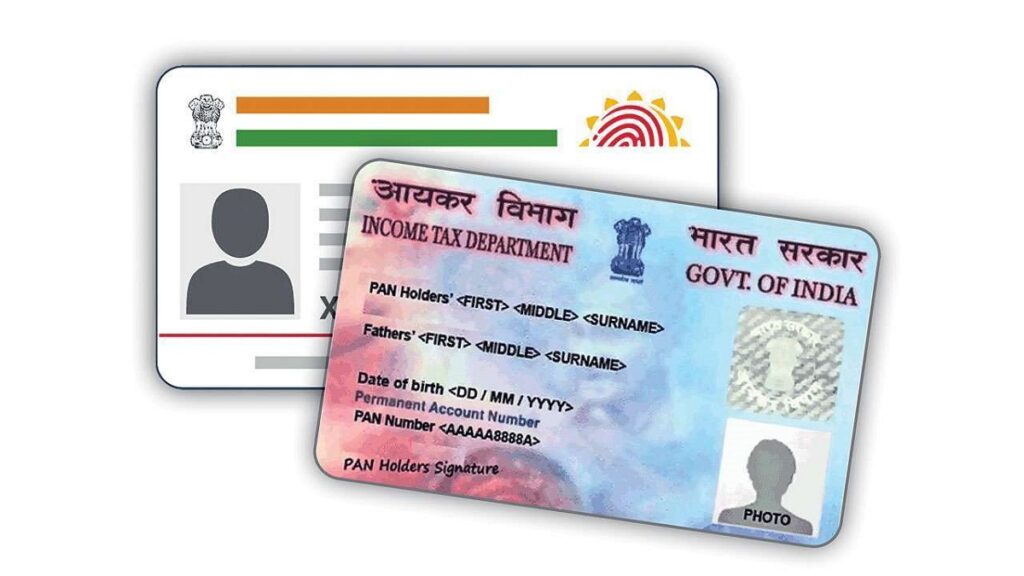
The Indian government has extended the deadline for free online updates of Aadhaar card details for the second time. Initially set for June 14, the deadline was previously extended to September 14. Now, citizens have until December 14 to update their Aadhaar card details at no cost.
Aim of the Initiative The initiative is in line with the Digital India program and is aimed at encouraging residents to take advantage of the free document update facility on the myAadhaar portal. It primarily targets individuals who obtained their Aadhaar cards a decade ago and have not updated their information since. This service is exclusively available for online modifications and cannot be accessed at physical Aadhaar centers.
Importance of Updating Aadhaar Details Updating Aadhaar details with current identity and address documents enables smoother service delivery, accurate authentication, and an improved quality of life for Aadhaar cardholders. It is essential for ensuring the accuracy and relevance of Aadhaar-related information.
How to Update Aadhaar Details Online To update Aadhaar details online, individuals can follow these steps:
Log in to the portal using the Aadhaar number and captcha. An OTP will be sent to the registered mobile number for authentication.
Navigate to the document update section and review existing details.
Select the appropriate document type from the dropdown list and upload scanned copies of the original documents.
Click the submit button and make a note of the Service Request Number (SRN) to track the status of the application request.
Accepted Proof of Identity and Address Documents The initiative accepts various documents as proof of identity (PoI) and proof of address (PoA). These documents include government-issued IDs, certificates, bank statements, utility bills, and more.
Updating Aadhaar details ensures its continued relevance and utility in various government and private sector services, making it a crucial step for residents.
India’s foreign exchange reserves witnessed a decline of $4.9 billion, falling to $593.90 billion for the week ending September 8, as reported by the Reserve Bank of India (RBI). This comes after a notable increase of $4.039 billion in the previous reporting week when the reserves stood at $598.897 billion.
Factors Contributing to the Decline The decline in forex reserves can be attributed to the central bank’s utilization of reserves to safeguard the rupee, particularly in response to global developments that have exerted pressure on the currency since the previous year. While the country’s forex reserves had reached a historic high of $645 billion in October 2021, subsequent factors have impacted this reserve position.
Composition of Reserves The major component of India’s forex reserves, foreign currency assets, decreased by $4.265 billion during the week, settling at $526.426 billion. Foreign currency assets are influenced by fluctuations in the values of non-US units, including the euro, pound, and yen, held within the foreign exchange reserves.
Gold reserves also witnessed a decline, falling by $554 million to reach $44.384 billion. Additionally, the special drawing rights (SDRs) registered a decrease of $134 million, with SDRs now standing at $18.06 billion.
Reserve Position with IMF India’s reserve position with the International Monetary Fund (IMF) also experienced a decrease, dropping by $39 million to reach $5.034 billion in the reporting week, as indicated by RBI data.
The fluctuation in India’s forex reserves reflects the dynamic nature of its economic and monetary policies, responding to various domestic and global factors that influence the country’s external financial position.
India’s G20 Presidency has marked a historic milestone with the announcement of the India-Middle East-Europe Economic Corridor during the G20 summit held at Bharat Mandapam. This transformative initiative is set to redefine trade and connectivity dynamics between India, West Asia, and Europe, reflecting India’s growing stature in global geopolitics.
Multimodal Connectivity The India-Middle East-Europe Economic Corridor is a multimodal passage involving India, UAE, Saudi Arabia, Jordan, Israel, and Greece. This ambitious project aims to streamline the international supply chain, facilitating the movement of goods from Mumbai to UAE by ship, then through UAE and Jordan via rail to Israel’s Haifa port. Subsequently, these shipments will cross the Mediterranean Sea, reaching Greece’s Piraeus port.
Reducing Dependencies and Congestion The strategic significance of this corridor lies in reducing dependencies on circuitous Red Sea routes and mitigating Suez Canal congestion. This alternate supply chain system counters Chinese dominance, offering Europe and other nations a more efficient route. Transit time between India and Europe through this corridor is estimated to be ten days, 40% faster than the traditional Suez Canal route.
Infrastructure Development To realize this vision, significant infrastructure investments are underway, including capacity expansion at Indian ports like Mumbai and Jawaharlal Nehru Port Trust, as well as enhancements at Dubai’s Jebel Ali Port, Israel’s Haifa Port, and Greece’s Piraeus Port. Rail connectivity projects in the UAE, Saudi Arabia, Jordan, and Israel are advancing rapidly.
Economic Growth Prospects The corridor’s successful implementation promises to catapult India’s economy, leveraging its demographic dividend and advancements in critical technologies. India’s role as a manufacturing and marketing hub for renewable energy, semiconductors, artificial intelligence, and more will be pivotal, attracting substantial investments and outsourcing from Europe.
Enhanced Economic Cooperation This corridor fosters deeper economic cooperation with West Asia and Europe, positioning India as a credible alternative to China’s Belt and Road Initiative. With a focus on shared interests and benefits, the corridor garners enthusiasm from all participating nations.
Efficient Connectivity Compared to the Asian Highway project, the India-Middle East-Europe Economic Corridor offers a more direct, efficient, and effective route, making it a game-changer in the evolving global trade landscape.
The United Kingdom has announced a fee hike across various visa categories, affecting several types of visa applications. These changes will apply to most visa categories, including health and care visas, applications for British citizenship registration and naturalization, and visit visas for durations of up to six months, two years, five years, and ten years.
Wider Impact on Visa Applications The fee increases will also affect the majority of fees for entry clearance and specific applications for leave to remain in the UK. This includes applications for work and study visas, fees for indefinite leave to enter and remain, as well as fees related to certificates of sponsorship and confirmation of acceptance for studies.
Expected Implementation Date These adjustments to visa fees are pending parliamentary approval and are anticipated to come into effect on October 4, as confirmed by the Home Office.
Impact on Visa Applicants The fee hike may have financial implications for individuals applying for visas to enter or remain in the UK. Prospective applicants and stakeholders are advised to review the updated fee schedule and plan their visa applications accordingly.
The Bombay High Court has issued a notice to Attorney General for India, R Venkataramani, in response to a petition challenging the constitutional validity of provisions within the Insolvency and Bankruptcy Code (IBC) that pertain to the appointment of insolvency resolution professionals (IRPs).
Suspension Without Hearing The petitioner, insolvency professional Poonam Basak, was suspended for three years by the Insolvency and Bankruptcy Board of India (IBBI), which rendered her ineligible for accepting new appointments as an IRP. Basak argued that this suspension effectively assumed the allegations against her were true until proven false, violating her fundamental rights under Articles 14, 19, and 21 of the constitution.
Challenged Sections The sections under challenge include 7(5), 9(5), 16(2), 16(3), 16(4), 27(5), 82(1), 89(3), 97(1), 98(3), 98(5), 125(1), and 145(5) of the IBC, which permit the suspension of an insolvency professional without a hearing upon issuance of a show cause notice.
Violation of Natural Justice The petition emphasized that such suspension without a hearing violates principles of natural justice and the presumption of innocence until proven guilty.
De Facto Whole Time Member Issue The petition also questioned whether the Chairperson of the IBBI is a de facto Whole Time Member of the Board with the authority to issue suspension orders. The Court found that the Chairperson’s appointment process differed from that of Whole Time Members, suggesting a lack of jurisdiction.
Court’s Decision In light of these issues, the Court temporarily stayed the operation of the suspension order and show cause notice against Basak.
Legal Representation Senior Advocate Sharan Jagtiani, along with Advocates Nirman Sharma, Ansh Karnawat, G Aniruth Purusothaman, and Parth Shah, represented Poonam Basak in the case.