The Telecom Regulatory Authority of India (TRAI) is actively working to make smartphones more affordable in India, aiming to promote digital inclusion across the country. In a bid to gather valuable insights, TRAI has invited public comments on ways to enhance smartphone affordability.
Focus of TRAI’s Consultation Paper
TRAI’s consultation paper, titled “Digital Inclusion in the Era of Emerging Technologies,” primarily examines the effectiveness of the government’s initiatives, particularly its emphasis on boosting domestic smartphone manufacturing, in reducing smartphone prices in India. The paper also delves into strategies for ensuring that digital devices and connectivity become more accessible to citizens, empowering them to fully embrace the advantages of an inclusive digital society.
Key Points Considered
Within the consultation paper, TRAI highlights two critical aspects: smartphone financing and the viability of second-hand smartphones in India. It expresses concerns about the rapid advancement of technology, the introduction of 5G services, artificial intelligence, and machine learning. TRAI emphasizes that, unless these technologies are made affordable and accessible to marginalized communities and underserved regions, there is a risk of exacerbating the existing digital divide.
Addressing Inequities in Digital Inclusion
TRAI underscores the importance of addressing inequalities in digital inclusion, which can arise due to uneven access to infrastructure, limited digital literacy, and affordability challenges. The authority recognizes that these issues must be resolved to ensure comprehensive digital inclusion and to prevent disparities from widening further.
Deadline for Public Participation
To gather diverse perspectives and recommendations, TRAI has set a deadline of October 16 for the submission of comments and October 31 for counter-comments on the consultation paper.
Conclusion
TRAI’s proactive approach in seeking public input reflects its commitment to bridging the digital divide and making digital technologies more accessible to all segments of the Indian population. The insights gathered from this initiative will likely play a pivotal role in shaping policies aimed at fostering digital inclusion in the country.
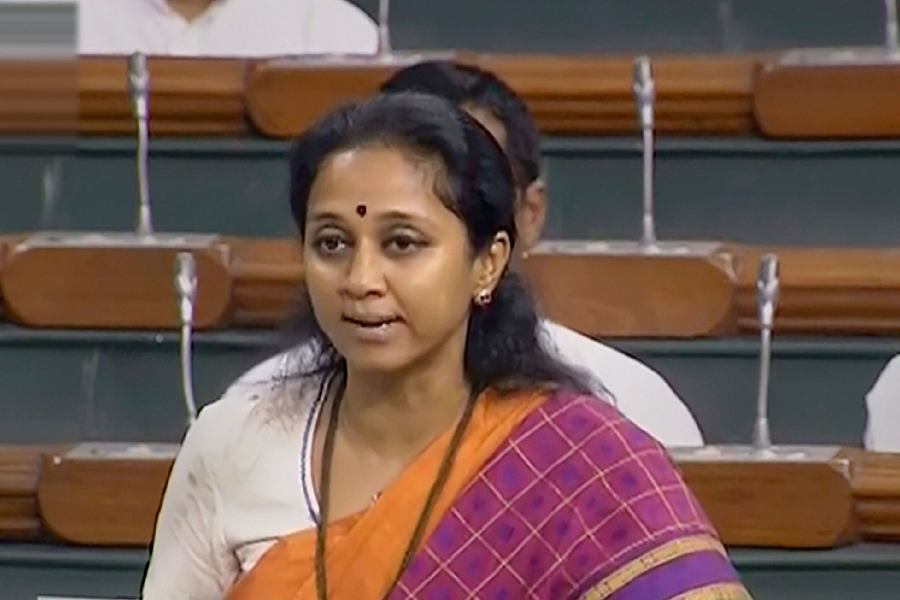
Nationalist Congress Party (NCP) lawmaker Supriya Sule has called for the passage of the Women’s Reservation Bill, which aims to reserve 33% of Lok Sabha and assembly seats for women. Her appeal comes after leaders from various political parties advocated for the bill during an all-party meeting ahead of the special five-day Parliament session.
Support for Women’s Reservation Bill
Sule emphasized that women constitute 50% of the population, urging Parliament to deliberate on the bill. She suggested that Prime Minister Narendra Modi could take the initiative to bring the bill for women’s reservation in Parliament and assemblies, assuring full support from lawmakers.
Historical Background
The Women’s Reservation Bill was approved by the Rajya Sabha in 2010 but faced disruptions and was not pushed through the Lok Sabha by the then Congress-led United Progressive Alliance government. Opposition from allies like the Rashtriya Janata Dal (RJD) and Samajwadi Party, who demanded quotas for Scheduled Castes and Scheduled Tribes within the proposed quota, contributed to the bill’s stagnation.
Parliament’s Functioning
Sule also raised concerns about the decreasing number of Parliament sittings and called for more sessions to ensure effective governance. She noted that a record number of ordinances had been introduced, emphasizing the need for increased Parliament days.
Criticism of Prime Minister Modi
In her address, Sule criticized Prime Minister Modi for referring to the NCP as a “Naturally Corrupt Party” and accusing her party of corruption.
Conclusion
Sule’s call for the passage of the Women’s Reservation Bill highlights the importance of gender equality and increased representation of women in Indian politics. The bill’s fate in the current session and the government’s response will be closely watched by advocates of women’s rights and political reform.
A petitioner in the Adani-Hindenburg case has approached the Supreme Court, requesting the reconstitution of the expert panel responsible for investigating allegations of regulatory failure and legal breaches by the Adani conglomerate. The petitioner, Anamika Jaiswal, has cited a conflict of interest involving three of the panel’s six members, including the panel’s chairman, a retired Supreme Court judge.
Conflict of Interest Allegations
Anamika Jaiswal’s application highlights concerns about the inclusion of OP Bhatt (former State Bank of India chairman), KV Kamath (veteran banker), and senior advocate Somasekhar Sundaresan in the expert panel. The petitioner argues that these members may have a conflict of interest in the probe’s outcome regarding the accusations by US short-seller Hindenburg Research.
OP Bhatt: Jaiswal points out that Bhatt currently serves as the chairman of Greenko, a renewable energy company closely collaborating with the Adani group since March 2022. Furthermore, Bhatt’s connection to a CBI investigation in March 2018, related to alleged irregularities in disbursing loans to fugitive economic offender Vijay Mallya, is raised as a potential conflict.
KV Kamath: Jaiswal notes that Kamath, the former chairman of ICICI Bank, was named in a CBI FIR concerning the ICICI Bank fraud case. This case involved allegations of kickbacks to Chanda Kochhar, the bank’s former CEO, in exchange for loans provided to the Videocon group during Kamath’s tenure.
Somasekhar Sundaresan: The application argues that Sundaresan, a senior advocate, has represented the Adani group in various legal matters, including before the Securities and Exchange Board of India (SEBI) Board.
Conclusion
The petitioner’s request for the reconstitution of the expert panel underscores concerns about potential conflicts of interest that could compromise the fairness and impartiality of the Adani probe. The Supreme Court’s decision on this matter will be crucial in ensuring transparency and credibility in the investigation process.
The Supreme Court of India has ruled that there is no prohibition against seeking the reinstatement of an appeal challenging the imposition of a tax liability if an assessee is unsuccessful in obtaining the benefits of the Kerala Value Added Tax Amnesty Scheme, 2020 (VAT Amnesty Scheme). The decision came in the case of PM Paul versus The State Tax Officer & Ors, where a Kerala-based businessman sought to restore his tax appeal after withdrawing it to apply for the VAT Amnesty Scheme.
No Bar on Restoration
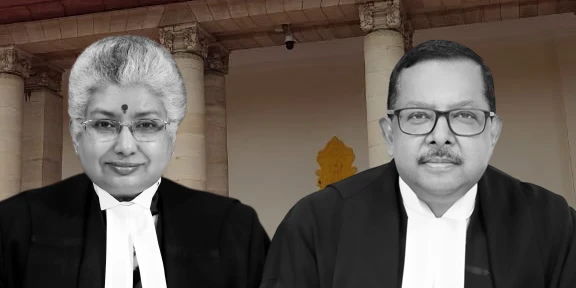
The Supreme Court bench comprising Justice BV Nagarathna and Justice Ujjal Bhuyan stated that there is no explicit restriction preventing the restoration of an appeal when an assessee is unable to avail of the Amnesty Scheme’s benefits. The Court emphasized that tax appeals are a statutory remedy, and the appellant had initially withdrawn the appeal as a prerequisite for applying for the Amnesty Scheme.
Ruling Details
The businessman’s appeal had been withdrawn to ensure no pending legal proceedings existed for applying to the VAT Amnesty Scheme. However, when he was unsuccessful in availing the scheme’s benefits, he sought the restoration of his original tax appeal.
The Supreme Court allowed the appeal against the Kerala High Court’s decision, restoring the tax appeal pending before the Joint Commissioner of Appeals. The Court instructed the parties to appear before the appellate authority on October 4, with the restored appeal to be heard on its merits and disposed of in accordance with the law.
Conclusion
The Supreme Court’s decision clarifies that an assessee can seek the reinstatement of a tax appeal even after withdrawing it to apply for tax amnesty, provided the amnesty benefits are not obtained. This ruling underscores the importance of statutory remedies and access to justice in tax matters.
The Reserve Bank of India (RBI) is reportedly intervening in the foreign exchange market by selling dollars through public sector banks to prevent the Indian rupee from hitting a record low. The rupee has been under pressure and was trading at 83.2025 against the U.S. dollar, just shy of its all-time low of 83.29.
RBI’s Dollar Sales
According to six traders cited by Reuters, the RBI is likely behind the dollar-selling operations via public sector banks. Large public sector banks are reported to be actively selling dollars in the market. The RBI’s approach involves offering dollars at various price points, without adhering to a specific exchange rate.
Market Response
Traders are noting that despite the RBI’s intervention, the rupee may still face downward pressure, and a new record low cannot be ruled out. The market appears to be absorbing the dollar selling without significant resistance.
Conclusion
The RBI’s efforts to stabilize the rupee highlight the central bank’s commitment to maintaining exchange rate stability. While these interventions aim to prevent a further slide in the rupee’s value, the currency’s performance will continue to be influenced by various domestic and international factors. The RBI remains watchful, ready to take necessary measures to safeguard India’s economic stability.
Foxconn, the prominent manufacturer of Apple’s flagship iPhone, is setting ambitious goals for its operations in India. The Taiwanese electronics giant aims to double its employment, investment, and business size in the country within a year. This comes as Foxconn plays a pivotal role in establishing India as a major global manufacturing hub for Apple, particularly with the production of the latest iPhone 15 within the country.
Foxconn’s India Growth
Foxconn’s representative in India, V Lee, expressed this commitment on LinkedIn, highlighting the company’s rapid growth in the country under Prime Minister Modi’s leadership. The company’s operations in India already generate approximately $10 billion annually, a significant contribution to its $200 billion annual revenue.
Future Investments and Diversification
Foxconn’s chairman and CEO, Young Liu, recently indicated that the company could invest billions of dollars in India if its plans materialize fully. The firm operates around nine campuses in India and has over 30 factories, with plans to expand beyond iPhone manufacturing.
Foxconn is exploring India as a potential third global hub for electric vehicle (EV) contract manufacturing, aligning with its goal to produce 500,000 to 700,000 EVs by 2025, capturing about 5% of the global EV market. This diversification beyond iPhones reflects Foxconn’s strategy to reduce its dependence on China and navigate challenges posed by COVID-19 restrictions and geopolitical tensions.
Conclusion
Foxconn’s commitment to doubling its India operations signifies the country’s growing importance in global electronics manufacturing. As Foxconn expands its footprint in India and explores EV manufacturing, it strengthens India’s position on the global manufacturing map and offers significant economic opportunities.
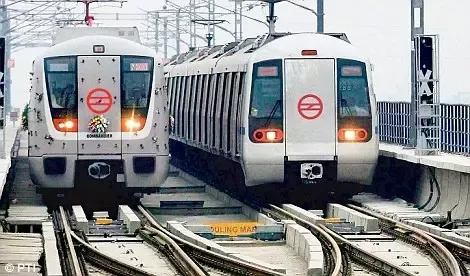
The Delhi Metro has achieved a historic milestone by becoming India’s longest metro network, spanning an impressive 393 kilometers. This remarkable feat was accomplished with the recent inauguration of the Dwarka Sector-21 to Yashobhoomi Dwarka Sector–25 Metro section on the Airport Express Line corridor. The Delhi Metro Rail Corporation (DMRC) manages and operates this extensive rapid transit network, serving not only the national capital but also neighboring cities like Noida, Ghaziabad, Faridabad, Ballabgarh, and Gurugram.
Delhi Metro’s Journey Delhi Metro embarked on its transformative journey on December 25, 2002, with the commencement of services from Shahdara to Tis Hazari on the Red Line. Since then, it has expanded significantly, currently operating more than ten lines that crisscross the Delhi-NCR region.
Overview of Delhi Metro Corridors The Delhi Metro network comprises various lines, each contributing to the extensive coverage of the region:
Red Line: Stretching 33.48 kilometers, the Red Line features 29 stations and four key interchanges.
Yellow Line: Covering 47.25 kilometers from Samaypur Badli to Millenium City Centre Gurugram, the Yellow Line boasts 37 stations and eight interchanges.
Blue Line (Line 3 and 4): This 55.56-kilometer corridor connects Dwarka Sector-21 to Noida Electronic City, encompassing 50 stations and ten interchanges.
Green Line: Spanning 27.96 kilometers, the Green Line includes 24 stations and four interchanges.
Violet Line: Extending over 45 kilometers, the Violet Line features 34 stations and five interchanges.
Pink Line: Covering 57.49 kilometers from Majlis Park to Shiv Vihar, the Pink Line encompasses 38 stations and eleven interchanges.
Magenta Line: This 34.12-kilometer line comprises 25 stations and four interchanges.
Grey Line: Spanning 4.98 kilometers, the Grey Line connects Dwarka to Dhansa Bus Stand, with four stations and one interchange station at Dwarka.
Airport Express Line: Stretching 24.9 kilometers, the Airport Express Line boasts seven stations and three interchanges.
Rapid Metro (RMGL): Covering 10.58 kilometers, this route includes 11 stations and one interchange facility at Sikanderpur.
Conclusion The Delhi Metro’s expansion to become India’s longest metro network signifies a significant milestone in the nation’s public transportation infrastructure. This extensive network not only enhances connectivity within the Delhi-NCR region but also underscores the city’s commitment to sustainable and efficient urban mobility.
Reliance Jio is gearing up to unveil its highly anticipated fixed wireless broadband service, Jio AirFiber, on Ganesh Chaturthi, scheduled for September 19. This announcement follows Reliance Industries Chairman Mukesh Ambani’s revelation at the company’s 46th annual general meeting last month.
Jio AirFiber: Revolutionizing Connectivity Jio AirFiber is a wireless 5G-powered Wi-Fi service harnessing 5G technology to deliver high-speed internet connectivity to homes and businesses. This service is poised to challenge established wired broadband providers like Airtel and ACT Fibernet.
Distinguishing Features of Jio AirFiber Unlike JioFiber, which relies on fiber-optic cables, Jio AirFiber operates wirelessly, eliminating the need for complex installations by technicians. It leverages dedicated 5G radio links to connect users’ residences or offices to the Jio network, enabling speeds of up to a remarkable 1.5 Gbps.
Jio AirFiber Price and Availability While pricing details are yet to be disclosed, Jio AirFiber is expected to offer competitive rates compared to other broadband services. Initially, the service will launch in select cities, with plans to expand to more locations in the near future.
Key Features Jio AirFiber will come with a range of features, including high-speed internet access, unlimited data usage, support for Wi-Fi 6 – the latest Wi-Fi standard known for speed and performance enhancements, and bundled OTT subscriptions.
A Disruptive Force in Broadband The entry of Jio AirFiber into the market is expected to disrupt the Indian broadband sector. Renowned for its aggressive pricing and innovative offerings, Jio has previously transformed the telecom industry with unlimited data plans and affordable 4G smartphones. Jio AirFiber could follow suit, prompting other broadband providers to lower prices and enhance services to stay competitive.
The launch of Jio AirFiber on Ganesh Chaturthi heralds a new era in broadband services, promising faster, more accessible, and technologically advanced internet connectivity for Indian consumers and businesses alike.
On Monday, Prime Minister Narendra Modi outlined the history of the historic Parliament House, which has traveled nearly eight decades alongside India since it gained independence from the British Empire.
As he set the tone for Parliament to move to its new site, PM Modi praised “historic decisions” made by Parliament, including the repeal of Article 370 and the implementation of the Goods and Services Tax (GST) and One Rank One Pension laws.
“The House will always be able to claim with pride that it was here that Article 370 was made possible… GST was approved here as well. “One Rank-One Pension” was witnessed by this House, and a 10% EWS reservation was successfully implemented for the first time in the nation without any contention, he said.
When discussing the significant historical events that shaped the structure, Prime Minister Modi also recalled how Jawaharlal Nehru, the nation’s first PM, delivered his “stroke of midnight” address here, laying the groundwork for India’s independence.
“The resounding inspiration of Nehru Ji’s ‘Stroke of Midnight’ speech will be with us. The prime minister remarked today that Atal Bihari Vajpayee once observed, “Governments will come and go, but this country will stay. ” He then recounted several significant events that took place in the ancient Parliament building.
Today, the Parliament convened for a special five-day session during which Tuesday’s transfer of proceedings to the new Parliament building would take place. The last day of business in the old building is today.
‘Bitter-sweet memories’ are recalled by PM Modi.
The 2001 terrorist attack and the building’s function during colonial times were among the “bitter-sweet memories (of the old building)” that the prime minister shared with the crowded House. He also mentioned the building’s significance at the time.
“Leaving this building is a bittersweet experience…It has a lot of memories that are both bitter and sweet. We have all seen disagreements and conflicts, but we have also seen “parivaar bhaav,” or “a sense of family,” the prime minister remarked in his speech.
“A terrorist attack occurred (on Parliament). This wasn’t an attack on a structure; rather, it was an assault on our living soul—the “Mother of Democracy.” He praised the security personnel murdered in the attack and stated, “The nation can never forget that incident.
In addition, Prime Minister Narendra Modi stated, “The imperial legislative council met in the previous Parliament before Independence. Following Independence, it adopted the name “Sansad Bhawan.” While it is true that foreign rulers made the choice to create this edifice, we can never forget that my countrymen’s blood, sweat, and money were spent on its construction.
In a speech full of nostalgia, the prime minister also complimented India’s Chandrayaan-3 Moon mission, saying it “made the world proud” and “highlighted a new form of India’s strength.” He also discussed the G20 Summit’s success, saying that “140 crore citizens… not any individual or party” were responsible for it.
The negotiation of the unified communique from G20 leaders, according to the Prime Minister, highlighted India’s strength and status in the international community. He also made reference to the historic Delhi Declaration.
The Indian government has unveiled the Skill India Digital (SID) platform, a pioneering initiative that converges the ‘Digital India’ and ‘Skill India’ programs. Designed to enhance skill development through digital technology and Industry 4.0 expertise, the platform seeks to make skill acquisition more innovative, accessible, and personalized. Union Minister for Education and Skill Development and Entrepreneurship, Dharmendra Pradhan, inaugurated the platform, emphasizing its role in bolstering India’s digital public infrastructure.
Comprehensive Skill Development Hub SID is a comprehensive digital platform offering industry-relevant skill development courses, job opportunities, and entrepreneurship support. It serves as an extensive information gateway for all government skilling and entrepreneurship initiatives. One notable feature is the introduction of digital CVs using personalized QR codes, enabling recruiters to access candidate profiles by scanning these codes.
Advocacy for Global Digital Public Infrastructure Minister Pradhan highlighted India’s advocacy for global digital public infrastructure and its commitment to addressing skills gaps. This initiative aligns with India’s successful G20 Presidency, during which the country showcased its digital assets, including those developed under the India Stack umbrella.
Creating a Future-Ready Workforce SID aims to centralize and unify various training programs launched by central and state governments. By doing so, it aims to generate employment and entrepreneurial opportunities for Indian youth. Given the tech-driven post-pandemic world, the platform seeks to equip India with a future-ready workforce.
Continued Emphasis on Digital Skills This initiative aligns with the government’s ongoing efforts to promote digital skills and digitization. In August, the Digital India initiative received a significant boost with an outlay of INR 14,903 Crores. Prime Minister Narendra Modi has previously emphasized the potential for India’s digital economy to reach $1 trillion by 2025, highlighting digitization as a key pillar for post-pandemic recovery and workforce resilience.
The Skill India Digital platform represents a significant step toward India’s digital transformation, fostering skill development and entrepreneurship in the digital age.