After breaching the crucial psychological support level of $1900 last week, gold has faced a significant downturn. Currently, it has found support around the $1820 mark and is in an oversold condition. This downtrend is not limited to gold; silver is also in an oversold region. While the majority of the correction appears to be complete, there might be a bit more downward movement if the Non-Farm Payroll data, released today, exceeds expectations.
The key Non-Farm Payrolls figure is anticipated to be around 170,000, compared to a previous rise of 187,000 in the September report. The recent disappointing ADP jobs report has heightened concerns that the more critical jobs report today could also underperform.
Gold prices have tumbled more than 11% from their May peak of over $2,000 per ounce, primarily due to the Federal Reserve’s hawkish stance, which has driven long-term bond yields to their highest levels in 16 years. Unfortunately, a robust gold rally in the near term seems unlikely as the Fed’s potential for further action is expected to keep a lid on gold prices. However, looking ahead to 2024, there is optimism that prices will start to rise. While some Fed members may advocate for one more rate hike, the prevailing view is that the Fed has concluded its rate hikes. With factors such as the resumption of student loan repayments, a slowdown in real household disposable income, and the possibility of Fed rate cuts before August 2024, there could be a positive impact on gold and silver.
The recent weakness in gold can be attributed to the surge in the US Dollar and Treasury yields. However, over the last two trading sessions, the US Dollar has retraced, and US 10 and 30-year Treasury yields have also pulled back. Despite these developments, gold has struggled to recover and has now seen nine consecutive days of lower closes. This indicates that despite some relief in the USD and bond yields, traders remain cautious about taking long positions in gold, largely due to today’s crucial US employment data. If the data comes in below expectations, we may see some long positions being initiated as traders gain more confidence. Additionally, the Federal Reserve’s commitment to keeping rates higher for a longer duration is influencing traders to stay away from long positions in gold. According to the CME’s FedWatch tool, there is only a 19.6% probability that the Federal Reserve will raise its benchmark rate at the November FOMC meeting, with a slightly higher probability of 29.4% for a rate hike in December.
From a technical perspective, MCX Gold is in an oversold condition, with the RSI_14 trading at 25. Historically, reversals have occurred around this RSI level. The employment data released today is of utmost importance, and if it favors gold with negative data, it could present an opportunity to go long. The risk-reward ratio does not favor further short positions from this point. For those with existing short positions, booking profits is advisable, and a recommendation to go long is in the range of 56,000-55,500 with an expected target of 57,500 and a stop loss of 55,200.
Valiant Laboratories’ shares made a strong debut on the stock exchanges, opening at a 15.82% premium over the IPO price. The shares started trading at Rs 162.15 on the NSE and Rs 161 on the BSE, compared to the IPO price of Rs 140. Investors who participated in the IPO and secured shares have seen a profit of Rs 22.15 per share, representing a nearly 16% return on the first day of listing.
However, the question arises: should investors hold onto their shares or book profits? The IPO received robust demand, with a subscription rate of 29.76 times, indicating strong investor interest. While the initial listing has been positive, investors should exercise caution and consider associated risks. These risks include the company’s reliance on a single product, dependence on a limited number of suppliers and customers, and competition within the industry.
Shivani Nyati, Head of Wealth at Swastika Investment, advises investors to book profits and exit their positions. For those interested in holding for the long term, she suggests placing a stop loss at Rs 150.
To recap, Valiant Laboratories’ IPO was open for public subscription from September 27, 2023, to October 3, 2023. The IPO price range was set at Rs 133-140 per equity share with a minimum lot size of 105 shares, requiring a minimum investment of Rs 14,700 for retail investors. The IPO witnessed strong demand, with the QIB category subscribed 20.83 times, non-institutional investors subscribing 73.64 times, and retail individual investors (RIIs) subscribing 16.06 times.
The company specializes in manufacturing Paracetamol, an Active Pharmaceutical Ingredient, and Bulk Drug, in various grades and sizes based on customer specifications. Valiant Laboratories has demonstrated consistent revenue growth, achieving a CAGR of 35.3% during FY21-23.
The Burman family, known for their ownership of Dabur India, has been steadily increasing their presence in the financial services sector. With a net worth of $10 billion according to Forbes India Rich List, they currently hold a 26% stake in Religare Enterprises, making them the largest shareholders in the company. Their plan includes increasing their stake in Religare Enterprises to over 25%, which would trigger a mandatory open offer.
Mohit Burman, Chairman of Dabur India, expressed their commitment to enhancing shareholder value in Religare Enterprises, highlighting their 25-year presence in the financial services sector, which includes investments in various financial institutions. He also indicated their intention to further expand their insurance and broking businesses under the Religare umbrella.
This move places the Burman family in competition with conglomerates like Reliance Industries, which recently demerged Jio Financial Services and has ambitious plans in the financial sector. Established players such as Bajaj Finance, Tata Group, Aditya Birla Group, and the Shriram Group are also key competitors.
Industry analysts and financial experts view this as a strategic move to tap into the growing financial services sector in India. The country’s thriving economy has led to increased demand for loans and various financial services, including insurance, creating opportunities for companies like Bajaj Finance, Tata Capital, and Aditya Birla Capital to secure fresh funding.
Deepak Jasani, Head of Retail Research at HDFC Securities, suggests that the Burmans’ decision to raise their stake in Religare is a diversification strategy, as financial services offer visible earnings potential for the next 5-10 years. They are opting for inorganic growth rather than organic expansion.
The under-penetration of financial services in India presents significant growth prospects for large business conglomerates. G Chokkalingam, Founder of Equinomics Research & Advisory, emphasizes that the financial services sector in India has substantial room for expansion, considering its low penetration levels compared to developed countries.
In terms of retail loans, mortgage loans, insurance coverage, and mutual fund assets under management (AUM), India lags significantly behind countries like the US and the UK. The Burman family’s open offer for Religare Enterprises amounts to Rs 2,116 crore, and their acquisition of an additional 5.27% stake will require an investment of Rs 407 crore. They have also indicated their intention to appoint directors to the board and take control of the company, with the flexibility to implement changes in the management structure as determined by the board.
When the Reserve Bank of India (RBI) keeps the repo rate unchanged, it signifies that the central bank is maintaining the current level of interest rates at which it lends money to commercial banks. The RBI’s decision to pause the repo rate at 6.5% since February 2023 aligns with its perspective that developed economies are approaching a rate peak, despite expectations of prolonged inflation.
Impact on Homebuyers
Adhil Shetty, CEO of Bankbazaar.com, notes that the RBI’s decision brings stability to policy rates, benefiting homebuyers. The unchanged repo rate suggests that banks are unlikely to immediately adjust their lending rates. For homebuyers, this translates to stable EMIs and better financial planning.
Advantages of Unchanged Repo Rates for Homebuyers
Financial Planning: Unchanged repo rates provide a period of rate stability, helping prospective homebuyers plan their finances with confidence.
Affordable Borrowing: Steady or lower interest rates make homeownership more affordable, potentially stimulating housing demand and market activity.
Refinancing Opportunities: Existing borrowers with floating-rate home loans can explore refinancing options if lower interest rates become available from lenders.
Impact on Housing Demand
Stable or lower interest rates encourage housing demand as affordability improves. This can lead to increased activity in the real estate market. However, existing borrowers may use this opportunity to prepay their loans and reduce interest burdens.
Effect on Property Prices
Unchanged repo rates can have mixed effects on property prices. Lower interest rates can push prices higher due to increased demand. Conversely, steady or higher interest rates may moderate price growth or trigger corrections if borrowing costs become prohibitive.
Refinancing Considerations
Existing homebuyers with floating-rate loans should assess the potential benefits of refinancing in light of unchanged repo rates. It’s essential to consider associated costs and long-term advantages when making refinancing decisions.
While the repo rate is a significant factor, home loan interest rates are influenced by multiple economic and market conditions, including inflation, liquidity, and bank policies. Therefore, homebuyers should stay informed about the broader economic landscape and seek expert advice to make informed decisions about home loans.
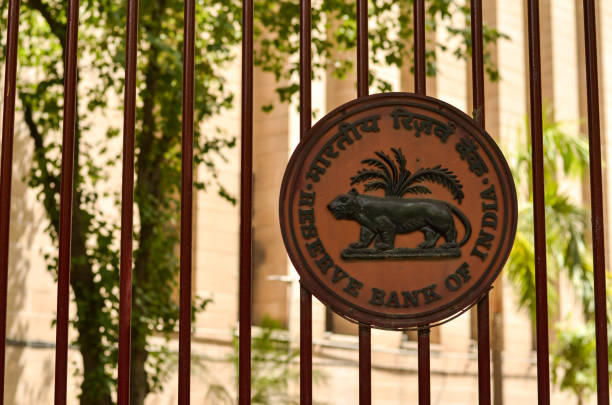
by gopal.krishna185Delhi, India, 2019. RBI logo on the closed iron gate of Reserve Bank of India (RBI) building at Patel Chowk, Parliament Road, Connaught Place with the office building in the background.
The Reserve Bank of India (RBI) has chosen to maintain its existing key interest rates, signaling a continuation of the current interest rate level at which it provides loans to commercial banks. RBI Governor Shaktikanta Das announced the fourth bi-monthly monetary policy, revealing that the central bank has decided to keep the repo rate unchanged at 6.50% and has adopted a stance of ‘withdrawal of accommodation.’ He stated, “After a detailed assessment of the evolving macroeconomic and financial developments and the outlook, RBI’s Monetary Policy Committee decided unanimously to keep the Policy Repo Rate unchanged at 6.5%.”
Market’s Positive Response
The RBI’s decision to maintain key interest rates unchanged has elicited a positive response from the market. In the wake of this news, the NSE Nifty 50 saw a 0.57% increase to reach 19,658.20 points, and the BSE Sensex recorded an uptick of nearly 400 points, reaching 66,030.69 during Friday’s trading session.
Market Dynamics Ahead
Despite concerns about rising global inflation, the market has reacted positively to the RBI’s policy stance. However, experts anticipate that the impact of this decision may be limited, as market attention is expected to shift towards global factors such as the dollar index and US bond yields. According to Santosh Meena, Head of Research at Swastika Investmart, “The RBI’s decision to maintain the status quo in its policy has been received positively by the market, despite growing concerns about rising inflation on a global scale. Nevertheless, the impact of this decision is expected to be limited, as the market’s attention is anticipated to shift towards global market dynamics, notably the dollar index and US bond yields.”
Gold prices have seen a significant drop of more than 11% from their May highs of over $2,000 per ounce. This decline has been driven by the Federal Reserve’s hawkish stance, which has led to a surge in long-term bond yields, reaching their highest levels in 16 years. Gold faced a critical moment when it breached the psychological support level of $1,900. Currently, it has found support around $1,820 and is now considered oversold. Silver has followed a similar pattern of overselling, and it’s believed that most of the correction has already taken place. However, the upcoming Non-Farm Payroll data release may introduce further correction if the results exceed expectations.
Non-Farm Payroll Data Expectations
The key Non-Farm Payroll figure is anticipated to show an increase of 170,000 jobs, compared to a rise of 187,000 in the previous September report. A recent disappointment in the ADP jobs report has raised concerns that Friday’s more crucial employment report may also underperform.
Gold’s Prospects Moving Forward
Despite the current oversold conditions and the potential for a rebound, a strong rally in gold is not expected in the near term. The Federal Reserve’s threat of further action will likely continue to constrain gold prices. However, there is optimism that prices will begin to rise in 2024. While some Fed members may favor one more rate hike, there is a belief that the Fed has completed its rate hikes. With factors such as student loan repayment resuming and real household disposable income slowing, the Fed may consider rate cuts before August 2024, which could positively impact gold and silver.
Technical Analysis and Trading Recommendations
From a technical perspective, MCX Gold is currently in an oversold region with an RSI_14 indicator at 25. Historically, reversals have occurred around this zone. The upcoming employment data is crucial, and a negative outcome for gold could present a favorable opportunity to go long. The risk/reward ratio does not favor short positions at this point. Traders holding short positions may consider booking profits, and it is recommended to consider going long around the range of 56,000-55,500 with an expected target of 57,500 and a stop loss at 55,200.
For newly established private companies looking to raise capital through share issuance, it’s essential to be aware of the tax implications of Angel Tax and recent amendments. Angel Tax, as per Section 56(2)(viib) of the Income Tax Act, applies when closely held companies issue shares at a value higher than their face value. The excess of the issue price over the Fair Market Value (FMV) is taxed as “Income from other Sources.”
Applicability Exceptions
Angel Tax provisions do not apply to eligible startups and certain cases where shares are issued to venture capital undertakings. FMV is determined under Rule 11UA of the IT Rules, using methods like Net Asset Value (NAV) or Discounted Cash Flow (DCF).
Recent Changes to Rule 11UA
The Central Board of Direct Taxes (CBDT) has introduced new valuation methods for non-resident investors in addition to DCF and NAV:
Comparable Company Multiple Method
Probability Weighted Expected Return Method
Option Pricing Method
Milestone Analysis Method
Replacement Cost Method.
Safe Harbor Provision
A safe harbor of a 10% value variation is introduced. If the issue price doesn’t exceed the Rule 11UA value by more than 10%, it’s considered as FMV.
Consideration from Notified Entities
If a closely held company receives consideration for shares from a notified entity, that price can be considered FMV for both resident and non-resident investors. However, this applies if the consideration doesn’t exceed the aggregate consideration received from the notified entity, within 90 days before or after the share issuance.
Matching Prices for Resident and Non-Resident Investors
Similar price matching is available for resident and non-resident investors concerning investments by Venture Capital Funds or Specified Funds.
These rules are crucial for new companies seeking to raise capital through share issuance, ensuring compliance with Angel Tax regulations and recent amendments.
In the latest report from Geetanjali Homestate, the Gurugram property market has demonstrated a substantial year-on-year growth of 14.9% in Q3 2023. Average property prices now range from Rs 7,400 to Rs 7,550 per sqft. This remarkable surge underscores the city’s evolution into a vibrant real estate destination.
Quarter-on-Quarter Growth: 6.1%
The report also highlights a quarter-on-quarter growth rate of 6.1%. In Q2 2023, property prices were within the range of Rs 6,900 to Rs 7,100 per sqft, showing a steady upward trajectory.
Gurugram’s Diverse Property Offerings
Gurugram offers a diverse range of properties, including residential apartments, builder floors, and residential plots, catering to various property seekers’ preferences. Geetanjali Homestate’s Property Pricing Report serves as a valuable resource for potential buyers, investors, and developers interested in the dynamic Gurugram property market.
Growth in Prominent Localities
Golf Course Road: Sector 42 has seen an impressive year-on-year growth of 44.1%, with property prices surging to Rs 45,000 to Rs 47,000 per sqft in Q3 2023. Quarter-on-quarter growth was 8.8%.
Sohna Road & Dwarka Expressway: Sohna Road saw a year-on-year growth of 22.2% in Q3 2023, with prices ranging from Rs 7,300 to Rs 7,500 per sqft. Dwarka Expressway had a remarkable year-on-year growth of 36.6%, with prices ranging from Rs 8,500 to Rs 10,000 per sqft.
Golf Course Extension Road: Sector 67 witnessed extraordinary year-on-year growth of 45.6%, with prices ranging from Rs 12,000 to Rs 14,000 per sqft in Q3 2023.
Southern Peripheral Road: In Sector 79, there was an impressive year-on-year growth of 32.3%, with prices ranging from Rs 8,600 to Rs 8,800 per sqft in Q3 2023. Sector 70A experienced year-on-year growth of 17.3%.
New Gurugram: In Sector 83, property prices showed a year-on-year growth of 22.2%, with prices ranging from Rs 6,800 to Rs 7,000 per sqft. Sector 92 displayed steady appreciation with a 5.3% year-on-year increase.
The decision to buy or rent a home is a significant financial choice that has a profound impact on one’s life. Each option comes with its own set of advantages and disadvantages, and the right choice depends on individual financial circumstances and long-term goals.
The Case for Buying: Building Your Castle
Owning a home carries a sense of stability and control. Homeowners build equity with every mortgage payment, and the feeling of fully owning one’s space is empowering. Homeownership allows personalization, from painting walls to remodeling kitchens, and offers the potential for property appreciation, although it’s not guaranteed.
Additionally, homeowners enjoy tax benefits, such as deductions for mortgage interest and property taxes, leading to potential savings during tax season.
The Case Against Buying: The Heavy Burden of Ownership
However, homeownership is not without its challenges. The upfront costs, including a down payment, closing costs, property taxes, and insurance, can be substantial. Maintenance and repair expenses are the homeowner’s responsibility, and selling a property can be complicated and costly if the need to move arises.
Early mortgage payments primarily cover interest, emphasizing the long path to full ownership.
The Argument for Renting: Liberating Flexibility
Renting offers financial accessibility with lower upfront costs. Maintenance and repairs are the landlord’s responsibility, providing peace of mind. Renting offers unparalleled flexibility, allowing easy transitions without property ties. Renters are also shielded from property market volatility.
The Renting Reality: No Equity, Rising Costs
However, renters do not build equity, and rising rent prices can strain finances over time. Tax benefits of homeownership are not available to renters.
In conclusion, the choice between buying and renting should be based on personal financial stability, long-term plans, budget, and lifestyle. It’s a deeply personal decision, and there’s no one-size-fits-all answer. Ultimately, the goal is to find a place where one feels comfortable, secure, and financially stable, whether owning or renting. The key is to envision the life you want and choose the path that aligns with your happiness.
When you sell mutual fund units, you are liable to pay capital gains tax on the profit earned. Capital gains tax depends on factors like the holding period and the type of fund. Indexation is a provision that comes into play while calculating the net tax liability on capital gains. It helps in reducing the profit gap between the purchase price and the sale price due to inflation.
To be eligible for indexation benefits, investors need to choose the growth option of the fund and remain invested for a minimum of 3 years. Indexation involves inflating the purchase price using the Cost Inflation Index (CII), a government-notified inflation factor. This inflation-adjusted purchase price reduces the total profit and, consequently, the capital gains tax liability.
For example, if an investor purchased mutual fund units in 2018 and redeemed them in 2023, the purchase cost can be indexed up with reference to the CII of 2023-24 divided by the CII of 2018-19. The tax liability is then calculated on the difference between the indexed-up purchase price and the sale price.
However, recent changes in the Finance Act of 2023 have impacted indexation benefits. Indexation benefits on debt mutual funds are no longer available. Gains from the growth option of a debt mutual fund with less than 35% equity allocation are taxed as Short Term Capital Gain (STGC) at the marginal tax slab rate, irrespective of the holding period.
Equity mutual funds, on the other hand, continue to enjoy favorable tax treatment. Pure equity funds with over 65% equity allocation do not qualify for indexation benefits. If an investor holds the growth option of an equity mutual fund for more than 12 months, they become eligible for Long Term Capital Gain (LTCG) tax, calculated at 10% plus cess and surcharge.
Some hybrid and multi-asset funds that allocate 35-65% to equity may be eligible for the indexation benefit, as per the Finance Act. However, investors should confirm with the fund house or a financial advisor whether a particular fund is eligible for indexation.
Please note that mutual fund investments carry market risks, and it is advisable to consult a SEBI-registered financial advisor before investing