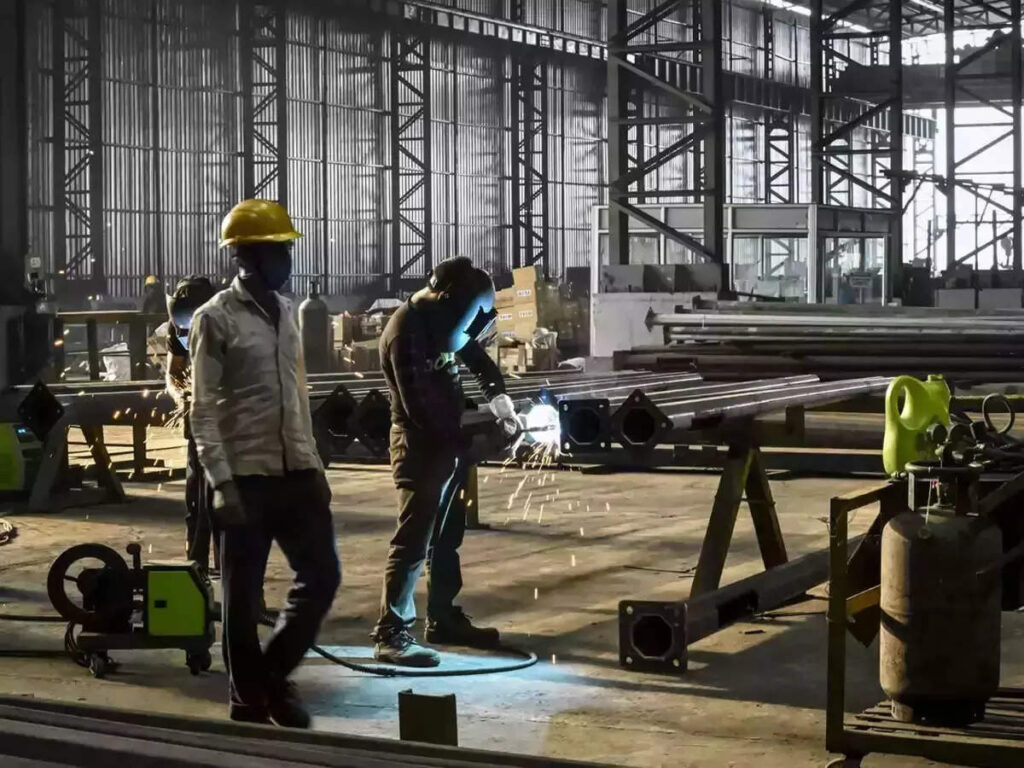
Steady Growth Amid Challenges: India’s manufacturing activity experienced a five-month low in September, with the S&P Global Purchasing Managers’ Index (PMI) registering 57.5, down from August’s 58.6. Despite this dip, the sector maintained a solid performance, driven by robust demand that bolstered business confidence, even as inflationary pressures increased. This marked the 27th consecutive month that the PMI remained above the 50-mark, indicating expansion rather than contraction.
Factors Influencing Manufacturing:Although Indian producers reported a slight slowdown in growth in September, a significant surge in new orders sustained expansions in output, input procurement, and employment. Stable supply-chain conditions helped reduce input price inflation to its weakest point in over three years. However, factors such as higher labor costs, positive business sentiment, and strong demand contributed to an increase in factory gate charges.
New Orders and Exports: New orders, a key sub-component of the PMI, saw a softer but still sharp increase in September. Favorable demand trends, market dynamics, and effective advertising were cited as reasons for sales growth. Export orders also softened from the nine-month high reached in August but remained robust, with businesses gaining new clients from Asia, Europe, North America, and the Middle East.
Outlook and Inflation:Manufacturers held a positive outlook for production, anticipating strengthened demand in the next 12 months, which continued to drive job creation and inventory replenishment efforts. However, robust demand added to price pressures in September, with output charges rising despite lower cost pressures. Although India’s inflation eased slightly in August, it remained above the RBI target range of 2-6%.
Overall Trajectory:While the manufacturing sector experienced a modest slowdown, it remained on a favorable trajectory, driven by strong demand, positive sentiment, and export opportunities. Manufacturers anticipated increased output in the coming year, emphasizing the sector’s resilience in the face of challenges.
Note: The article summarizes India’s manufacturing PMI for September, highlighting factors impacting the sector’s performance and outlook.
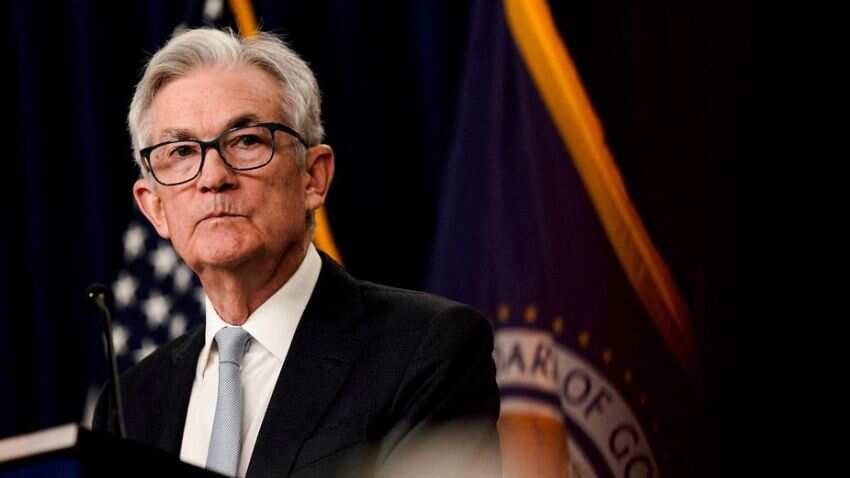
US stock futures experienced a boost, while Treasuries saw a decline following the weekend agreement to avoid a US government shutdown. Investors are now eagerly awaiting comments from Federal Reserve Chief Jerome Powell later today.
During early Asia trade, S&P 500 futures surged by as much as 0.7% after US lawmakers passed a compromise bill on Saturday to keep the government funded until November 17. In Asia, the stock benchmark erased earlier gains, and European equity futures saw a slight drop. Several Asian markets, including China, remained closed for holidays.
Yung-Yu Ma, Chief Investment Officer at BMO Wealth Management, noted, “Financial markets were bracing for a shutdown, so there’s an element of relief, but it’s only a temporary lifting of one of the clouds hanging over the markets now. Interest rates and Fed hawkishness remain the name of the game and the main driver of the markets over the next few weeks.”
Jerome Powell is scheduled to participate in a roundtable discussion in Pennsylvania, along with Philadelphia Fed President Patrick Harker. This week, the spotlight will also be on US manufacturing activity and jobs data after the head of the New York Fed suggested on Friday that policymakers should keep interest rates high for a while.
Following the resolution of the US government shutdown, Treasuries saw a drop, with investors refocusing on the future path of interest rates. US 10-year yields increased by four basis points to reach 4.61%, while their five-year counterparts climbed a similar amount to reach 4.64%. The US dollar strengthened against all Group-of-10 peers.
Vasu Menon, Managing Director of Investment Strategy at Oversea-Chinese Banking Corp., said, “The higher-for-longer rates, tighter fiscal policy going forward, higher bond yields, at least in the short term, will all come to roost and impact the economy and cause a slowdown,” potentially leading to a US recession in the first half of 2024. He made these remarks on Bloomberg Television.
The Bank of Japan announced that it will conduct an additional buying operation for government bonds on Wednesday. This news led to a reduction in losses for ten-year bond futures, while the yen maintained its earlier declines.
Japanese government bonds saw declines, and stocks received a boost after Japan’s quarterly Tankan survey showed that confidence among large manufacturers had improved more than anticipated. A summary of the central bank’s policy meeting last month also indicated that officials were more positive about considering policy revisions.
The gains in US stock futures on the first trading day of October may temporarily alleviate the challenging period faced by global financial markets. Elevated interest rates resulted in the July-to-September quarter being the worst for MSCI’s all-country equity index since September 2022, as surging oil prices added concerns about inflation and slowing economic growth.
In other news, oil prices increased amid speculation that global demand is outpacing supply.
The increased awareness of risks has emphasized the importance of insurance, leading individuals and businesses to reassess their insurance needs and seek comprehensive coverage tailored to specific risks.
Embedded insurance is a concept that involves seamlessly integrating insurance offerings into the purchase of other products and services. For example, when buying a phone, customers can opt for anti-theft insurance that is automatically included in the purchase. Similarly, when booking flight tickets, travelers are often given the choice to add travel insurance, providing protection against flight-related issues. Embedded insurance simplifies the customer experience, streamlines the insurance purchasing process, and offers a personalized and tailored insurance solution at the point of purchase. In most cases, coverage can be acquired with a simple click, making it more convenient for customers to obtain insurance protection.
Embedded insurance is gaining popularity among millennials and Gen Z, who prefer quick, straightforward, and digital access to solutions. The availability of coverage at the point of sale, whether online or offline, benefits insurance companies as well.
One of its significant advantages is its contextual nature. Gen Z and millennials are comfortable sharing their activities, preferences, and whereabouts on social media. Insurtech companies leverage this valuable data to offer personalized insurance solutions to this new generation of aspirational buyers. With this information, insurers can ensure that the right insurance product is offered to the right customer at the right time.
Another key benefit is the substantially lower onboarding costs for insurers. Insurtech firms are collaborating with regional micro-credit organizations and micro-lending institutions to provide embedded insurance products at competitive rates, particularly in regions like India where insurance penetration is low, and data availability is limited.
Embedded insurance has the potential to transform the insurance landscape by making it more accessible and seamlessly integrated into everyday transactions. It offers convenience, customization, and new opportunities for businesses, but its successful adoption requires careful marketing and clear communication.
Popular Vehicles and Services Ltd, a company involved in automotive dealerships, has submitted preliminary documents to the capital markets regulator Sebi for the purpose of raising funds through an initial public offering (IPO). This marks the company’s second attempt to go public. Previously, in August 2021, the firm had filed draft papers with the Securities and Exchange Board of India (Sebi) for an IPO but decided to postpone the debut public issue due to uncertain market conditions.
As per the Draft Red Herring Prospectus (DRHP) filed on Thursday, the IPO will consist of fresh equity shares valued at Rs 250 crore and an Offer For Sale (OFS) of 1.42 crore equity shares by Banyantree Growth Capital II, LLC. Additionally, the company aims to secure Rs 50 crore in a pre-IPO placement round. If such a placement is executed, it will reduce the size of the fresh issue. The proceeds from the fresh issue will be allocated for debt repayment and general corporate purposes.
This Kerala-based company is a prominent and diversified automotive dealership firm in India, with a presence across the entire automotive retail value chain. Its operations encompass the sale of new passenger and commercial vehicles, vehicle servicing and repairs, distribution of spare parts, sales of pre-owned passenger vehicles, and facilitation of the sale of third-party financial and insurance products.
Popular Vehicles and Services Ltd operates passenger vehicle dealerships for brands like Maruti Suzuki, Honda, and JLR, as well as a commercial vehicle dealership for Tata Motors. ICICI Securities, Nuvama Wealth Management, and Centrum Capital have been appointed as merchant bankers to provide guidance to the company regarding the IPO. The company’s equity shares will be listed on both the BSE and NSE stock exchanges.
The World Bank’s latest report indicates that developing economies in East Asia and the Pacific are expected to experience slower growth in the coming years due to the impact of tighter finances and a challenging global environment. According to the semi-annual outlook, the region is estimated to achieve a gross domestic product (GDP) growth rate of 5% in 2023 and 4.5% in 2024. These figures represent a slight revision from the April forecasts of 5.1% growth for this year and 4.8% for the next. However, it’s worth noting that the region’s growth is still expected to outpace many other emerging markets.
China plays a significant role in this economic landscape, and its economic prospects are influencing the overall outlook. China, the world’s second-largest economy, is anticipated to expand by 4.4% next year, down from the previous projection of 4.8%. This downward revision is attributed to challenges such as property market issues, rising debt levels, and the diminishing economic boost from the post-Covid reopening. Nevertheless, the GDP forecast for China in 2023 remains at 5.1%.
The report emphasizes the importance of China’s economic performance for the entire region, noting that a 1% reduction in China’s growth is associated with a 0.3 percentage point reduction in regional growth.
When excluding China from the analysis, the report suggests that East Asia and the Pacific could experience slightly faster growth in 2024, driven by an improvement in the global economy and increased foreign demand for the region’s manufactured goods and commodities. Nevertheless, the outlook is not without risks, including geopolitical tensions and the potential for natural disasters and extreme weather events.
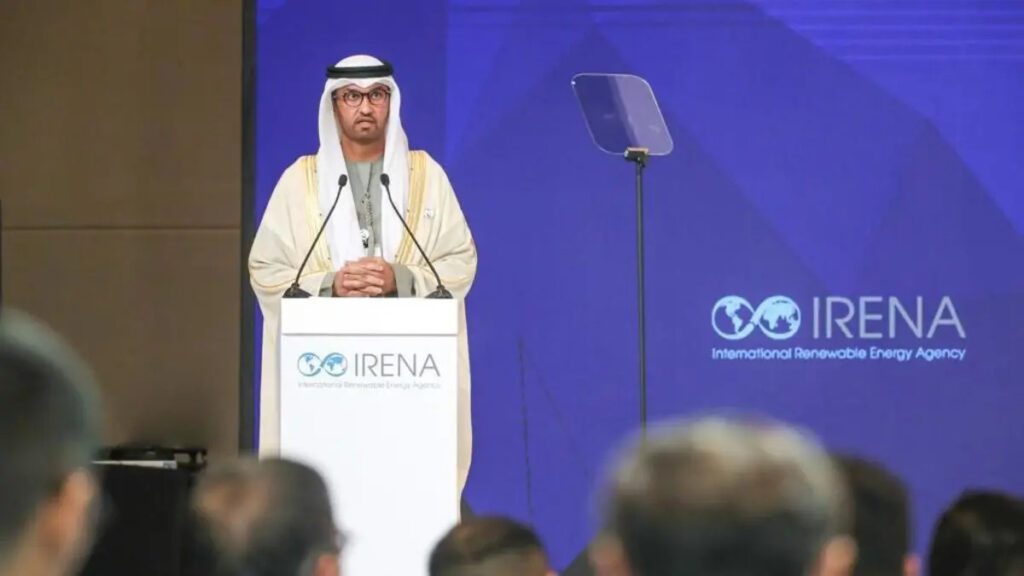
COP28 President Sultan al-Jaber has urged the oil and gas industry to align with a net-zero target by 2050, eliminate methane emissions, and end routine flaring by 2030. Speaking at the Abu Dhabi International Petroleum Exhibition & Conference (ADIPEC), Jaber welcomed the actions taken by more than 20 oil and gas companies to combat climate change. He emphasized the need for a profound transformation of entire economies to address the climate crisis, highlighting that economies currently rely on the equivalent of 250 million barrels of oil, gas, and coal daily, which must be replaced or decarbonized.
Notably, Jaber is also the CEO of the Abu Dhabi National Oil Corporation (ADNOC), and the UAE has a significant reliance on fossil fuels in its economy.
Jaber’s call comes after convening meetings of both demand and supply side businesses in Abu Dhabi. He stressed the importance of collaboration between industries, governments, civil society, NGOs, scientists, technologists, and the financial community to accelerate decarbonization. While industries can take action, governments should play a proactive role in setting the right demand signals and addressing permitting issues, according to Jaber.
The success of the upcoming UN climate summit in Dubai, COP28, will depend on key parameters such as operationalizing the loss and damage fund and establishing an energy pathway to achieve the Paris Agreement’s goal of limiting global temperature rise to 1.5 degrees Celsius, a senior official stated. The conference’s outcomes are crucial as the climate crisis, combined with El Nino, is leading to record-high global land and sea surface temperatures.
Ambassador Majid Al Suwaidi, COP28 Director General from the UAE, which holds the presidency for the summit, emphasized the need to deliver on mandated outcomes such as the Global Stocktake, the Global Goal on Adaptation, and the operationalization of the Loss and Damage fund, along with just transition work.
The price of natural gas produced from challenging areas, such as the deepsea KG-D6 block of Reliance Industries, has been significantly reduced by 18%. This decrease is in line with the softening of international benchmark gas prices. However, the price of gas primarily used for producing Compressed Natural Gas (CNG) for vehicles and piping to household kitchens for cooking purposes will remain unchanged. This stability is due to a price cap set at 30% less than market rates, including those paid to Reliance.
Six-Month Price Adjustment: Starting October 1, for a six-month period, the price of gas from deepsea and high-pressure, high-temperature (HPTP) areas has been lowered to USD 9.96 per million British thermal unit (mmBtu) from USD 12.12, as reported by the Petroleum Planning and Analysis Cell (PPAC) of the oil ministry. The Indian government bi-annually determines prices for locally-produced natural gas, which is used for various purposes, including CNG, household cooking, electricity generation, and fertilizer production.
Different Pricing Formulas: Two distinct formulas govern gas rates for legacy or old fields of national oil companies like Oil and Natural Gas Corporation (ONGC) and Oil India Ltd (OIL), compared to newer fields in challenging-to-exploit regions like deepsea. Pricing adjustments are made on April 1 and October 1 each year. The formula for legacy fields was altered in April this year, indexing it to 10% of the prevailing Brent crude oil price, with a cap at USD 6.5 per mmBtu.
Impact of the Price Cap: Legacy field rates are now determined monthly, with a September price of USD 8.60 per mmBtu. However, due to the cap, producers will receive only USD 6.5 per mmBtu. Brent crude oil averaged around USD 92 per barrel this month, but rates will remain capped at USD 6.5. In contrast, the pricing for gas from challenging areas still follows the old formula, considering a one-year average of international LNG prices and global gas hub rates with a one-quarter lag.
Global Price Trends: International prices decreased during the reference period from July 2022 to June 2023, resulting in lower prices for gas from challenging fields. The price for difficult area gas had previously been reduced to USD 12.12 per mmBtu for the six-month period beginning April 1, down from a record USD 12.46.
Regulating Gas Prices:The Indian government has implemented pricing mechanisms to stabilize gas prices, ensuring that consumers, including CNG users, piped cooking gas consumers, and fertilizer plants, are not adversely affected. This price ceiling accounts for production costs while safeguarding consumers, with the aim of increasing the share of natural gas in India’s energy mix to 15% by 2030, up from the current 6.3%.
Foreign Portfolio Investors (FPIs) have shifted from sustained buying to net selling, withdrawing a total of INR 14,767 crore from Indian equities in September. The reversal in FPI sentiment can be attributed to several factors, including the appreciation of the US dollar, a steady rise in US bond yields, and a spike in crude oil prices.
Uncertain Outlook for FPI Flows: The future of FPI flows into India remains uncertain, contingent on various factors. These include the performance of the Indian economy, the Reserve Bank of India’s (RBI) October monetary policy decisions, and the outcomes of the September quarter earnings reports, as noted by Mayank Mehra, Manager and Principal Partner at Craving Alpha.
September’s FPI Outflow:According to depository data, FPIs sold shares amounting to INR 14,767 crore in September. This followed a four-month low in FPI investments in August, with INR 12,262 crore. Prior to this outflow, FPIs consistently bought Indian equities for six consecutive months from March to August, injecting a total of INR 1.74 lakh crore during this period.
Factors Behind the FPI Exodus: Several factors contributed to the FPI outflow in September. These include the steady appreciation of the US dollar, which pushed the dollar index close to 107, as well as a continuous rise in US bond yields, reaching around 4.7%. Additionally, the spike in Brent crude oil prices to USD 97 also weighed on FPI selling. Higher US interest rates played a role in the FPI exodus, as foreign investors pulled out money from India.
Global Economic Uncertainties:Economic uncertainties in the US and Eurozone regions, coupled with concerns about global economic growth, prompted foreign investors to adopt a risk-averse stance. Rising crude prices, persistent inflation figures, and expectations of prolonged elevated interest rates further fueled foreign investors’ cautious approach.
Impact on Domestic Markets:While FPIs reduced their holdings, domestic institutional investors (DIIs) increased their investments. On a positive note, FPIs invested INR 938 crore in India’s debt market during the same period. So far this year, FPIs have invested INR 1.2 lakh crore in equity and over INR 29,000 crore in the debt market. In terms of sectors, FPIs were net buyers in capital goods and selected financial sectors.
The shifting sentiment of FPIs underscores the influence of global and domestic economic factors on investment flows into Indian markets.
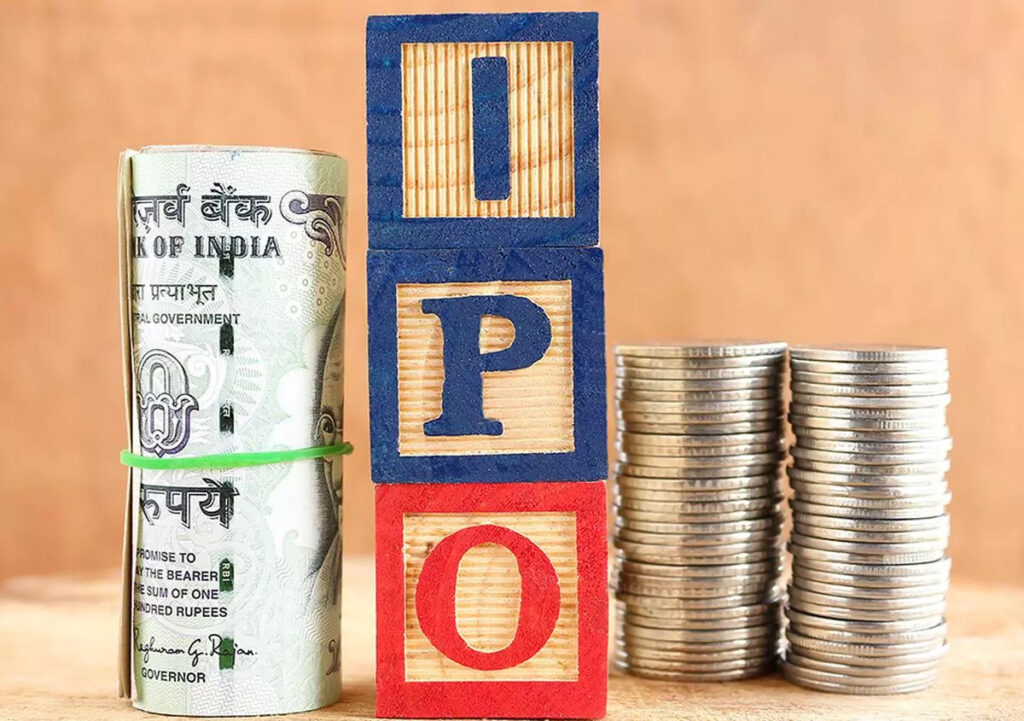
In the first half of the financial year 2023-24, India witnessed significant activity in the Initial Public Offering (IPO) market, with a total of Rs 26,000 crore raised. This marked a resurgence in IPOs, particularly in September, where Rs 12,000 crore was raised, accounting for nearly half of the first-half total.
Market Confidence and Q1 Earnings Boost
Experts attribute this boost to favorable market conditions and renewed confidence following a robust Q1 earnings season. While the fundraising in H1 FY24 was lower compared to H1 FY23 when Rs 36,000 crore was raised, marquee offerings by Life Insurance Corporation of India (Rs 21,008 crore) and Delhivery (Rs 5,235 crore) were prominent contributors.
Incentives for Small and Medium-sized Businesses
Investor confidence in the economy, healthy corporate earnings, and several factors, including investors seeking quick gains and rising risk appetite, have incentivized small and medium-sized businesses to enter the IPO market.
Quarterly Breakdown
The first quarter (April-June) saw IPOs totaling over Rs 7,400 crore, while the second quarter (July-September) witnessed a surge with IPOs totaling over Rs 18,800 crore.
Optimistic IPO Pipeline
The IPO pipeline remains robust, with approximately 30 entities receiving SEBI approval for IPOs totaling Rs 40,740 crore, and 38 entities with IPO sizes of Rs 43,659 crore awaiting approval after filing offer documents.
Election-related Uncertainty in Second Half
While the IPO market has been flourishing, there is anticipation of a potential slowdown in the second half due to upcoming elections. Some companies may postpone their IPO plans until after the elections to provide the market with the desired certainty.
Regulatory Scrutiny and IPO Approval
Regulatory scrutiny has increased as the market has experienced challenges with newly listed firms underperforming. As a result, companies with valid approvals or those awaiting approvals have had to re-file their papers.
Prominent Pending IPOs
Notable IPOs still awaiting approval include Oravel Stays, Go Digit, and depository NSDL, with estimated sizes of Rs 8,430 crore, Rs 3,500 crore, and Rs 4,500 crore, respectively. These IPOs are expected to contribute significantly to the future IPO landscape in India.
U.S. West Texas Intermediate (WTI) crude futures climbed by 23 cents, or 0.3%, reaching $91.02 per barrel. This recovery followed a 92-cent loss on the previous Friday. Both benchmarks enjoyed a substantial nearly 30% rally during the third quarter, primarily driven by forecasts of a significant crude supply deficit in the fourth quarter. This projection stems from Saudi Arabia and Russia extending additional supply cuts until year-end.
OPEC+ Policy Unchanged: The Organization of the Petroleum Exporting Countries (OPEC) and its allies, including Russia (OPEC+), are expected to maintain their current oil output policy. Four sources within OPEC+ informed Reuters about this expectation. The prevailing tighter supplies and rising demand are contributing to the ongoing oil price rally.
Factors Driving Prices: Hiroyuki Kikukawa, President of NS Trading, cited supply concerns and the avoidance of a U.S. government shutdown as factors contributing to the recent strength in oil prices. The last-minute bipartisan agreement to pass a short-term funding bill delayed the risk of a government shutdown until mid-November, providing relief to over 4 million federal workers.
Supply Worries Intensify: The U.S. oil and gas rig count, seen as an early indicator of future output, declined by seven to 623 in the week ending September 29. This marks the lowest count since February 2022, as reported by energy services firm Baker Hughes.
Price Outlook and Caution: According to a Reuters survey of 42 economists, Brent crude is expected to average $89.85 per barrel in the fourth quarter and $86.45 in 2024. However, investor caution prevails due to concerns about the Chinese economy. A private-sector survey revealed that China’s factory activity expanded at a slower pace in September, primarily due to sluggish external demand. Despite some signs of stabilization, challenges such as a property market slump, falling exports, and high youth unemployment continue to cloud the economic outlook, raising uncertainties about future fuel demand.
As oil prices respond to evolving supply dynamics and global economic conditions, market participants remain watchful for further developments in the coming months.