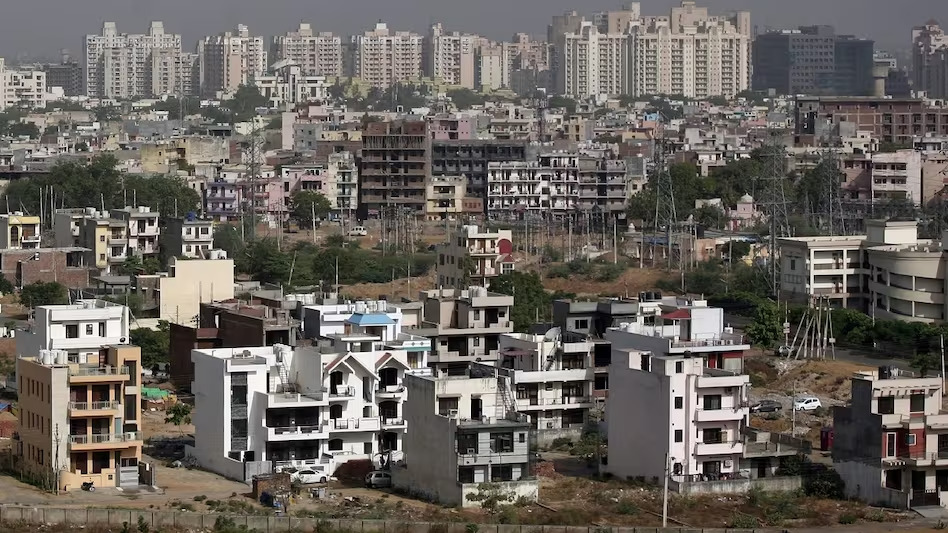
The Indian government is set to launch a new interest subsidy program worth Rs 60,000 crore, aimed at benefiting both the urban poor and middle-class citizens. Sources reveal that the Ministry of Housing and Urban Affairs’ proposal has received approval from the Expenditure Finance Committee (EFC). This initiative, spanning five years, will provide interest subventions ranging from 3% to 6% per annum on home loans up to Rs 50,00,000.
The EFC, responsible for schemes with a budgetary allocation exceeding Rs 500 crore, has given its nod to this endeavor. It is anticipated that the carpet area requirements for eligible houses under this scheme will be notably higher compared to the existing Credit Linked Subsidy Scheme (CLSS) for urban poor beneficiaries, which falls under the Pradhan Mantri Awas Yojana-Urban (PMAY-U).
Under the current CLSS scheme of PMAY-U, the government offers interest subsidies of 6.5% for home loans up to Rs 6,00,000 for economically weaker sections (with a carpet area of 30-60 sqm), and 4% and 3% for loan amounts between Rs 6,00,000-12,00,000 and Rs 12,00,000-18,00,000, respectively, for those belonging to the MIG-I (160 sqm) and MIG-II (200 sqm) categories, for the purposes of house acquisition or construction. Since its launch in June 2015, PMAY-U has sanctioned 11.89 million houses, with the government disbursing Rs 1.47 trillion for the scheme.
This new scheme is expected to replace the CLSS scheme under PMAY-U and could provide a significant boost to the labor-intensive construction sector. The actual subsidy expenditure for the current fiscal year will depend on the demand from homebuyers. Importantly, the additional expenditure for this scheme will not impact the FY24 budget significantly, as the government has some room to accommodate such expenses within its Rs 10 trillion capex program.
With the festive season approaching, the demand for gold is expected to surge, as it remains a popular investment choice among Indians due to its reputation as a hedge against inflation and a diversification option in investment portfolios. However, the traditional method of purchasing physical gold has its drawbacks, including concerns about purity, security, and high making charges. In contrast, digital gold offers a more convenient and secure way to invest in this precious metal.
Let’s explore the advantages of digital gold and key considerations for potential investors.
Investment Options: Digital gold has transformed the investment landscape, providing a hassle-free alternative to physical gold. It effectively addresses concerns related to authenticity, theft, and storage. Furthermore, digital gold offers investors the flexibility to customize their investments according to their goals and preferences. Here are some popular digital gold options:
Sovereign Gold Bonds (SGBs): SGBs, which offer market-linked returns, are an appealing option for those looking to invest in gold before the festive season. They also provide annual interest to investors, typically at a fixed rate of 2.50% per annum, paid semi-annually on the nominal value. Investors can even use these bonds as collateral for loans.
Gold ETFs (Exchange-Traded Funds): Gold ETFs are cost-effective vehicles for investing in gold. These funds allow investors to purchase gold in small fractions, enhancing accessibility. They are backed by physical gold with high purity levels and can be easily bought or sold in the stock market. Gold ETFs are stored in a DEMAT account, ensuring security. Additionally, transactions involving gold ETFs are exempt from wealth tax, security transaction tax, and other levies, making them a tax-efficient choice.
Gold Mutual Funds: While not directly invested in gold, gold mutual funds offer exposure to gold mining companies and gold ETFs. They do not require a DEMAT account or a trading account, making them accessible to investors who can start with amounts as low as Rs 1000. However, they may have an expense ratio and an exit load if redeemed before one year.
How to Invest in Digital Gold: Investing in digital gold, whether through Gold ETFs, Gold mutual funds, or SGBs, involves several steps:
Open a DEMAT Account: To invest in Gold ETFs and SGBs, you need to open a DEMAT account, enabling electronic storage and trading of these assets.
Choose the Platform: Gold ETFs and SGBs can be purchased through the stock market platform or during primary issuance. For gold mutual funds, visit the nearest branch of the mutual fund company or utilize their online facilities.
Adhil Shetty, CEO of Bankbazaar.com, emphasizes the benefits of digital gold, stating, “Without owning physical gold, you can enjoy the benefit of gold investment where the value of the papers is in sync with the physical gold. When you wish to sell them, an equal amount of money gets credited to your bank account. You’re also protected against purity and safety risks associated with physical gold.”
When selecting the right digital gold investment, consider factors such as liquidity, tax implications for short and long-term gains, minimum and maximum investment amounts, loan facilities against these investments, and ease of investment. Ensure that your gold investments align with your financial goals and avoid overextending.
In conclusion, digital gold offers a modern and convenient approach to investing in this timeless asset. By eliminating the drawbacks associated with physical gold, it provides a secure and flexible avenue for investors. Whether you opt for Gold ETFs, Gold mutual funds, or SGBs, digital gold empowers you to tap into the potential of gold while aligning your investments with your financial objectives.
The global minimum tax has emerged as a central topic in international tax reform, with far-reaching implications for both developed and developing nations. While the taxation of the digital economy has garnered significant attention, the global minimum tax holds particular importance for developing countries. In this article, we delve into the critical considerations that developing nations must take into account regarding the global minimum tax and explore strategies to navigate this evolving tax landscape.
Understanding the Global Minimum Tax The global minimum tax represents a consensus among 137 countries and jurisdictions as part of the OECD/G20 Inclusive Framework on Base Erosion and Profit Shifting (BEPS). Its primary objective is to ensure that multinational enterprises (MNEs) pay a minimum tax rate of 15% in each country where they operate, effectively preventing profit shifting and tax avoidance.
The OECD’s initiative encompasses two pillars. Pillar one addresses tax challenges arising from the digitalization of the economy, while pillar two, known as the Global Anti-Base Erosion (GloBE) rules, introduces the base rate approach for the global minimum tax. It establishes the minimum tax rate of 15% for MNEs surpassing a specific turnover threshold, aiming to curb profit shifting to low-tax jurisdictions and harmful tax competition.
Potential Impact on Developing Countries While the global minimum tax is hailed as a significant stride toward equitable taxation, developing countries have voiced their apprehensions regarding its potential consequences.
One major concern among developing nations pertains to the potential loss of tax incentives. These countries fear that the removal of tax incentives could deter foreign direct investment (FDI) and impede their economic progress. Tax incentives have played a pivotal role in attracting investments, and the elimination of these incentives may render developing nations less competitive in the global market.
Furthermore, developing countries are wary of the possible loss of tax revenues to developed nations. Under the global minimum tax rules, if a developing country’s tax incentives result in an effective tax rate below 15%, the MNE’s home country may levy the minimum tax instead. This could result in a shift of tax revenues from developing to developed countries, exacerbating existing disparities.
Navigating the Global Minimum Tax Landscape Given the potential challenges posed by the global minimum tax, developing countries must strategically navigate this new tax terrain. Here are essential considerations for developing nations:
Review and Adapt Tax Incentives Developing countries should conduct a thorough review of their existing tax incentives to evaluate their compatibility with the 15% minimum tax rate imposed by the global minimum tax regime. This assessment should aim to identify and modify tax incentives that may be affected by the minimum tax threshold.
Strengthen Tax Administration and Enforcement To ensure compliance with the global minimum tax rules, developing nations must enhance their tax administration and enforcement capabilities. This involves investing in technology, capacity-building, and improved monitoring mechanisms to facilitate effective tax collection. Collaboration with international organizations and other nations to exchange best practices and bolster tax administration capabilities is also advisable.
Advocate for Equity and Inclusivity Developing countries should actively participate in international tax discussions to advocate for their interests, ensuring that the global minimum tax framework is equitable and inclusive. They should seek to address concerns related to the distribution of taxing rights, the impact on tax revenues, and the potential disadvantages faced by developing nations. Active engagement in global tax reform debates enables developing countries to influence the design and implementation of the global minimum tax.
Explore Regional Collaboration Developing countries can consider regional collaboration to address the challenges posed by the global minimum tax collectively. By collaborating with neighboring nations, developing countries can formulate regional strategies to attract investments, harmonize tax policies, and engage in collective negotiations with MNEs. Regional cooperation can help mitigate potential disadvantages faced by individual developing countries and present a unified front in international tax discussions.
Promote Economic Diversification Developing countries should prioritize economic diversification to reduce their reliance on specific sectors or industries that may be more vulnerable to the impact of the global minimum tax. By encouraging economic diversification, developing nations can build resilient economies less susceptible to changes in the global tax landscape.
Monitor FDI Impact Developing countries should closely monitor the impact of the global minimum tax on foreign direct investment (FDI). While concerns exist about the removal of tax incentives deterring foreign investors, it is essential to assess the overall impact of the global minimum tax on FDI flows. Developing nations should track investment trends, evaluate the effectiveness of alternative investment strategies, and adjust policies accordingly.
Emphasize Transparency and Accountability Developing countries should prioritize transparency and accountability within their tax systems to build trust and attract investments. Implementing robust anti-corruption measures, promoting transparency, and enforcing strong corporate governance standards create a conducive environment for investors.
In conclusion, the global minimum tax marks a significant shift in international tax policy, particularly affecting developing nations. By adeptly navigating this evolving tax landscape, developing countries can safeguard their interests and foster sustainable economic growth. Proactive policy-making, regional cooperation, and advocacy for equitable global tax policies are central to this endeavor.
Urbanization, in the Indian context, refers to the rapid migration of people from rural areas to urban centers, driven by various socio-economic factors and the allure of better opportunities. The Indian real estate sector, a vital component of the nation’s economy, finds itself at a critical juncture as it grapples with the transformative effects of urbanization.
In recent years, India has experienced an unprecedented wave of urbanization, with the urban population expected to reach a staggering 600 million by 2030, according to recent reports. This significant demographic shift is creating an insatiable demand for housing, commercial spaces, and infrastructure, driving remarkable growth in the Indian real estate market.
To fully grasp the extent of this transformation, one must understand the multifaceted significance of the urbanization-real estate connection. This synergy not only shapes the skylines of Indian cities but also underpins the economy, job creation, and overall quality of life.
Therefore, comprehending how urbanization impacts the Indian real estate sector is not merely an academic exercise; it is of strategic importance to policymakers, investors, and stakeholders.
Influence of Urbanization on Real Estate Demand The seismic shift of urbanization in India is set to redefine the dynamics of the nation’s real estate landscape. According to the United Nations, the urban population is projected to increase from 55% in 2018 to 68% by 2050, with an estimated 2.5 billion more people residing in cities by 2050. By 2030, the urban proportion of the world’s population is expected to reach 60%. This demographic wave translates into an unprecedented surge in demand across the real estate spectrum.
As urbanization advances, this demand is vividly visible in the form of an insatiable appetite for housing, commercial spaces, and essential infrastructure. The numbers are staggering: a growing urban population requires millions of new homes, vast commercial spaces, and an extensive modern infrastructure network to support evolving urban lifestyles.
This demand is the lifeblood of the Indian real estate market, propelling it into uncharted territory. It is not only reshaping the geography of Indian cities but also transforming the nature of real estate development. Developers, investors, and policymakers are actively adjusting their strategies to cater to this burgeoning demand, ushering in an era of innovation, sustainability, and affordability.
The surge in demand driven by urbanization is a defining feature of India’s real estate story, and understanding its magnitude is crucial for all stakeholders. It highlights the need for adaptable solutions that ensure sustainable growth, aligning the real estate sector with the aspirations of a rapidly urbanizing India.
Geographic Concentration of Real Estate Demand In the Indian real estate landscape, geography has become a critical determinant of demand and investment potential. The top seven cities in India – Mumbai, Delhi, Bengaluru, Chennai, Hyderabad, Kolkata, and Ahmedabad – serve as the epicenter of this transformative journey. These urban hubs are not merely driving real estate demand; they are fundamentally reshaping the contours of the Indian property landscape.
Collectively, these cities are expected to account for a substantial 60% share of the nation’s overall real estate demand by 2030, according to recent reports. This concentration reflects their economic vitality, job opportunities, and urbanization trends. Investors and developers keenly observe these cities as the epicenter of growth, understanding that the real estate market in these metropolises is poised for exponential expansion.
For real estate developers and investors, these implications are profound. The focus is shifting towards these strategic urban centers, necessitating a nuanced understanding of local dynamics, market forces, and regulatory environments.
This underscores the need for innovative and sustainable solutions tailored to the unique demands of each city. As the driving force behind India’s real estate resurgence, these cities are not just destinations; they are propelling the industry to new heights, paving the way for a dynamic and prosperous future.
Affordable Housing and Tier 2/Tier 3 Cities The urbanization wave in India extends beyond mega-cities and is fundamentally reshaping smaller urban centers, particularly tier 2 and tier 3 cities. The demand for affordable housing in these areas has reached unprecedented levels. Recent data indicates a significant influx of population into these cities as urbanization expands its reach.
In tier 2 and tier 3 cities, their role in accommodating this wave of urbanization cannot be overstated. These cities are becoming centers of economic activity, job creation, and improved living standards. Affordable housing is not merely a necessity but a priority, and developers recognize the immense potential in catering to this segment.
However, with opportunities come challenges. Tier 2 and tier 3 cities are experiencing rapid development but also face infrastructural constraints, regulatory hurdles, and the need for urban planning that aligns with their growth trajectory. Balancing affordability with quality and sustainability presents another significant challenge.
The potential in these markets is vast, but success requires a deep understanding of local dynamics, a commitment to responsible development, and collaboration with local authorities to create the necessary infrastructure. In India’s urbanization story, tier 2 and tier 3 cities are emerging as vibrant components, weaving together a narrative of growth, opportunity, and transformation in the real estate sector.
Government Initiatives and Challenges As urbanization sweeps across the nation, the government has implemented strategic measures to support the real estate industry. These initiatives encompass various aspects of the sector, aiming to stimulate growth, affordability, and sustainability.
Government efforts include substantial investments in infrastructure development, addressing critical gaps in transportation, energy, and connectivity. These investments not only facilitate urbanization but also open new horizons for real estate development.
To address the pressing issue of affordable housing, the government has introduced incentives and policies to promote this sector. Subsidies, tax benefits, and regulatory reforms have encouraged developers to engage in affordable housing projects, aligning with the growing demand in urban and semi-urban areas.
However, challenges loom large in the midst of the urbanization wave. The demand for affordable housing outpaces supply, leading to rising prices and housing shortages. Infrastructure deficits, including inadequate public transportation and urban congestion, pose logistical challenges. Moreover, environmental concerns, such as pollution and climate change, require immediate attention as urbanization intensifies.
While government initiatives are commendable, a collaborative approach between the government and real estate stakeholders is essential to effectively address these challenges. Together, they can chart a course toward sustainable urbanization, ensuring that the real estate sector continues to thrive amid these evolving dynamics.
The future of the Indian real estate sector depends on collaborative efforts between the government and industry stakeholders. Together, they must navigate challenges, innovate, and ensure sustainable growth that aligns with evolving urbanization trends.
The outlook for the sector remains promising, provided that we collectively address challenges and capitalize on the opportunities presented by this monumental wave of urbanization. In unity, we can shape a future where the Indian real estate sector thrives as an integral part of our nation’s transformative journey into urbanization.
The principle of not putting all your eggs in one basket applies to the world of investing as well. Various factors, such as economic cycles, geopolitical shifts, regulatory changes, or unforeseen events, can impact financial markets. Therefore, diversifying a portfolio across different investments, sectors, investment styles, geographic regions, and asset classes can help protect it from uncertainties and market volatility. Nobel Laureate Harry Markowitz introduced the Modern Portfolio Theory in the 1950s, demonstrating how a well-diversified portfolio can reduce risk without sacrificing potential returns.
To build a well-diversified portfolio, investors should start by understanding their investment goals, risk tolerance, time horizon, and liquidity needs. This process, known as setting investment objectives, forms the foundation of portfolio construction. It helps identify an appropriate asset allocation that aligns with the investor’s profile.
Once the investor profile is established, the next step is determining the optimal mix of asset classes. Traditional asset classes include equities, bonds, and cash. However, non-traditional investments such as private equity (PE), venture capital (VC), venture debt, structured credit, real estate, commodities, and others should also be considered based on investor suitability. Equities offer growth potential but come with higher risk due to market fluctuations. Bonds, on the other hand, offer lower risk and stable returns. Cash or equivalent instruments should hold funds needed for immediate liquidity.
Non-traditional assets like PE and VC, known as private markets, have lower correlation with traditional assets and higher return potential but also involve increased risk and illiquidity. Venture debt and structured credit are newer asset classes in India that can enhance returns but come with higher risk. Real estate offers both income generation and capital appreciation opportunities and can be accessed directly, through funds, or via real estate investment trusts (REITs).
Gold is a favored asset class in India due to its negative correlation with equities, serving as a hedge against volatility among commodities.
Diversification within an asset class is equally important. For example, within equities, investors should diversify across large-cap, mid-cap, and small-cap companies, as well as different sectors and industries. Additionally, diversification should consider investment styles, such as growth-oriented versus value-oriented approaches, and active versus passive investments. Similarly, within fixed-income and alternative asset classes, there are opportunities for diversification.
Many investors have a home country bias, investing primarily in their domestic markets. However, this exposes the portfolio to country-specific events and risks. International investments in equities or bonds can provide exposure to diverse economies and currencies, reducing such risks. Different economies often have diverging economic cycles, creating opportunities for portfolio alpha generation. Certain sectors may thrive in specific countries, such as technology in the US or semiconductors in Taiwan.
At the security level, diversification is essential. When investing in individual stocks or bonds, diversifying across a few securities is crucial. Mutual funds and ETFs inherently offer diversification, but holding multiple ETFs tracking the same index or numerous mutual funds of the same style may not significantly benefit diversification.
Once a well-diversified portfolio is constructed, it requires periodic adjustments in response to market conditions and regular rebalancing. Over time, the portfolio’s asset allocation may deviate from the initial plan due to variations in asset class performance. Regular rebalancing realigns the portfolio with its intended mix, selling overperforming assets that may be relatively expensive and acquiring underperforming assets that may be undervalued.
It’s essential to acknowledge that all investments carry some degree of risk. Diversifying a portfolio does not eliminate risk but spreads it across different assets and investments.
HDFC Bank is undergoing a strategic revamp in its top management to fuel growth in its mortgage segment and optimize branch expansion. Arvind Kapil will lead the mortgage division exclusively, and branch ramp-up responsibilities will be divided geographically. Additionally, the bank is making structural changes in its IT and Digital departments, establishing direct reporting to the CEO.
Key to Growth: Deposits and Housing Book
Jefferies, a global investment bank, views the bank’s growth and investor confidence as dependent on the expansion of deposits and the housing book. The bank’s gross advances stood at approximately Rs 23,545 crore as of September 30, 2023, reflecting impressive growth compared to the previous year.
Jefferies’ Analysis and ‘Buy’ Rating
Jefferies conducted interactions with the management of HDFC Life and HDFC AMC, two listed subsidiaries of HDFC Bank, which indicated increased flows and wallet share growth for them. The bank is also enhancing integration by adding branch and sales staff, which is expected to result in a 10-15% year-on-year rise in wallet share for the subsidiaries by the end of FY24.
Jefferies has maintained its ‘Buy’ rating on HDFC Bank, with a target price of Rs 2,030, representing a 33% upside potential. The bank’s valuations are considered reasonable, and the report highlights its growth prospects and reasonable price-to-book and price-to-earnings ratios.
Cautionary Notes
However, Jefferies cautions against the risk of a sudden spike in interest rates, as HDFC Bank now relies more on non-retail funds, making its funding costs more sensitive to market rates. A slower-than-expected ramp-up of priority sector loans through the Commercial and Rural Banking Division could also impact margins and return on assets (ROA) due to higher compliance costs associated with such loans.
On October 4, 2023, MCX gold prices experienced a decline, primarily attributed to the strengthening of the US dollar. Gold October futures on the Multi Commodity Exchange were trading at Rs 56,864 per gram, marking a decrease of Rs 63 or 0.11%. Silver rates also witnessed a drop of 0.41%, with Silver December futures trading at Rs 67,115 per kg on the MCX.
Factors Affecting Gold Prices
Gold prices retreated, approaching seven-month lows, as a result of an ascending US dollar and rising bond yields, spurred by robust US jobs data. These factors have created expectations of further monetary policy tightening. Spot gold saw a 0.1% decline, reaching $1,820.70 per ounce, while US gold futures dropped by 0.3% to $1,836.20.
Market Volatility Expected
Rahul Kalantri, VP Commodities at Mehta Equities, anticipated continued volatility in the bullion market. He noted that gold has support at $1,810-1,798 and resistance at $1,835-1,848. In INR terms, gold has support at Rs 56,010 – 55,810 and resistance at Rs 56,580 – 56,750. For silver, support is at $20.80-20.66 and resistance at $21.24-21.40, while in INR terms, support is at Rs 66,700-65,850 and resistance at Rs 67,940–68,550.
US Economic Data Impact
The yield on US 10-year notes exceeded 4.8% due to strong economic data, reaffirming the US economy’s resilience to high borrowing costs. This has increased expectations that the Federal Reserve may need to maintain elevated interest rates. Key economic data, including the US ISM Services PMI and ADP Non-farm employment change, are being closely monitored by traders for insights into the economy. Positive US data is likely to further bolster yields and exert downward pressure on bullion prices, according to Ravindra V.Rao, VP-Head Commodity Research at Kotak Securities.
Updater Services witnessed its stock debut on the NSE at Rs 285, slightly below its issue price of Rs 300. Similarly, on the BSE, the company’s shares were listed at Rs 299.90, marking a 5% discount to the IPO price. This listing may be disappointing for investors, considering the less-than-expected initial trading value.
Factors Contributing to the Listing Price
Several factors may have contributed to the lackluster stock debut. Firstly, the company’s IPO was priced relatively high, which, coupled with mixed financial performance and associated risks, might have deterred investors. Additionally, the broader market sentiment at the time of the listing could also have played a role in the subdued response.
Recommendation for IPO Allottees
Investors who were allotted shares in the Updater Services IPO should carefully evaluate the related risks and the current market environment. Given the lackluster listing, they may consider exiting their positions to manage potential losses or to explore better investment opportunities.
IPO Details
Updater Services’ initial public offering (IPO) was open for public subscription from September 25, 2023, to September 27, 2023. The IPO included a fresh issue of 133,33,333 shares, amounting to Rs 400 crore, and an offer-for-sale (OFS) with promoters selling 80,00,000 shares worth Rs 240 crore. The lot size for the IPO was 50 shares. The overall subscription for the IPO was 2.96 times, with the non-institutional investors portion at 0.89 times, the QIB category at 4.50 times, and the Retail Individual Investors (RIIs) quota at 1.45 times. The Grey Market Premium (GMP) of Updater Services’ IPO remained unchanged ahead of its listing.
Oil prices saw an uptick in early Asian trade on Wednesday, driven by concerns over tightening global crude supply ahead of a meeting of OPEC+ ministers. Brent crude oil futures rose by 6 cents to reach $90.98 per barrel, while U.S. West Texas Intermediate crude (WTI) increased by 11 cents to $89.34 per barrel.
Saudi Arabia’s Price Increase
Saudi Arabia is anticipated to boost its official selling price of Arab Light crude to Asia for the fifth consecutive month in November, as reported by a Reuters survey. This move suggests continued tightening of crude supply from the world’s largest oil exporter.
Russia’s Export Ban
Russia has implemented a fuel export ban, with no specified time frame for its duration. The ban, introduced last month, will remain in place as long as needed to stabilize prices and address shortages in the domestic market, according to Deputy Prime Minister Alexander Novak.
U.S. Crude Stockpiles Decline
In the U.S., industry data indicated a drop in crude stocks of approximately 4.2 million barrels for the week ending September 29, according to sources citing American Petroleum Institute figures. Official government data on stockpiles is expected on Wednesday, with analysts estimating an average decline of about 500,000 barrels for the same week.
Impact of Strong Dollar and Political Turmoil
Oil prices have faced pressure due to the recent strength of the U.S. dollar, which reached a 10-month high against major peers. This strength is driven by data indicating a tight labor market, potentially leading the Federal Reserve to consider raising interest rates next month. Higher interest rates and a stronger dollar can make oil more expensive for holders of other currencies, potentially dampening oil demand.
Additionally, political turmoil in Washington has added to market uncertainty, as Republicans in the U.S. House of Representatives ousted their leader, causing disruptions in Congress shortly after averting a government shutdown. These geopolitical factors are being closely monitored by investors for their potential impact on oil prices.
On October 3, 2023, foreign institutional investors (FIIs) made net sales of shares worth Rs 2,034.14 crore in the Indian stock market, while domestic institutional investors (DIIs) purchased shares worth Rs 1,361.02 crore, according to provisional data from the NSE. This data reveals the investment activity of both foreign and domestic institutional players in the Indian equity market.
Monthly Trends
For the month until October 3, 2023, FIIs had a net selling position, offloading shares worth Rs 2,034.14 crore. In contrast, DIIs had a net buying position, adding shares worth Rs 1,361.02 crore. These figures highlight the divergence in investment strategies between foreign and domestic institutional investors during this period.
September Comparison
In the previous month, September, FIIs sold shares worth a net Rs 26,692.16 crore, while DIIs took a contrasting stance by adding equities worth a net Rs 20,312.65 crore. This suggests a significant difference in investment sentiment and actions between the two categories of investors.
Market Conditions
On the day of the data release, the Indian stock market experienced negative movements, with the NSE Nifty 50 declining by 0.56% to settle at 19,528.75, and the BSE Sensex falling by 316.31 points to 65,512.10. Factors contributing to this included rising US bond yields and a slowdown in India’s manufacturing activity.
Outlook and Factors Influencing Investment
Global concerns about potential US interest rate hikes, along with a 16-year high in US 10-year bond yields and a 7-month high in the Dollar Index, have impacted market sentiments. Profit booking has been observed in response to these factors. In the near term, market weakness is expected to persist, with a focus on individual stock performance.
Investor sentiment remains sensitive to economic data releases both globally and domestically. All eyes are on the upcoming RBI monetary policy announcement scheduled for October 6th, 2023, as it will play a significant role in shaping market dynamics.
Foreign institutional investors (FIIs) and domestic institutional investors (DIIs) play crucial roles in influencing India’s investment landscape, and their decisions are influenced by political and economic trends. Both types of investors have the potential to impact the country’s net investment flows.