Oil prices experienced a decline on Tuesday after a more than 4% surge in the previous session. Traders remained cautious, closely monitoring potential supply disruptions due to military clashes between Israel and the Palestinian Islamist group Hamas.
Brent Crude and West Texas Intermediate (WTI) Crude
Brent crude, the international benchmark, fell by 30 cents, or 0.3%, to reach $87.85 per barrel by 0330 GMT. Simultaneously, U.S. West Texas Intermediate crude (WTI) eased by 31 cents, or 0.4%, to $86.07 per barrel. The surge in oil prices on the previous day was driven by concerns that the conflict in the Middle East could extend beyond Gaza and impact the oil-rich region.
Uncertainty in the Markets
Analysts from ING noted that there is still a significant amount of uncertainty in the markets following the weekend’s attacks in Israel. They pointed out that oil markets are now factoring in a risk premium due to the ongoing tensions. If reports of Iran’s involvement are confirmed, this could further boost oil prices, as the United States might enforce oil sanctions against Iran more rigorously, tightening an already constrained market.
While Israel itself has minimal crude oil production, market concerns revolve around the potential for the conflict to escalate, disrupting Middle East oil supplies and exacerbating an anticipated supply deficit for the remainder of the year. Reports indicated that Israel’s port of Ashkelon and its oil terminal had been shut down in the wake of the conflict.
Iran’s Role and Implications
Although the United States currently lacks intelligence or evidence directly linking Iran to the attacks, a White House spokesperson suggested Iran’s complicity. If concrete evidence emerges implicating Iran, it could lead to an immediate reduction in Iran’s oil exports.
Potential Price Stabilization and Supply Relief Talks
Some analysts believe that Brent oil may stabilize between $90 and $100 per barrel in the fourth quarter of 2023. However, the ongoing conflict between Palestine and Israel raises the risk of Brent futures reaching and exceeding $100 per barrel.
On a more positive note for oil supply, discussions between Venezuela and the U.S. have made progress. This could potentially provide sanctions relief to Caracas by allowing at least one additional foreign oil company to purchase Venezuelan crude oil under specific conditions.
Fibe, in partnership with Axis Bank, has introduced India’s first-ever numberless credit card, designed with tech-savvy Gen Zs in mind. This innovative credit card removes traditional features such as a card number, expiry date, and CVV from the physical card, significantly enhancing security and privacy. By eliminating these sensitive details, the risk of identity theft and unauthorized access to cardholder information is minimized.
Complete Control Through Fibe App
Customers can conveniently access their Fibe Axis Bank Credit Card details through the Fibe app, providing them with complete control over their financial information. This co-branded credit card offers a range of benefits, including a flat 3% cashback on online food deliveries from various restaurant aggregators, local ride-hailing apps, and online ticketing platforms. Additionally, customers receive a 1% cashback on all online and offline transactions. The card is powered by RuPay, allowing customers to link it to UPI for added convenience. It is accepted both at offline retail stores and digital platforms and offers tap-and-pay functionality.
Zero Joining Fee and Lifetime Zero Annual Fee
This unique card comes with zero joining fee and zero annual fee for a lifetime. Cardholders also enjoy access to four domestic airport lounges annually, a fuel surcharge waiver for fuel spends between Rs. 400 and Rs. 5,000, and exclusive Axis Dining Delights, Wednesday Delights, End of Season Sales, and RuPay portfolio offerings available across all Axis Bank cards.
Akshay Mehrotra, Co-Founder and CEO of Fibe, expressed their commitment to providing secure financial solutions to India’s ambitious youth, emphasizing the convenience of UPI payments. Sanjeev Moghe, President & Head of Cards & Payments at Axis Bank, highlighted their dedication to innovation and inclusivity, aiming to prioritize customer security while empowering the nation’s smart and ambitious youth.
This numberless credit card represents a significant step forward in offering a secure and convenient payment ecosystem tailored to the needs of the next generation of digital-savvy consumers.
The Indian real estate market is experiencing substantial growth, with projections indicating further expansion. Currently valued at a staggering USD 265.18 billion, it is expected to reach USD 828.75 billion by 2028, with a robust CAGR of 25.6% (according to Mordor Intelligence). Real estate has long been a secure avenue for both investors seeking long-term profits and developers aiming for a substantial return on investment.
However, the gains in real estate also come with tax obligations, including municipal corporation tax, goods and services tax (GST), stamp duty, and registration charges, among others. This article explores intelligent tax strategies that can assist investors and developers in reducing their tax liabilities.
Leveraging Depreciation for Tax Savings
While real estate often appreciates in value, it is subject to depreciation, making it a valuable tax-saving strategy. Depreciation reflects the decrease in a property’s value over time, reducing taxable income for investors and developers. Utilizing depreciation deductions not only minimizes tax liabilities but also preserves a significant portion of earnings. As per the Income Tax Act, the annual depreciation rate for residential properties is 5%, while non-residential developments have a rate of 10%.
Benefiting from Joint Ownership
Jointly owning a property can be a lucrative strategy for both investors and developers. Under Section 80C of the Income Tax Act, co-owners on a home loan can claim relief up to Rs. 1.5 lakh. Additionally, if co-owners generate rental income or capital gains, they can strategically divide these earnings to reduce overall tax liability. This approach is particularly advantageous when one owner falls within a lower tax bracket.
Exploring Agricultural Land Investments
Investing in agricultural land not only offers lucrative investment opportunities but also serves as a tax-efficient strategy. Capital gains tax is not applicable to the sale of agricultural land, as it is not categorized as a capital asset under Section 54 of the Income Tax Act. Owners can further utilize the land for organic farming or fractional holdings, creating additional passive income streams.
Timing Investments Strategically
Timing is crucial for investors and developers to minimize taxes. For short-term buyers and sellers, adhering to tax deadlines is vital to avoid penalties. Early-year purchases of building materials and addressing repairs are essential for developers, as they offer immediate tax deductions. Investing in 54EC bonds, issued by entities like the Rural Electrification Corporation (REC) and the National Highways Authority of India (NHAI), can provide investors with deductions of up to Rs 50 lakh on capital gains from property sales.
In Conclusion, the real estate sector offers stability, appreciation, and long-term reliability, but it also comes with tax obligations. To significantly reduce tax burdens, individuals can employ various strategies, including depreciation deductions, agricultural land investments, joint property ownership, and strategic investment timing. As the real estate landscape continues to grow, understanding these tax-saving strategies is essential for maximizing income. In cases of complex tax planning, consulting experts or using automated tax solutions is advisable for a simplified tax payment process.
The Indian rupee exhibited strength against the US dollar on Tuesday, gaining 4 paise to settle at 83.24 (provisional). This upward movement was primarily attributed to the robust performance of domestic equity markets, which bolstered investor confidence. Nevertheless, the rupee faced headwinds from higher crude oil prices in global markets and increased demand for the safe-haven US dollar, driven by concerns surrounding the Middle East conflict.
Intraday Range and Closing
At the interbank foreign exchange, the rupee commenced trading at 83.23 against the US dollar and maintained a relatively narrow trading range of 83.22 to 83.26 throughout the day. Ultimately, it settled at 83.24 (provisional), marking a gain of 4 paise compared to its previous close. In the previous session, the rupee had dipped by 1 paise, closing at 83.28 against the US dollar.
Dollar Index and Crude Oil Prices
The dollar index, a measure of the US dollar’s strength against a basket of six major currencies, was observed trading 0.27% lower at 105.80. Meanwhile, Brent crude futures, the global benchmark for oil, experienced a modest decline of 0.23%, reaching USD 87.95 per barrel.
Equity Market Performance
On the domestic front, Indian stock markets witnessed a bullish trend, with the BSE Sensex concluding the day at 66,079.36, representing a notable gain of 566.97 points or 0.87%. Similarly, the broader NSE Nifty recorded an ascent of 177.50 points or 0.91%, closing at 19,689.85.
Foreign Institutional Investors (FIIs)
Foreign Institutional Investors (FIIs) were net sellers in the capital market on the preceding trading day, offloading shares worth Rs 997.76 crore, according to exchange data.
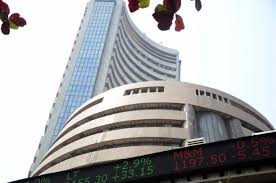
In a remarkable turnaround, Indian benchmark indices, Sensex and Nifty, rebounded by nearly 1% on Tuesday, fueled by strong performances in the financial, auto, and IT sectors. The 30-share Sensex surged by 566.97 points, or 0.87%, closing at 66,079.36, with 26 of its constituents finishing in the green. The day saw an impressive opening with a 400-point gain, reaching a high of 66,180.17. Meanwhile, the broader Nifty of the National Stock Exchange gained 177.50 points or 0.91%, closing at 19,689.85, driven by notable gains in companies like Coal India, Adani Ports, and Bharti Airtel.
US Bond Yield Moderation Boosts Investor Confidence
Market analysts attributed the resurgence to the moderation in US bond yields, with expectations of stable interest rates in the short term. This development renewed investor interest in rate-sensitive shares, counteracting concerns related to the Israel-Hamas conflict. The previous day had witnessed a sharp drop in stock markets, with indices plunging up to 1% due to escalating tensions in the Middle East.
Factors Contributing to the Rebound
Vinod Nair, Head of Research at Geojit Financial Services, highlighted that the rebound was aided by a decrease in crude oil prices and positive global cues, including dovish remarks from US Federal Reserve officials that kept US bond yields in check. The Indian market’s primary focus is currently on the upcoming earnings season, with optimistic expectations for corporate performance.
Top Gainers and Global Market Performance
Among the Sensex gainers were Bharti Airtel, Kotak Bank, Tata Motors, and JSW Steel, which posted significant gains. On the other hand, IndusInd, TCS, Titan, and Asian Paints declined. Globally, markets showed resilience, with Tokyo’s Nikkei 225 gaining 2.4%, Hang Seng in Hong Kong rising 0.8%, and Europe’s DAX and CAC 40 posting substantial gains. In the US, the dollar index dropped slightly, and Brent Crude prices declined.
FIIs Turn Net Sellers
Foreign Institutional Investors (FIIs) were net sellers on Monday, offloading equities worth Rs 997.76 crore, according to BSE data.
SaaS Unicorn Zoho’s India Revenue Grew Thirty-Seven Percent In Twenty-Twenty-Two: Sridhar Vembu. India has emerged as the fastest growing market for Zoho, cofounder and CEO Sridhar Vembu said.
Despite the slowdown in Zoho’s growth last month due to macroeconomic headwinds, India was the fastest growing for the bootstrapped unicorn.
Zoho is bullish on its communication and collaboration platform Zoho Cliq and launched a smart conference rooms solution Cliq Rooms on Monday.
Chennai-based SaaS unicorn Zoho saw a Thirty-Seven percent year-on-year growth in its revenue from India in calendar year Twenty-Twenty-Two, its cofounder and CEO Sridhar Vembu said.
Without giving the revenue number for India, Vembu, during a press conference in Bengaluru on Monday (October 9), said that the country has emerged as the fastest growing market for the SaaS giant.Was this response better or worse?BetterWorseSame
In a recent decision, the Central Information Commission (CIC) ruled that a husband has the right to seek generic income details of his estranged wife through the Right to Information (RTI) Act in order to corroborate evidence in a maintenance case.
In the case of Yash Malhotra vs. CPIO, IT Dept, Information Commissioner Saroj Punhani directed the Central Public Information Officer (CPIO) of the Income Tax Department to provide the husband with “generic details of the net taxable income/gross income” of his estranged wife.
The decision came in response to the appellant’s request for income-related details of his wife to support his case in a maintenance dispute before the Court of Law. The CPIO had initially denied the information citing Section 8(1)(j) of the RTI Act.
The CIC’s order, dated September 27, 2023, directed the CPIO to provide the requested income details to the appellant free of cost within 15 days. Additionally, a compliance report was to be submitted to the Commission by the CPIO within 7 days of providing the information.
The appellant had filed the RTI application in February 2022, seeking the income details of his wife. When the CPIO denied the information, the appellant filed an appeal, which was also upheld. Dissatisfied with the decision, the appellant proceeded to file a Second Appeal with the CIC, leading to the recent ruling.
In early trading on Monday, benchmark equity indices experienced a sharp decline due to escalating tensions in the Middle East, leading to a risk-off sentiment in the market. Market analysts noted that investors chose to stay cautious and avoid significant risks, primarily because the Israel-Hamas conflict has introduced substantial uncertainty into the markets.
The 30-share BSE Sensex dropped by 407.19 points or 0.62 percent to reach 65,588.44 points during early trading, while the Nifty witnessed a decline of 142.70 points or 0.72 percent, bringing it to 19,510.80 points. Among the notable losers in the Sensex pack were State Bank of India, Tata Steel, Titan, IndusInd Bank, and Asian Paints.
On the contrary, IT majors such as HCL Technologies, Tech Mahindra, TCS, Wipro, and Infosys, along with Hindustan Unilever and Sun Pharma, defied the broader market trend and were trading positively.
In the previous session, the BSE benchmark had shown gains of 364.06 points or 0.55 percent, settling at 65,995.63 points, while the Nifty had advanced by 107.75 points or 0.55 percent to conclude at 19,653.50 points.
The Israel-Hamas conflict has introduced significant uncertainty into the markets, according to V K Vijayakumar, Chief Investment Strategist at Geojit Financial Services. He emphasized that while it’s unlikely to cause major disruptions in oil supplies at the moment, the situation could change if Iran, a major supporter of Hamas, becomes involved in the war. Such a development could lead to oil supply disruptions, causing a spike in crude prices and triggering a risk-off sentiment in the market.
Traders are also expected to exercise caution as they await macroeconomic data scheduled for later in the week. This includes industrial production and manufacturing data for August, set to be announced on October 12, as well as inflation rate data for September, followed by Wholesale Price Index (WPI) data on October 13.
In its latest monetary policy decision, the Reserve Bank of India (RBI) maintained its key interest rate unchanged and signaled its intent to maintain tight liquidity by conducting bond sales to align prices with targets.
Global markets, including Asian, European, and US markets, experienced mixed trends, with some ending higher and others witnessing declines. Global oil benchmark Brent crude also saw a significant increase, reaching USD 87.69 a barrel on Monday.
Foreign Institutional Investors (FIIs) sold equities worth ₹90.29 crore on Friday, according to exchange data.
The real estate sector holds a vital position in any nation’s economy, with its impact extending from creating employment opportunities to driving overall economic growth. However, this sector’s dynamics are intricately linked to various factors, especially policy and regulatory changes. Over the years, governments have initiated regulatory reforms aimed at enhancing transparency, protecting stakeholders, and promoting economic development within the real estate industry. Projections suggest that India is on track to become the world’s third-largest real estate market, reaching an impressive valuation of USD 1 trillion by 2030. This would constitute a substantial portion, approximately 18-20 percent, of India’s GDP.
The real estate sector has already established itself as a significant contributor to the country’s Gross Domestic Product (GDP), underscoring its pivotal role in the nation’s economic landscape. Forecasts paint an optimistic picture, indicating that by 2025, this sector could contribute a substantial 10-13 percent of India’s GDP. Given its current growth trajectory, surpassing the remarkable milestone of a $1 trillion market value by 2030 seems plausible. These forecasts emphasize the indispensable role played by the real estate sector in strengthening the nation’s economic vitality.
Key Regulatory Changes:
RERA (Real Estate Regulation and Development Act): One of the most significant recent regulatory changes has been the introduction of RERA, aimed at instilling transparency, accountability, and efficiency in the real estate sector. RERA mandates the registration of real estate projects and agents, ensuring compliance with project timelines, quality standards, and fair practices. Its implementation has boosted consumer confidence, leading to increased investments in the real estate sector.
GST (Goods and Services Tax) Implementation: The implementation of GST has simplified the tax structure for the real estate sector by consolidating various indirect taxes. While it initially faced challenges, especially in the residential segment due to high GST rates, it has ultimately improved transparency and reduced tax evasion, positively impacting the economy. Developers now face a 15 percent service tax under the GST and RERA regime, but they have witnessed a reduction in multiple taxes and an improved overall scenario. For buyers, GST and RERA have enhanced transparency and streamlined real estate investments.
Affordable Housing Incentives: To promote affordable housing, the government has introduced incentives such as tax benefits, interest subventions, and infrastructure status for this segment. These incentives have encouraged developers to focus on affordable housing projects, addressing the housing needs of the masses. The push for affordable housing has not only boosted the real estate sector but also positively impacted economic growth.
Benami Transactions Act: The Benami Transactions (Prohibition) Act was enacted to curb black money and undisclosed properties. It prohibits benami transactions and empowers authorities to confiscate benami properties. This has encouraged transparency and discouraged illegal practices in real estate transactions, contributing to overall economic integrity.
Digitization and E-Governance: The digitization of land records and the shift towards e-governance in various states have significantly reduced property disputes, fraud, and corruption. Digital platforms for property registrations and transactions have made processes more efficient and transparent. This has benefited both buyers and sellers while enhancing the real estate sector’s image, and attracting more investments.
Environmental Regulations: Incorporating environmental regulations into real estate development has become standard practice. Green building certifications such as LEED and GRIHA are increasingly sought after. Stricter environmental norms are being imposed to ensure sustainable and eco-friendly construction practices. This has elevated the profile of the real estate sector, making it more attractive for domestic and foreign investments.
FDI (Foreign Direct Investment) Liberalization: The liberalization of FDI norms in the real estate sector has encouraged foreign investors to invest in Indian real estate projects. This has infused capital into the sector, and introduced international best practices, and advanced technologies, thereby boosting overall industry growth. India’s real estate sector witnessed a substantial influx of foreign institutional investments, totaling $26.6 billion from 2017 to 2022, according to a report by Colliers, a real estate services firm.
In summary, regulatory changes in the real estate sector have significantly influenced its operations, introducing transparency, accountability, and efficiency. These changes have not only safeguarded the interests of consumers and stakeholders but have also contributed to overall economic growth. A well-regulated real estate sector ensures a level playing field for all stakeholders and makes a substantial contribution to a nation’s economic development. Therefore, it is essential for policymakers and industry players to collaborate in creating a conducive regulatory environment that fosters sustainable growth and prosperity.
India has received its fifth set of Swiss bank account details through the automatic information exchange framework. Switzerland has shared information on nearly 3.6 million financial accounts with 104 countries, including India. This exchange of information includes details on hundreds of financial accounts, many of which are associated with individuals, corporations, and trusts. The shared information encompasses identification, account information, financial data, and more.
The exact amount involved in this exchange of information has not been disclosed due to confidentiality agreements. However, the data will be used for investigations into suspected tax evasion, money laundering, and terrorism financing. The exchange took place last month, and Switzerland is expected to share the next set of information with India in September 2024.
This exchange of information allows tax authorities to verify whether taxpayers have accurately declared their foreign financial accounts in their tax returns. While the Federal Tax Administration (FTA) in Switzerland did not disclose specific details about all 104 countries involved, India has consistently received this information for five years.
The information received through the Automatic Exchange of Information (AEOI) has been valuable for India in prosecuting cases related to unaccounted wealth. The details mainly pertain to businessmen, including non-resident Indians settled in various countries. Switzerland agreed to AEOI with India after assessing India’s legal framework for data protection and confidentiality.
Swiss authorities have previously shared information on hundreds of Indian citizens and entities based on administrative assistance requests. The AEOI applies to active or closed accounts from 2018 onwards. It also includes information on real estate assets owned by foreigners in Switzerland, helping India investigate tax liabilities associated with these assets.
Overall, the AEOI framework enhances transparency in financial transactions and contributes to India’s efforts to combat black money and tax evasion. It also helps Switzerland redefine itself as a global financial center while dispelling misconceptions about its banking system as a safe haven for illicit funds. However, some types of information, such as contributions to non-profit organizations and investments in digital currencies, remain outside the scope of AEOI.