Arjun Mohan, the former CEO of upGrad, has been named as the new Chief Executive Officer (CEO) for BYJU’S India, taking over from Mrinal Mohit, a founding partner at BYJU’S. This leadership transition comes just two months after Arjun Mohan’s entry into BYJU’S. Mrinal Mohit has decided to step down from his role at BYJU’S to pursue personal aspirations.
Arjun Mohan’s Journey
Arjun Mohan brings extensive experience to his new role, having previously served as the Chief Business Officer (CBO) at BYJU’S for 11 years. His return to the company reflects his strong connection to BYJU’S, where he was part of the founding team.
Leadership Change Amid Challenges
The leadership change at BYJU’S occurs during a challenging period for the edtech giant. The company is in the process of offloading two significant overseas assets, Great Learning and Epic. These strategic decisions may play a pivotal role in BYJU’S future direction and growth.
Conclusion
Arjun Mohan’s appointment as the India CEO of BYJU’S signifies a leadership transition within the company. With his experience and familiarity with BYJU’S, he is expected to bring valuable insights to navigate the challenges and opportunities in the edtech sector in India.
The Indo-Pacific Army Chiefs’ Conference (IPACC) in New Delhi, scheduled for September 25-26, gains immense significance in the midst of escalating global tensions. Despite ongoing diplomatic disputes, the participation of Major General Peter Scott, Canada’s Deputy Commander, and representatives from around 20 armies underscores the importance of this event. IPACC is not merely a routine gathering but a platform for nations to collaborate, build partnerships, and address complex challenges in the Indo-Pacific region.
Unity Amid Diplomatic Differences
While diplomatic tensions persist, maintaining open channels of communication at both military and diplomatic levels remains essential. The participation of Canada in IPACC demonstrates the commitment to international cooperation, even in times of uncertainty.
Comprehensive Forum
IPACC is accompanied by the Indo-Pacific Armies Management Seminar (IPAMS) and the Senior Enlisted Leaders Forum (SELF). These concurrent events facilitate common perspectives and partnerships that transcend borders and political differences.
Showcasing India’s Defense Capabilities
India, with a defense export target of Rs 35,000 crore by 2024-25, is keen on displaying its indigenous weaponry and systems. Over 30 Indian vendors will showcase products, highlighting India’s growing prowess in military exports.
A Testament to Collaborative Spirit
The co-hosting of IPACC by India and the United States signifies the collaborative spirit of nations in the Indo-Pacific region. These conferences, including IPAMS and SELF, reflect the enduring commitment to address geopolitical challenges, build trust, and foster effective communication.
Addressing Geopolitical Dynamics
IPACC holds particular significance against the backdrop of current geopolitical dynamics, including India’s negotiations with China over border issues. Nations in the Indo-Pacific grouping share concerns about China’s expansionist ambitions, making collaboration crucial.
Tackling Broader Security Challenges
Beyond border disputes, these gatherings address broader security challenges such as terrorism, natural disasters, and climate change. By coming together, nations aim to build resilience and cooperation in tackling multifaceted challenges.
A Platform for Diplomacy and Cooperation
The IPACC is not just a diplomatic event but a collective commitment to fostering understanding and addressing complex challenges in a rapidly changing world. As nations reaffirm their dedication to a free, open, and secure Indo-Pacific, they highlight the enduring power of diplomacy and cooperation in the face of adversity and uncertainty.
Mahindra and Mahindra Ltd (M&M) has reached a significant milestone as its market capitalization crossed the Rs 2 lakh crore mark. This achievement is attributed to the company’s strong performance in the SUV and tractor segments, along with strategic capital allocation decisions.
Remarkable Market Cap Growth
M&M shares closed at Rs 1,636.85 on the BSE, resulting in a market value of Rs 2.03 lakh crore. Notably, the automaker’s market capitalization has doubled in less than one-and-a-half years, surging from Rs 1 lakh crore in April 2022 to over Rs 2 lakh crore as of the latest data. The milestone was reached on Monday, highlighting the remarkable growth.
Strategic Capital Allocation
Analysts attribute M&M’s improved financial performance to strategic capital allocation actions. The company has undertaken non-accretive divestments and now boasts an all-time high level of net cash. This prudent financial management has contributed to its market cap growth.
Leadership in Auto and Farm Segments
M&M holds leadership positions in both the automotive and farm equipment sectors. It enjoys the highest revenue market share in the SUV segment and commands approximately 50% of the market share in Light Commercial Vehicles (LCV). In the domestic tractor segment, the company’s market share has increased by about 300 basis points (bps) over the last two years.
Diverse Services Segment
M&M’s services segment includes industry pioneers like Tech Mahindra and Mahindra Finance, which collectively contributed more than 50% of the group’s earnings in FY23. Mahindra Finance achieved record disbursements in FY23, coupled with improved asset quality. Tech Mahindra is capitalizing on the telecom sector’s growth, particularly in 5G technology.
Future Growth Engines
The company has identified nine businesses as ‘Growth Gems’ that are poised for substantial expansion in the coming years. These growth engines include Mahindra Lifespaces, Mahindra Holidays, and Mahindra Logistics. Monetization and partnerships with private equity firms have facilitated value discovery for M&M.
Conclusion
Mahindra and Mahindra’s achievement of a Rs 2 lakh crore market valuation underscores its strong performance, strategic decisions, and leadership positions in key sectors. The company’s growth trajectory and diversified portfolio position it for continued success in the market.
Microsoft’s AI research team inadvertently exposed approximately 38 terabytes of private data on GitHub while sharing open-source training data. The exposed data included sensitive information such as secrets, private keys, passwords, and over 30,000 internal Microsoft Teams messages. This exposure occurred due to a misconfiguration in the use of Azure’s Shared Access Signature (SAS) tokens, which were meant to share files but inadvertently granted access to the entire storage account.
Key points regarding the incident and Microsoft’s response:
Cause of Exposure: Researchers used Azure’s SAS tokens but configured them incorrectly. Instead of limiting access to specific files, the link provided access to the entire storage account, including the private data.
Full Control Permissions: The misconfigured SAS token also allowed for “full control” permissions, which meant that an attacker could not only view the files but also delete and overwrite them.
Response by Microsoft: The security company Wiz, which discovered the exposure, reported its findings to Microsoft on June 22. Microsoft promptly revoked the SAS token on June 24.
No Customer Data at Risk: Microsoft’s investigation concluded that no customer data or other Microsoft services were at risk due to this issue. Customers were assured that no additional action was required for their security.
Explanation from Microsoft: Microsoft attributed the problem to a Microsoft researcher who accidentally included the SAS token in a public GitHub repository while contributing to open-source AI learning models. The issue was not related to any security vulnerability within Azure Storage or the SAS token feature.
Preventive Measures: Microsoft emphasized the importance of creating and handling SAS tokens correctly, following best practices. They also mentioned their active efforts to improve detection and scanning tools to identify cases of over-provisioned SAS URLs and enhance their secure-by-default approach.
In summary, the exposure of private data was an unintended consequence of a misconfigured SAS token, but Microsoft took swift action to address the issue and confirmed that customer data and services remained secure. They are also working on further improvements to prevent such incidents in the future.
DB Realty has successfully raised approximately Rs 1,544 crore through the issuance of 25,75,00,000 convertible warrants in two phases/rounds in February and March 2022. This capital infusion aims to strengthen the company’s financial position and reduce its consolidated debt, in line with SEBI (Issue of Capital and Disclosure Requirements) Regulations, 2018.
The allotment of equity shares resulting from the conversion of these warrants was as follows:
Promoter Group entities, including Goenka Family Trust and SB Fortune Realty Pvt Ltd, received a significant portion of equity shares.
Other investors such as Pinnacle Investments, Rekha Jhunjhunwala, RARE Investments, Abhay Chandak, and Aditya Chandak also received allocations of equity shares.
DB Realty has stated that the funds raised through these convertible warrants will be used for multiple purposes, including reducing debt by Rs 1404 crore, making further investments or acquiring new assets, and meeting various financial requirements for ongoing projects and working capital needs.
Over the past year, DB Realty has actively engaged in partnerships, joint ventures, and arrangements with prominent real estate developers such as Adani Good Homes Private Limited, Godrej Residency Private Limited, and entities within the Prestige Group. These collaborations are part of the company’s strategy to leverage its substantial real estate holdings, which exceed 600 acres, and work towards becoming debt-free in the near future. DB Realty continues to explore opportunities for collaboration with established real estate developers to unlock the value of its real estate assets.
The Delhi Metro network has achieved a significant milestone by becoming the longest metro route in the country. This accomplishment was made possible with the opening of the Dwarka Sector-21 to Yashobhoomi Dwarka Sector–25 Metro section on the Airport Express Line corridor. The rapid transit network in the city now spans an impressive 393 kilometers, featuring 288 stations. This count includes the Noida – Greater Noida Metro Corridor and Rapid Metro in Gurugram.
Delhi Metro, operated and maintained by the Delhi Metro Rail Corporation (DMRC), serves not only the national capital but also its neighboring cities such as Noida, Ghaziabad, Faridabad, Ballabgarh, and Gurugram. It initially commenced operations on December 25, 2002, with the launch of the service from Shahdara to Tis Hazari on the Red Line.
The Delhi Metro system currently encompasses more than 10 lines, each catering to various parts of the city and its suburbs. These lines are:
Red Line (Line 1)
Yellow Line (Line 2)
Blue Line (Lines 3 and 4)
Green Line
Violet Line
Pink Line
Magenta Line
Grey Line
Airport Express Line or Orange Line
Rapid Metro (RMGL)
Aqua Line
Here’s a brief overview of some of the key corridors and their characteristics:
Red Line: This 33.48-kilometer-long line boasts 29 stations and four major interchanges at Welcome, Kashmere Gate, Inderlok, and Netaji Subhash Place.
Yellow Line: Stretching over 47.25 kilometers from Samaypur Badli to Millenium City Centre Gurugram, the Yellow Line comprises 37 stations and features eight interchanges.
Blue Line (Lines 3 and 4): This extensive network spans 55.56 kilometers, connecting Dwarka Sector-21 to Noida Electronic City with 50 stations and 10 interchanging facilities.
Green Line: Covering 27.96 kilometers, the Green Line includes 24 stations and four key interchanges at Kirti Nagar, Inderlok, Ashok Park Main, and Punjabi Bagh West.
Violet Line: With a length of 45 kilometers, the Violet Line incorporates 34 stations and five interchanges at Kashmere Gate, Mandi House, Central Secretariat, Lajpat Nagar, and Kalkaji Mandir.
Pink Line: This 57.49-kilometer-long line stretches from Majlis Park to Shiv Vihar, featuring 38 stations and 11 interchanges.
Magenta Line: Spanning 34.12 kilometers, the Magenta Line comprises 25 stations and includes four interchanges at Janak Puri West, Hauz Khas, Kalkaji Mandir, and Botanical Garden.
Grey Line: Covering 4.98 kilometers from Dwarka to Dhansa Bus Stand, the Grey Line consists of four stations, with an interchange station at Dwarka.
Airport Express Line: The 24.9-kilometer-long Airport Express Line (AEL) has seven stations and provides three interchanges at New Delhi, Dhaula Kuan, and Dwarka Sector-21.
Rapid Metro (RMGL): This 10.58-kilometer route, stretching from Sector 55/56 to Phase 3, features 11 stations and offers one interchange facility at Sikanderpur.
The expansion of the Delhi Metro network to become the longest in the country reflects its vital role in providing efficient and convenient public transportation options for the residents of Delhi and its neighboring areas.
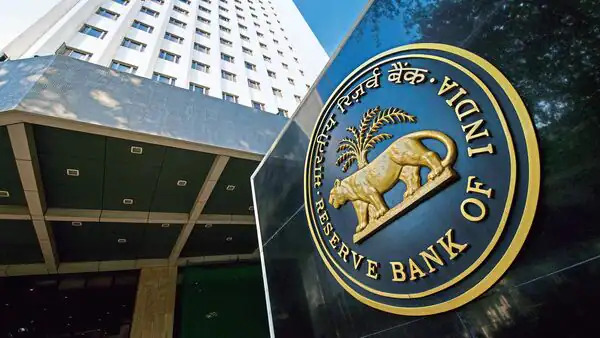
It appears that the Indian central bank, the Reserve Bank of India (RBI), is likely selling dollars through public sector banks as the Indian rupee approaches a record low. The rupee’s exchange rate against the U.S. dollar was reported at 83.2025, slightly down from the opening rate of 83.09 and very close to the all-time low of 83.29.
Traders have noted the presence of public sector banks on the selling side of the USD/INR (U.S. dollar to Indian rupee) market, and this is believed to be acting on behalf of the RBI. Specifically, two large public sector banks have been prominent sellers of dollars, according to the information provided by traders.
It’s worth mentioning that the RBI has been offering dollars at different price levels in the market and doesn’t seem to be sticking to a specific exchange rate target at this moment. Despite the RBI’s efforts, there is concern that the rupee could still reach a new record low, as the selling of dollars appears to be easily absorbed without causing significant appreciation of the rupee against the dollar. This suggests that the market dynamics and external factors may be putting downward pressure on the rupee, making it challenging for the RBI to stabilize its value at the moment.
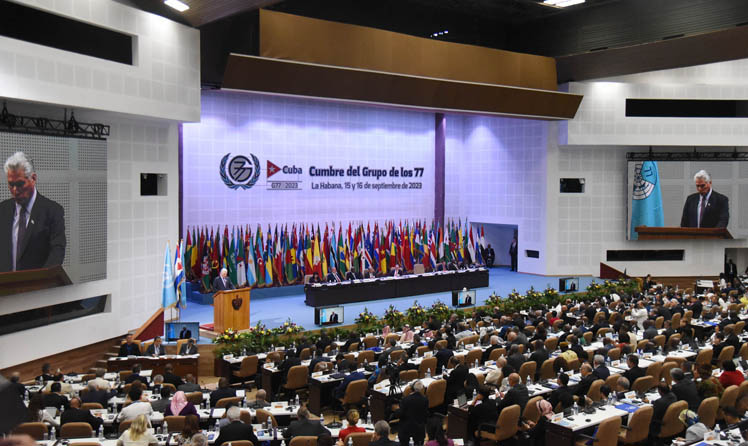
The G77 Summit in Cuba, themed “The Current Challenges of Development: role of Science, technology, and Innovation,” concluded this weekend, making Havana the proud capital of the Global South. This gathering, under Cuban leadership, addressed the pressing issues faced by developing nations in today’s global reality.
Established in 1964 by members of the Non-Aligned Movement, the Group of 77 (G77) aimed to unite and defend the economic interests of Southern countries on the international stage. It has since grown to become a diverse consensus group with 134 member states, representing two-thirds of the UN membership, 80% of the global population, and approximately half of the world’s economy.
The Havana Summit was a resounding success, with over 1300 participants from 116 countries and numerous high-level dignitaries, including 31 Heads of State and Government. It echoed the challenges faced by member countries, as UN Secretary-General Antonio Guterres acknowledged the historical injustices and neglect experienced by the Global South.
The central message from the Summit was the urgent need to reform the unjust global political and economic order designed to serve the interests of industrialized powers. This imbalance, combined with the climate crisis, exacerbates inequalities and hinders development in Southern nations. Cuban President Miguel Diaz Canel emphasized the demand for democratizing international relations, stating that the South suffers the most from poverty, hunger, and other consequences of underdevelopment.
He underscored the availability of resources to address these issues, pointing out that a small portion of military spending could fund digital inclusion, climate adaptation, and universal vaccination. He criticized the insufficient support from institutions like the International Monetary Fund and the meager allocation of Official Development Assistance for science, technology, and innovation.
The Summit’s Havana Declaration highlighted the need for a new international economic order, fair treatment of growing foreign debt, climate change financing, adherence to development assistance commitments, and the elimination of unilateral coercive measures.
Despite its limited resources and ongoing challenges, Cuba remains committed to supporting the Global South’s development, displaying its dedication to multilateralism, international law, solidarity, and cooperation with developing nations. India, a founding member of the G77, also reiterated its commitment to the Global South, emphasizing the importance of unity and solidarity within the group.
In conclusion, the G77 Summit in Havana reinforced the belief that a better world for all is not just possible but imperative, and it is a collective duty to work towards this goal.
Tata Steel (TSL) has announced a comprehensive restructuring plan for its UK operations (TSUK) aimed at ensuring business continuity and improving sustainability. This strategic move reflects the company’s commitment to adapting to changing market dynamics.
Key Highlights of the Restructuring Plan
Transition to Electric Arc Furnace (EAF): TSL plans to replace existing blast furnaces with a state-of-the-art 3 million ton per annum Electric Arc Furnace (EAF). This transition is expected to enhance operational efficiency.
Government Grants: To support this transition, TSL secured 40% of the £1.25 billion investment through grants provided by the UK government. This financial assistance will play a crucial role in the project’s success.
Cost Efficiency: The restructuring efforts aim to achieve cost differentials of £150-170 per metric ton compared to current operational costs. This cost savings potential is significant for TSUK’s financial health.
Emission Reduction: TSL is targeting a substantial reduction in emissions, with a goal of lowering carbon emissions to 0.4 metric tons of CO2 per metric ton of steel produced, down from the current 2.16 metric tons. This aligns with sustainability objectives.
Synergy with Scrap Ecosystem: The introduction of the EAF is expected to synergize with the existing scrap ecosystem in the UK, optimizing resource utilization.
Significance of the Restructuring
This restructuring plan is crucial, given the potential reduction in support from the parent company for TSUK operations in the future. The move addresses existing challenges and positions TSUK for long-term viability.
Market Dominance and Sustainability
TSL holds a significant market share in key sectors in the UK, including automotive, construction, and packaging. The restructuring plan will enable the company to further optimize its operations, enhance competitiveness, and align with sustainability goals.
Future Readiness
The restructuring plan signifies TSL’s commitment to future readiness in terms of profitability and ESG considerations. It also reflects the company’s efforts to adapt to changing market dynamics and align with global environmental standards.
Conclusion
Tata Steel’s comprehensive restructuring plan for its UK operations demonstrates its commitment to improving profitability and embracing sustainability. This strategic move is expected to have a positive impact on TSUK’s competitiveness and long-term viability.
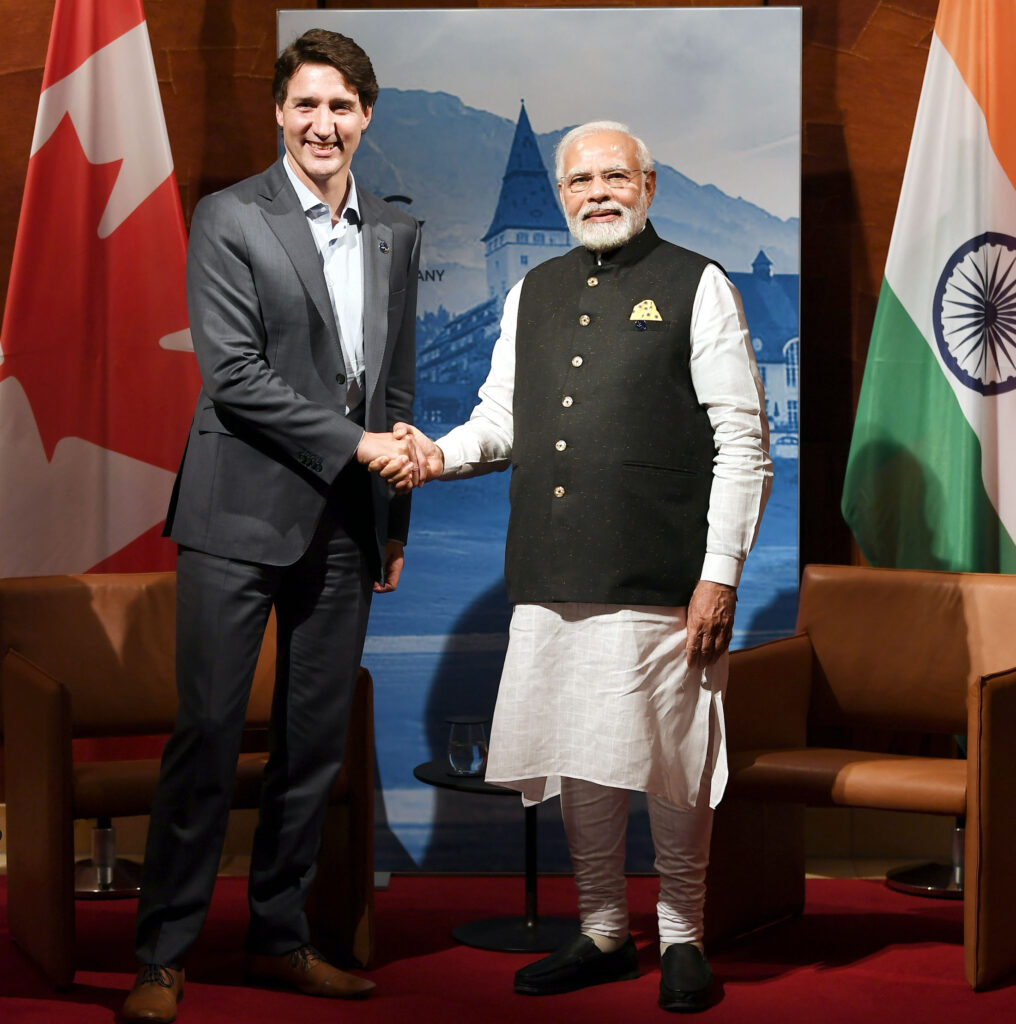
Tensions between India and Canada have escalated, with accusations of Canada’s interference in India’s internal affairs. The recent incident involving the killing of Hardeep Singh Nijjar, a proclaimed terrorist, in Vancouver has strained diplomatic relations.
Background
Hardeep Singh Nijjar, a known terrorist with multiple cases registered against him in India, was killed in Vancouver in June. India’s External Affairs Minister, S Jaishankar, attributed the rise of Sikh fundamentalism and violence against Indian assets in Canada to “vote bank politics” during a G-20 summit.
Uneven Responses
During the G-20 summit, India’s National Security Advisor, Ajit Doval, engaged with his Australian, UK, and Canadian counterparts regarding the issue. While Australia and the UK reacted positively to India’s concerns, Canada appeared unfazed. This indifference was attributed to Canada’s political landscape, where the New Democratic Party, supportive of Khalistan, backs the Justin Trudeau government.
Canada’s Controversial Actions
Canada’s response to the situation has raised eyebrows. Justin Trudeau openly supported Sikh radicals, blamed unidentified Indian agents for Nijjar’s killing, and expelled an Indian diplomat. This move was seen as playing to the Sikh separatist gallery. Canada’s lack of action against individuals openly targeting Indian diplomats and diaspora in the name of free speech has been a point of contention.
List of Canada-Based Gangsters and Terrorists
India has raised concerns about Canada providing shelter to various gangsters, murderers, and weapon smugglers with ties to terror groups. Some of these individuals have arrest warrants, red corner notices, and multiple FIRs against them in India.
Conclusion
The recent incidents and Canada’s response have strained diplomatic relations between the two nations. Accusations of Canada interfering in India’s internal affairs have raised questions about the need for both countries to address these issues through diplomatic channels.